

The Largest National Park In Canada Is An Underrated Destination For Nature Lovers
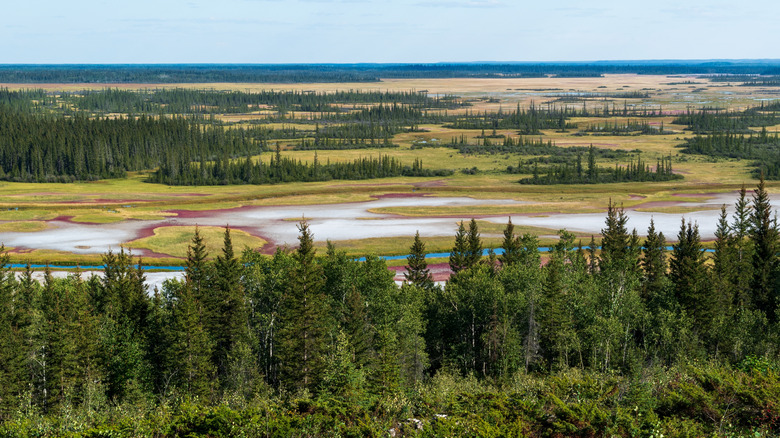
Canada is world-famous as one of the best outdoor destinations in the world. With its vast prairies, stunning mountain ranges, rugged coastlines, and magnificent lakes and rivers, Canada offers a feast of landscapes ideal for outdoor explorers and backcountry adventurers. It is a superb place for wildlife lovers, with an astonishing array of creatures in every corner of the country, from orcas and humpback whales off the coast of British Columbia to rare Kermode spirit bears in the Great Bear Rainforest.
Canada's national parks are spectacular and perfect for nature lovers. The Pacific Rim National Park is one of the most popular, but there are plenty of smaller, less well-known spots as well, like Sirmilik or the Gwaii Haanas National Park Reserve. However, size doesn't necessarily correlate with popularity, and Canada's largest national park is bizarrely underrated, despite being a glorious spot for anyone who loves the great outdoors. Wood Buffalo National Park straddles the border of Alberta and the Northwest Territories, and serves up an array of outstanding outdoor experiences for adventurous travelers.
Despite its remote location, it is accessible by road year-round from Fort McMurray and Fort Chipewyan, and from Edmonton and Yellowknife in the spring, summer, and fall. Flights connect from Edmonton International Airport (YEG) and Yellowknife Airport (YZF) to Fort Smith Regional Airport (FSM) in the Northwest Territories and Fort Chipewyan Airport (YPY) in Alberta.
Roaming buffalo, reclusive birds, and an enormous beaver dam
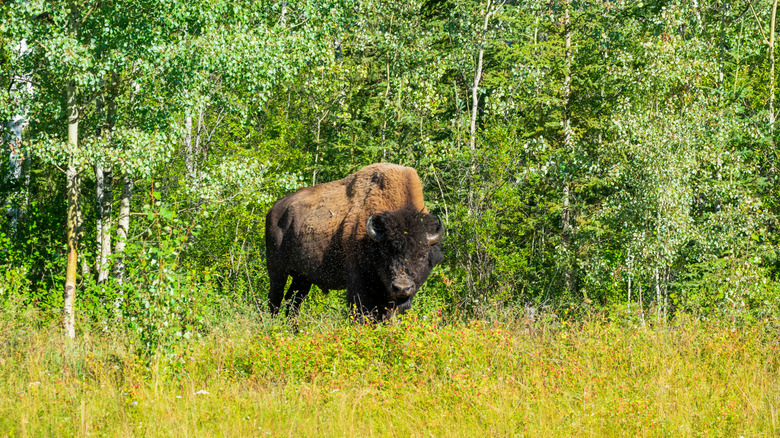
Wood Buffalo National Park was originally established in 1922 to preserve the world's largest free-roaming herd of bison. The collapse of the American bison population is something quite extraordinary — in 1830 there were an estimated 40 million across North America, and at the turn of the 20th century there were just over 1,000. Wood Buffalo National Park is now home to around 3,000 of these magnificent herbivores, and no visit is complete without a trip to see them roaming in the wild. There are herds at Sweetgrass Station near the Peace-Athabasca Delta and along the banks of the Slave River.
Another fascinating creature conserved in the Wood Buffalo National Park is the whooping crane. The park is home to the only natural habitat for this endangered species, which builds its nests around the lakes, streams, marshes, and bogs of the delta. There are around 500 cranes that migrate every year from their winter home in the Aransas National Wildlife Refuge, near the underrated beach town of Port Aransas in Texas. Their nesting sites are extremely (and deliberately) remote, so sightings are rare, but visitors in spring and fall might get lucky and see birds leaving or arriving as part of their migration.
The final piece of the wildlife puzzle in Wood Buffalo National Park is the world's largest beaver dam. Located in the Peace-Athabasca Delta, one of the largest inland freshwater deltas in the world, this magnificent feat of animal engineering is secluded and remote, far from any roads or trails, and only accessible on a private sightseeing tour. So large it can be seen from space, the dam is about half a mile long, with a surface area of nearly 750,000 square feet, and holds back nearly 1,600 hockey rinks' worth of water!
Dark skies and Northern Lights
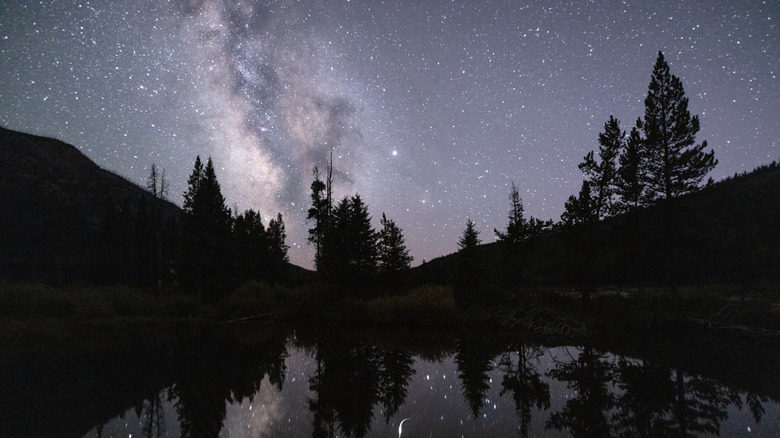
It's not just on the ground where Wood Buffalo National Park puts on a display of the majesty of nature. The park is also the world's largest Dark Sky Preserve, a place where natural darkness is protected, which makes it an ideal spot for stargazing. Its location and lack of artificial light make it one of the best places on the planet to see the Aurora Borealis.
The best place to experience the wonder of the night sky in Wood Buffalo National Park is at the Dark Sky Circle, where specially designed benches let you lie back in comfort and watch the constellations unfold. On the shores of Pine Lake, deep within the park, enjoying the dark sky here likely means at least one night under canvas at Pine Lake Campground. The most accessible viewing spot is at the Salt River Day Use Area, which can be included in a day trip.
Carefully selecting the time of year you visit Wood Buffalo National Park is important. In the summer, the weather is warm and the days incredibly long, which is ideal for exploring or soaking up the endless evening sun, but less so for aurora hunting or stargazing. If you are hoping to enjoy the dark skies, then you'll want to wait for the crisp, cold nights of autumn and winter.