

5 French Restaurant Rules American Tourists Break In The Last 10 Minutes
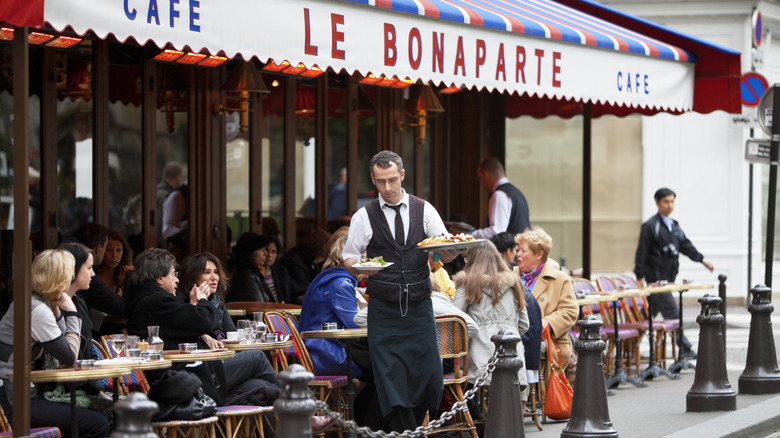
No trip to France would be complete without sampling some of the mouthwatering cuisine. French cooking is famous all over the world and many culinary enthusiasts believe it is the very best. Traditional techniques developed by the French have influenced and inspired many regional dishes around the world. French chefs are highly accomplished and have spent years learning how to prepare the tasty delicacies. A trip to France is a prime opportunity to sample some of the most prestigious and renowned cooking in the world, but American tourists often have a difficult time adjusting to the different restaurant rules. If you don't want to worry about locals thinking you're a bit strange when you visit France, it's worth doing a little research on common restaurant etiquette before your trip.
There are definitely some common American behaviors that come across as bizarre to locals in France. Some Americans tend to complain that the French are rude and rather mean, while the French often believe that American tourists are loud, ill-mannered, and obnoxious. These differences often come to a head when Americans visit a French restaurant. There are some differences in proper etiquette between the two countries, and many Americans break French restaurant rules within the first 10 minutes of sitting down at the table.
American tourists who do make it through most of their meal successfully — those who have studied how to properly order and use the correct silverware at a fancy restaurant — still run the risk of breaking unspoken French restaurant rules during the last 10 minutes of their meal. A few mistakes you don't want to make are rushing to pay the bill, asking to split the cost among a group, announcing the cost of the meal, and leaving a large American-sized tip. Skipping dessert is another mistake.
Don't rush or get frustrated when the bill doesn't come as soon as you're done eating

People from the United States who are visiting Europe for the first time often struggle to understand why Europeans take so long to eat at a restaurant. In the U.S. we're used to fast-food culture. Nearly every street corner has a drive-through window where you can order a hastily prepared burger that arrives in less time than it takes to pull out your debit card. The entire meal is over in less time than it takes to get the menu at a French restaurant. You shouldn't expect the bill to arrive the minute you're done eating your food in France.
Even when you dine out at a nice restaurant in the United States, it's not uncommon to feel rushed by the servers, whose job it is to turn over the table for the next guest. The same urgency doesn't usually exist at a restaurant in France, and the server won't be waiting to drop your check off as soon as you're done with your last bite. You're probably going to have to ask for it.
Even after you've finished your meal at a French restaurant, you'll need to practice patience. In Europe, and particularly in France, meals are an experience. French people fully enjoy their food, and eating a meal at a restaurant is a social activity as much as it is an opportunity to fill your stomach. Savor the experience, relax, and converse with your friends. You won't be rushed out of the restaurant. Instead, wait patiently for your server to come to your table. Then, simply ask for the bill. They might not bring it until you ask. All you have to do is say, "L'addition s'il vous plaît," to politely request the check.
Skipping dessert or feeling guilty for ordering it
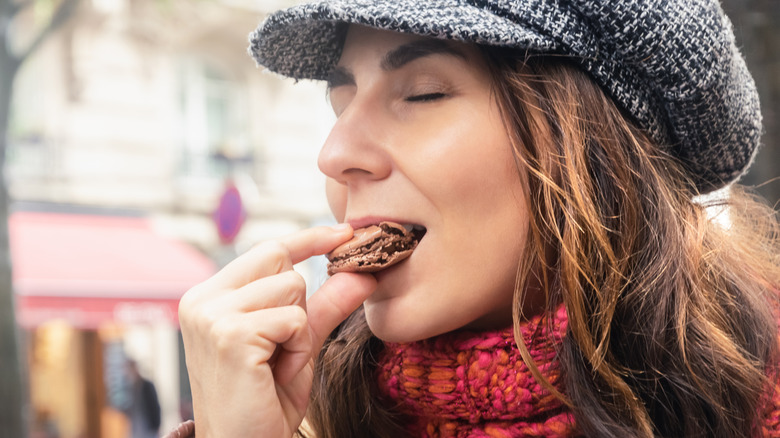
One of the biggest mistakes that you can make in the last 10 minutes of your meal at a French restaurant is failing to order dessert. It's just too good to pass up! French pastries are some of the most mouthwatering delicacies in the entire world, and a trip to France is the perfect opportunity to sample some of the most delectable treats you'll ever have.
Not everyone has a sweet tooth, but it's always worth taking the extra time to see what's on the dessert menu in France. If you don't have a ton of room, split something with your dining companions so that everyone can have a bite or two. This is not the time or the place to cut calories. In France, food is all about pleasure. Indulging in a sweet treat is part of the experience, and a satisfying end to the meal. Desserts in France aren't the massive and sickeningly sweet concoctions we see on menus in the United States. Usually they're small treats that are portioned to compliment the meal, and they should be enjoyed guilt-free.
Order an espresso to pair with your tasty treat and linger at the table cherishing a delicious meal and the time you are spending with your dining companions. Macarons, madeleines, crème brûlée, and éclairs are a few iconic French desserts worth sampling during your trip.
Making things awkward when you pay the bill
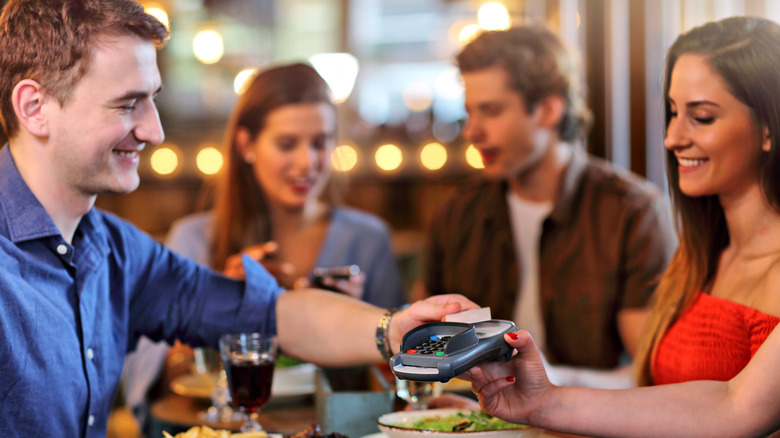
Before you get ready to pay for your meal, make sure you understand the unspoken rules about splitting the bill in France. In the United States, it's not uncommon for a large group of friends to ask for separate checks for each individual guest. People will order drinks, appetizers, and individual meals. Some people will order dessert, others will skip it. The servers are then expected to remember who ordered what or listen to the long explanation and remember it when they make up the bill. Servers in the United States will do this, although some of them will do so reluctantly, but splitting the bill in this manner is not nearly as common in France.
If you ask to split the bill in such a complicated way, you may annoy your server. If you can, have one person pay the bill and then send them money via an app. Otherwise, you can get cash ahead of time and use that to split the bill. If you have to split the bill between credit cards, that's fine, but you should still only ask for one check. Don't expect the server to divide everything up for you. Just split the total cost equally between each person.
If you do decide to treat your group to a dinner out, don't announce how much the meal cost when you get the bill. Talking about money publicly in that way is considered bad manners in France. It is common for groups of friends to take turns treating one another. If someone has paid for a few meals in a row, be aware of that. It's probably your turn to offer to pay.
Leaving a large tip
In the United States, servers make their living through tips. It is common practice in America to tip no less than 20%. Even if you order takeout or dine at a cafe, most people in the United States will tip 10% to 15% to the person who rings them up at the counter. Tipping anything less than 20% at a sit-down restaurant is very much frowned upon in the United States, even if the service is bad. When you experience excellent service, tipping 25% or more is a common practice. If you leave a restaurant in the United States without leaving an appropriate tip, you better have a darn good reason. The server will almost certainly feel shorted.
In France, things are different, and you'll look like a total tourist if you leave a big tip every time you dine at a restaurant. People who work in restaurants and wait tables there are paid a living wage and receive benefits. Tips are not required, nor are they always expected. It's an entirely different culture, and it's one of the reasons why you won't feel rushed at a restaurant in France since there isn't financial pressure for the staff to service as many tables as possible. They're paid the same amount no matter how many people walk through the doors of the restaurant.
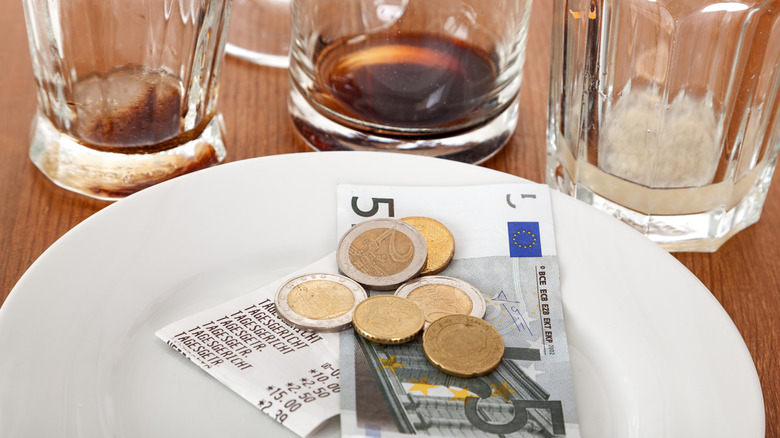
A small tip to show your gratitude is still appreciated, but there is no need to aim for the 20% minimum that's common in the U.S. It is appropriate to leave a few Euros on the table when dining at a casual cafe. For excellent service at a fine-dining establishment you could tip around 10% without raising any eyebrows. That being said, an extra-large tip is something that should be avoided in France because displays of wealth may be frowned upon.