

Not Yosemite, Not The Grand Canyon: This National Park Is The 'Quietest Place On Earth'
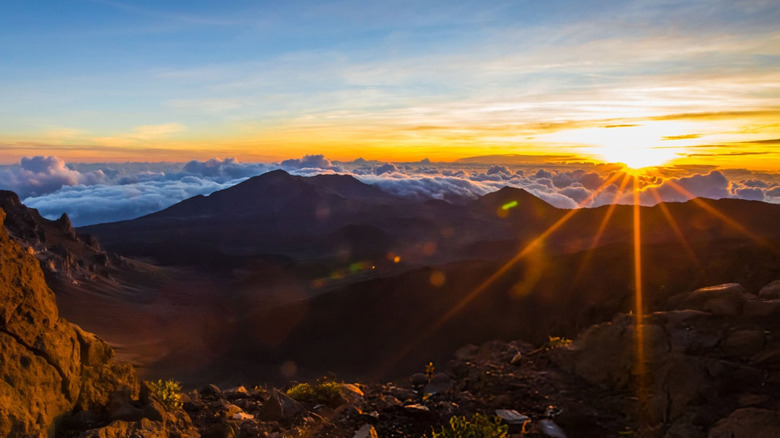
America's glorious national parks are some of the best places on Earth to find tranquility and serenity. These vast wildernesses let travelers surround themselves with the gentle sounds of the natural world and cut out the hubbub of the modern world. Some might decide that the 1,200 square miles of sequoia forests, glacial mountains, and beginner-friendly hiking trails in Yosemite National Park are the ideal spot for a quiet getaway. Others might choose to descend to the bottom of the deep ravine of Grand Canyon National Park to escape the hustle and bustle of the outside world. But one overlooked U.S. national park is actually home to what is considered the quietest natural place on the planet: the volcanic crater of Haleakalā National Park in Hawaii.
Sound levels within the crater have been recorded as low as 10 decibels (dBA). For context, the highest-ever recording is 142.2 dBA at Arrowhead Stadium, and 0 dBA is the lowest threshold of human hearing, so Haleakalā's crater is truly near-silent. Haleakalā National Park is located on the eastern side of Maui, away from the busy beaches and hotels. It is about an hour's drive from Kahului Airport (OGG), one of the busiest in Hawaii, which is served by flights from the U.S. and Canada. International visitors tend to arrive at Daniel K. Inouye International Airport (HNL) in Honolulu and take a short flight between the islands.
Find colorful lava flows and a stunning sunrise in Haleakalā National Park
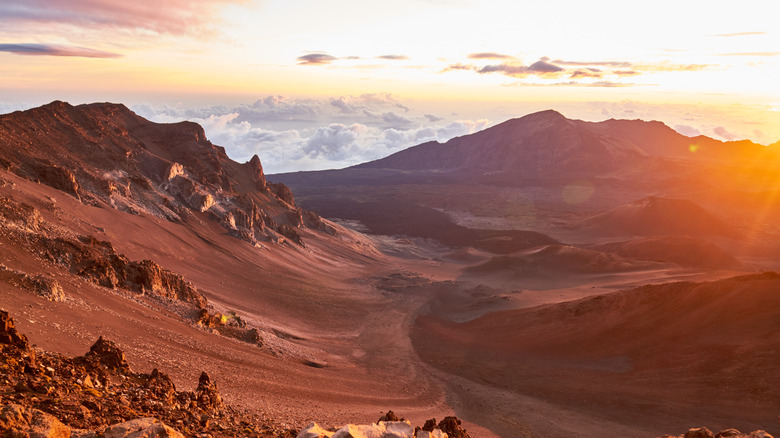
Haleakalā National Park is a remarkable, otherworldly landscape dominated by the vast volcano at its center. With a huge valley carved out of the hardened pyroclastic lava flows, all swirling with rusty orange and brick red, the alien scenery is highlighted by the towering summit of Haleakalā, which translates as "house of the sun." This dormant volcano rises over 10,000 feet above sea level and is almost always shrouded in clouds. The high elevation, which puts it above noises from human habitations and air traffic, combined with the isolation provided by the crater walls and the muffling properties of the ashy volcanic soil, make it such a uniquely peaceful place.
The park's status as the quietest place on Earth was bestowed on it by acoustic ecologist Gordon Hempton, who founded the nonprofit Quiet Parks International. His organization is dedicated to certifying and protecting peaceful places in order to give people access to natural quiet. Hempton explains, "We aren't saying that quiet is for everyone and that everyone should experience it, but I do feel the choice is essential to quality of life." Quiet is also important for the natural world. Jesse Barber, professor in the Department of Biological Sciences at Boise State University, says, "Human-caused noise is known to interfere with animals' abilities to hear important sounds, like birdsong, and to fundamentally alter where animals live and their reproductive fitness."
Haleakalā National Park is one of the best places to watch the sunrise in Hawaii. The wonderful stillness and total peace make the early morning trek absolutely worth it. There are very few other places in the world quite like it, and nowhere that does it better.
Things to do in Haleakalā National Park
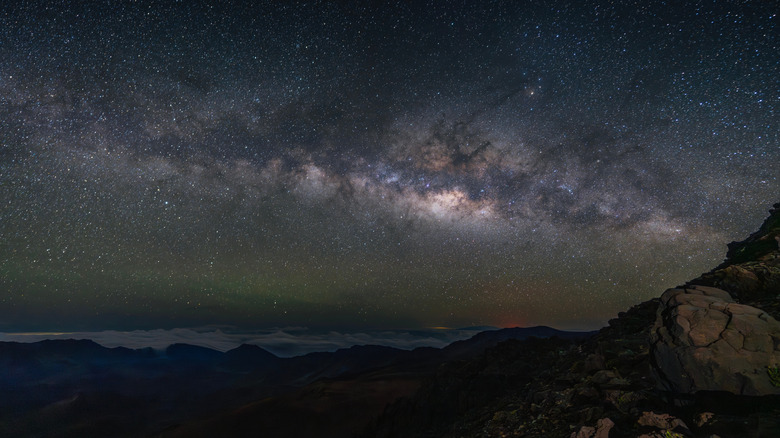
While the summit of Haleakalā might be the main draw of the national park, there's a whole lot more to see and do in this gorgeous corner of Maui. One of the best and most underrated draws of the park is stargazing, as the same conditions that make it so peaceful also mean that there is very little light pollution and visitors get a fantastic and clear view of the night sky.
Hiking is one of the best outdoor activities to do in Hawaii, and Haleakalā is a fabulous destination for hikers, with over 30 miles of trails around the summit and plenty more in the rest of the park. Hosmer Grove is a great choice for beginners or for anyone who doesn't want anything too strenuous: a gentle half-mile loop under the shade of pine and eucalyptus trees. Sliding Sands is often considered the quintessential Haleakalā hike: 11.2 miles through the psychedelic colors of the ancient lava flows. Finally, the four-mile loop of the Pipiwai Trail offers a delightful stroll through lush bamboo groves and past several stunning waterfalls.
Haleakalā is also a brilliant destination for wildlife and nature lovers. Jin Harlow, executive director of Haleakala Conservancy, says, "One thing people may not realize when they come to Haleakala is all the different climates that you can experience, from one extreme to the next, a dry and cold alpine desert to the lush, hot, and humid coastal rainforest. Because of that extreme difference, there is a richness of the variety of plants, animals, and landscapes you can see and experience." You can see endangered species like the Hawaiian goose, the Hawaiian hoary bat, and even Hawaiian monk seals along the coastline.