

Forget Yellowstone, This Underrated National Park Is A Growing Hydrothermal Hotspot
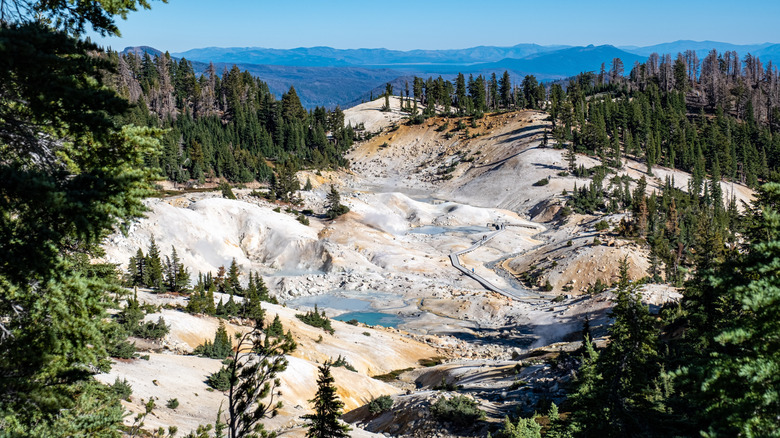
With the number of visitors to our more popular national parks steadily increasing, there's no wonder many of us are seeking out less crowded alternatives. Yellowstone may have Old Faithful and Mammoth Hot Springs to draw in visitors keen to witness its geothermal features, but with more than 4.7 million visitors in 2025, dreams of witnessing its bubbling mudpots and smoking fumaroles in relative tranquility are highly unlikely. If you want to avoid the crowds, head to Lassen Volcanic National Park in northern California instead. It has more than a few hydrothermal hotspots of its own.
With a landscape shaped by volcanic eruptions, Lassen stuns with its mountains reaching more than 10,000 feet, an abundance of clear blue lakes, and forests of tall conifer trees, including old-growth Jeffrey pine. Its 106,505 acres include more than 79,000 acres of designated wilderness, giving it protection that only around 5% of U.S. soil receives. Compared to Yellowstone, numbers are considerably lower, with 504,777 visitors in 2025. Despite this, people are catching on, and the Lassen Volcani National Park saw a 41% increase in visitors from the previous year. So if you want to see those volcanic peaks in peace, get there sooner rather than later.
One of North America's oldest national parks, Lassen was established in 1916, not long after its highest mountain, Lassen Peak, last erupted. The Lassen Volcanic Crater is classed as one of 18 very-high-threat volcanoes in the U.S., and its mud pots, fumaroles, boiling pools, and hot springs throughout its hydrothermal areas continue to be monitored closely by scientists. Lassen Volcanic National Park is around a three-hour drive north from Sacramento and its international airport.
Where to see hydrothermal features in Lassen Volcanic National Park
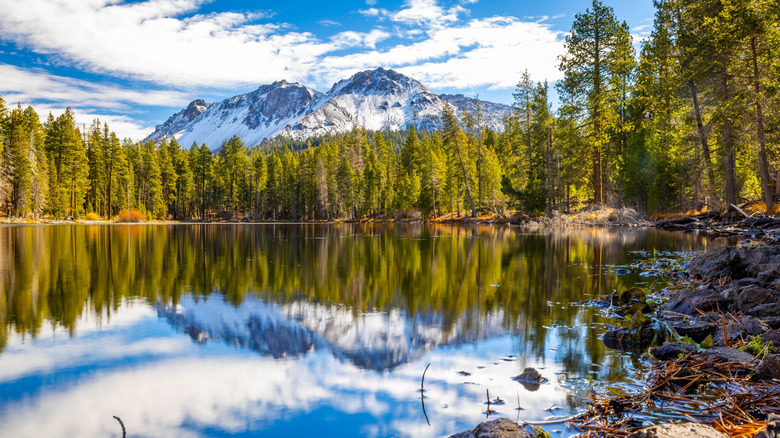
While Lassen Volcanic National Park and Kohm-Yah-Mah-Nee Visitor Center are open every day, other facilities are generally only open seasonally. This includes Highway 89, the road that runs through the park from the visitor center at the southwest entrance all the way up to Manzanita Lake at its northwest entrance. Climbing to a height of around 8,511 feet, the 30-mile Lassen Volcanic Scenic Highway is an easy way to see some of the park's popular features without too much effort — although its lack of guardrails, falling rocks, and switchbacks may be enough to make the stomachs of more anxious drivers churn. It's worth downloading the official self-guided audio tour to learn more about the park as you drive.
Hiking remains the best way to see evidence of volcanic activity up close, and there are more than 170 miles of trails in the park to explore. Despite its ominous name, the 3-mile Bumpass Hell Trail is a fairly easy walk leading to the park's largest hydrothermal area, where the sight of the bubbling pots and pools far outweighs the strong smell of sulphur. Not far from here is the more strenuous Lassen Peak Trail. Leading up to the world's largest plug dome volcano, expect a steep climb over rocky paths. Your effort will be rewarded with outstanding views and the chance to walk around the crater of one of only two volcanoes to have erupted in the contiguous U.S. since the late 1700s. Other places of geothermal interest include Sulphur Works, where a short walk will take you into a brightly colored landscape full of steaming vents, and Boiling Springs Lake, whose bubbling waters live up to its name.
Seasonal activities around Lassen Peak
While many activities focus on the geothermal areas, the lakes provide plenty of opportunities for fishing, swimming, and non-motorized boating like paddleboarding and kayaking in the warmer months. Manzanita Lake is easy to reach near the northwest entrance, and kayaks and canoes are available to hire from Lassen Lodging. The 2-mile Manzanita Lake Loop is a pleasant walk around the lake, especially at sunset, with views of Mount Lassen and an abundance of wildlife and birdlife to spot. The park is home to black bears, mountain lions, and the rare Sierra Nevada red fox. This is also where you'll find the biggest of the park's eight campgrounds, with 179 campsites and 20 cabins, all of which need to be reserved in advance. Backcountry camping is also allowed with a wilderness permit.
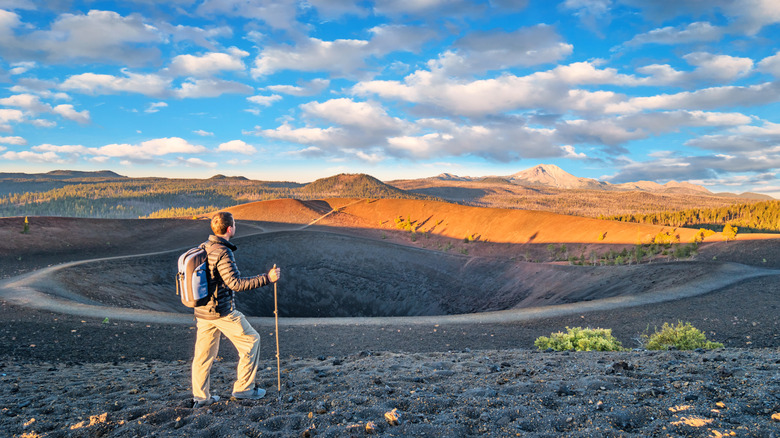
Over in the more remote northeast section of the park lies Butte Lake, with a campground and access to the Fantastic Lava Beds and Painted Dunes on the four-mile Cinder Cone Trail. As the pine-lined forest path gives way to the bare volcanic cone, be prepared for a steep climb on loose sandy terrain and zero shade. If you're visiting Lassen Volcanic National Park in winter, it frequently has up to around 30 feet of snow, and hiking boots get swapped for snowshoes. Cross-country skiing is popular, as is sledding in the southwest area. Unless you have your own RV, accommodation can be found just outside the park at Highlands Ranch Resort near Mill Creek.
As beautiful as Lassen is, its unpredictable hydrothermal nature means the National Park Service advice is just as important here as in Yellowstone. Dry, cracked areas may look safe to walk on but are actually thick crusts covering boiling water or mud. Same with hydrothermal water. It may look inviting, but its acidic properties can harm your skin and lungs. Always stay on the paths and boardwalks.