

One Of Europe's National Parks Offers Beautiful Coastlines, Forests, & Hiking
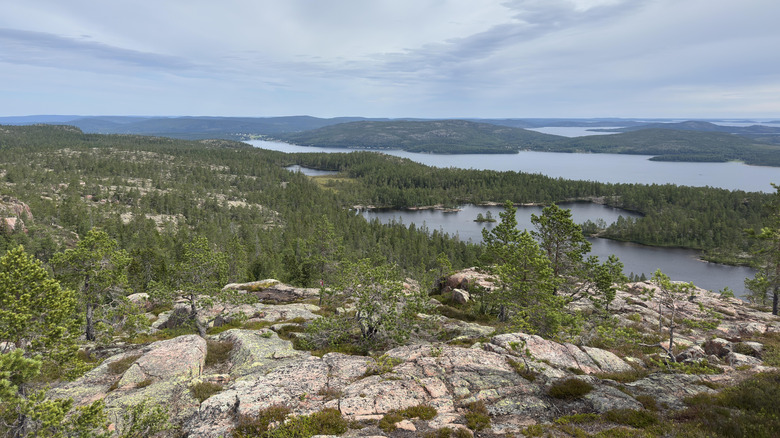
Covered in forests and lakes, and with a lengthy coastline fringed with archipelagos, Sweden is one of the most exciting destinations for adventure seekers and nature lovers. Freedom to roam rights, or Allemansrätten, make it even more attractive. Much of this wild and wonderful landscape sits happily protected and preserved within Sweden's 31 national parks, one of which is Skuleskogen National Park, and all of which are free to enter.
Located in Västernorrland county, Skuleskogen sits on the Gulf of Bothnia, around 310 miles north of the capital, Stockholm. The region lies within the High Coast, which is UNESCO-listed as it's a rare example of the Earth's crust lifting because glaciers no longer weigh it down. Over time, the land here has risen 935 feet, creating a beautiful coastline filled with hidden caves and deep ravines, while thousands of skerries –- rocky islets -– sit offshore. This glacial shift has left high, exposed bedrock terraces and steep hillsides, long since covered in ancient spruce forests. Streams trickle down the slopes, and a blanket of moss and exposed roots cover the forest floor.
The countryside here is just begging to be explored and possible thanks to several hiking trails running through the park. Milder weather and longer days (up to 19 hours of daylight in June) mean April to October is the best time to go. Like most national parks, Skuleskogen is busy in summer, and it may be more difficult to find space to park. However, travel writer Rick Steves encourages visitors to this part of Europe despite the crowds. Arriving by car is still the easiest option, but there are also buses fromÖrnsköldsvik and Härnösand, both of which are also served by trains from Stockholm.
Hiking in Skuleskogen National Park
For those prone to taking a wrong turn, you'll be pleased to know that the trail network in Skuleskogen is reassuringly well marked. The trail you want to take will determine which of the three entrances to the park you need. For maps or other information, the visitor center Naturum Höga Kusten is five miles away and is served by the No. 50 bus running between Härnösand and Örnsköldsvik.
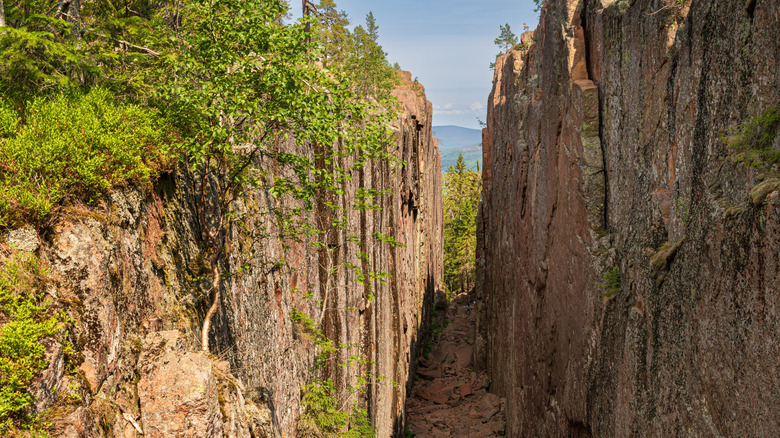
The 84-mile High Coast Trail, one of Sweden's 12 signature hiking trails, is divided into nine sections, one of which passes through Skuleskogen. The 4.6-mile section traverses the park between the north and south entrances and makes a challenging but rewarding morning hike. It includes a climb up Slåttdalsberget, the high mountain ridge giving superb views over the High Coast. It also passes Slåttdalsskrevan, the deep rock crevice that cuts the ridge in two. The 656-feet long, 23-feet wide, and 98-feet deep fissure is the park's most famous landmark, although walking through it is no longer recommended because of the danger of falling rocks.
There are other trails to tackle, from easy coastline walks to steeper forest hikes. The high viewpoints make it a pleasant place to watch the sunrise, and early mornings are the best time to spot moose and foxes, or enjoy listening to the dawn chorus. While summers may be mild, ranging from 59 to 68 degrees Fahrenheit, the weather can change quickly and exposure to coastal winds can heighten the chill factor. It's a good idea to chuck a waterproof coat and layers into your backpack, along with a supply of water and snacks.
Where to stay in and around Skuleskogen National Park
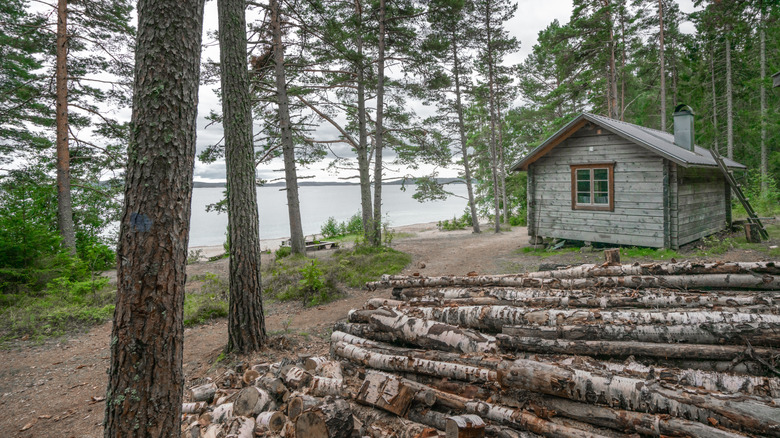
If you're planning to stay the night in Skuleskogen, there are several options depending on the time of year. Between May 1 and September 30, all camping is restricted to designated campsites. Thanks to the country's right to roam, outside of that period, you have more freedom to pitch your tent elsewhere, allowing common sense to prevail. There are also six cabins, open all year round, and best of all, the campsites and cabins are free — no permits or bookings required.
Braving winter in the park means following a few hacks to keep warm when camping, packing a cozy sleeping bag, and swapping your hiking boots for skis or snowshoes. The pine forests in the center of the park are particularly good for backcountry skiing, where the landscape transforms into a winter wilderness of frozen lakes and snow-laden trees. You can borrow skis and other equipment from Fritidsbanken in Örnsköldsvik.
Outside the park, you'll find accommodation in Docksta, only a few miles away, which is handy for reaching the west and south entrances. Docksta Hotell is a small, dog-friendly hotel, with the added bonus of an outdoor hot tub — a classic Swedish experience.
To stay closer to the north entrance, try Kajkanten, a B&B a 15-minute drive north away in Köpmanholmen. In a beautiful location right next to the sea, and ideal after tackling the High Coast Trail, the on-site restaurant means you won't need to walk any farther for your fish and chips. As well as comfortable rooms for hikers, there are 15 guest berths for those arriving by boat.