

There's Another Side Of Paris Many Tourists Often Overlook
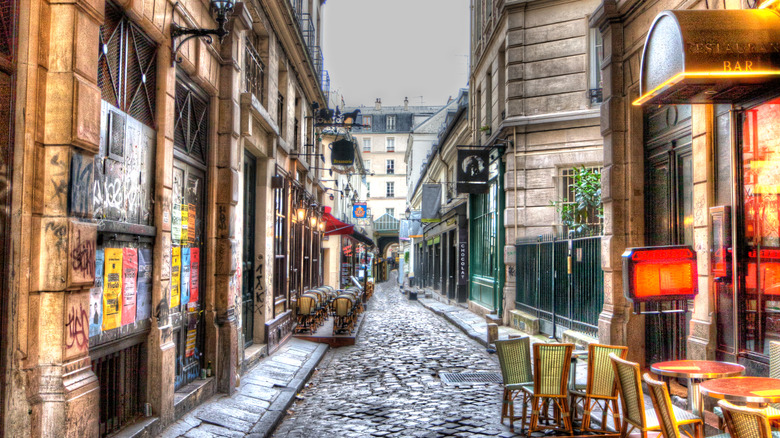
Paris' urban design reflects Parisians' longstanding penchant for assembling. Think leisurely chats along sidewalk dining spaces, picnics in city parks, or even protesting in the streets, which were made wider for this very reason. The city's sheltered, pedestrianized walkways are somewhat hidden venues for Parisians to go about their days in good company. Modern-day tourists may walk past these narrow corridors without even realizing it.
The French capital's covered passageways date back to the late 1700s and early 1800s. Then and now, Paris sees plenty of rain and traffic, so the passages kept people dry and made for quieter strolls between main roads. Cafés, shops, and newspaper stands lined these little nooks, as did posts for stagecoach horses. Locals, travelers, or anyone who wanted to enjoy the finer things in life could gather in these elegant walkways for respite from big city life. Some of the passageways fell by the wayside due to the major city changes initiated by the urban planner Baron Haussmann, but those that remain are not to be missed. Experience Paris like a Parisian and shop in these alleys or at a market nearby.
Each covered passageway in Paris is unique
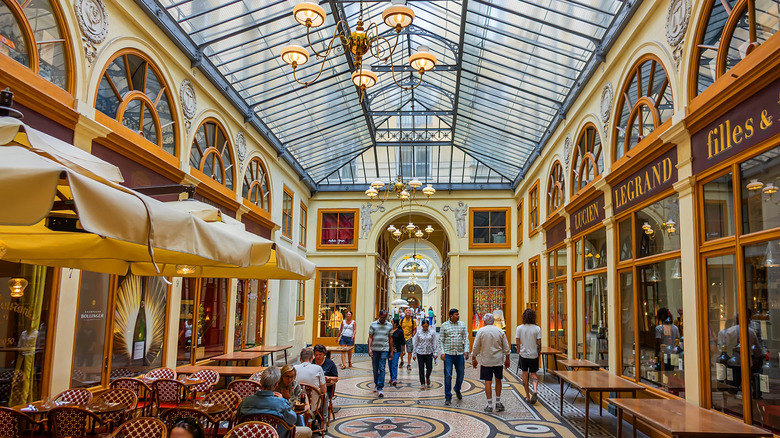
Paris' canopied passages retain their centuries-old purpose and appearances and feel straight out of an Old Hollywood film. While most still have historic lighting, vintage storefronts, and curved or pointed glass ceilings, other details vary. Floors range from checkered patterns to more intricate designs. Some passageways are lined with ornate, wood-paneled shops while others have elaborate reliefs along off-white stone walls. But along any of the remaining passageways, you might find bookstores, restaurants, cafés, and unique boutiques that offer more souvenirs than a simple Eiffel Tower trinket.
If you can only visit a few of Paris' covered passages, one should definitely be Galerie Vivienne near Jardin du Palais Royal. From its colorful mosaic floor and neo-classical building facade to its pointed iron and glass ceiling, opulence is everywhere you look in this 200-year-old hall. Be sure to stop at Librairie Jousseaume. As old as Galerie Vivienne, this bookstore also sells bookmarks, antiques, and postcards — just remember Rick Steves' advice about shopping etiquette in France.
Passage des Panoramas features an eclectic range of activities
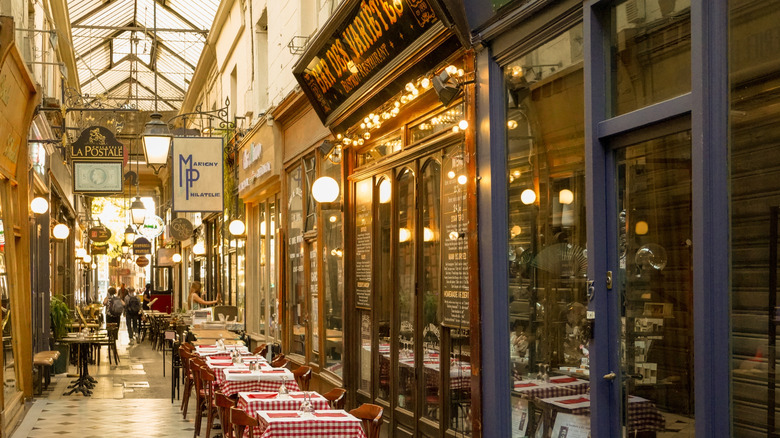
Passage des Panoramas near Palais Garnier is another well-known covered passage in the City of Light, and one of the oldest. American businessman William Thayer brought Passage des Panoramas to life in 1800, when boutiques and restaurants opened along the street. In the 21st century, aside from upscale restaurants such as Stern Ristorante and Astair, Passage des Panoramas is home to Le Vistemboire des Panoramas. This quirky, hole-in-the-wall museum has mismatched decor and is filled with art and storybook wonder. In alignment with the city's historic love of performing arts, check out Théâtre des Variétés here, too. If you can't see a show, it's still worth going inside as the interior layout rivals that of famous, centuries-old theaters elsewhere in Europe.
The best way to get around Paris is on foot, which is also the easiest way to seek out the city's covered passageways. Finding one feels like a secret discovery, even if you're actively looking for them. However, to avoid studying maps, book a guided walking tour of these little gems. Organizations such as Explore Paris offer tours of multiple covered passageways with guides who can teach you more about them along the way.