

One Of Europe's National Parks Is A Remote Gem For Scenic Outdoor Recreation
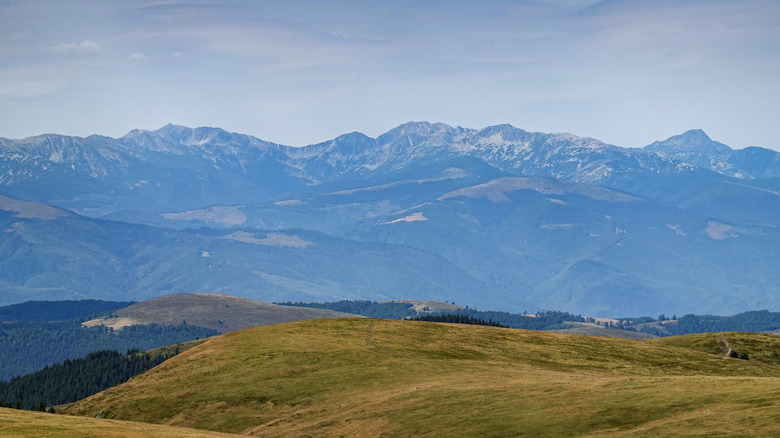
Europe is often underrated as a destination for outdoor adventure. While plenty of people head to Paris, London, or Rome for the history and culture, or Mykonos or the Costa del Sol for a beach getaway, Europe's wilder corners are often overlooked. But there are a surprising number of fabulous spots for nature lovers and rugged explorers to discover, from mountain peaks in England's Lake District and extinct volcanic craters in Iceland to primeval pine forests in Poland and dramatic coastlines in Norway.
If you are looking for something truly remote, secluded, and peaceful, you need to get a little further off the beaten track. Romania is still one of Europe's hidden gems, somewhere that hasn't been overrun by the tourist crowds, even though it is one of Europe's most affordable destinations. With its remote rural villages, dark forests, and craggy mountains, it is an ideal destination for outdoor adventurers, and it also boasts one of Europe's most attractive and least crowded wildernesses: Retezat National Park.
Hidden away in the Retezat Mountains in the southwest of the country, Retezat National Park is a protected area that spreads across nearly 100,000 acres of mountainous forests. The nearest major city is Timisoara, around three hours away by car, and the nearest airports are Sibiu International Airport (SBZ), 105 miles away, and Timișoara International Airport (TSR), around 135 miles away. Train travelers can reach nearby towns such as Ohaba de Sub Piatră and Petroșani, but will need onward transportation to the park entrances.
Soaring mountain peaks and sky-blue glacial lakes
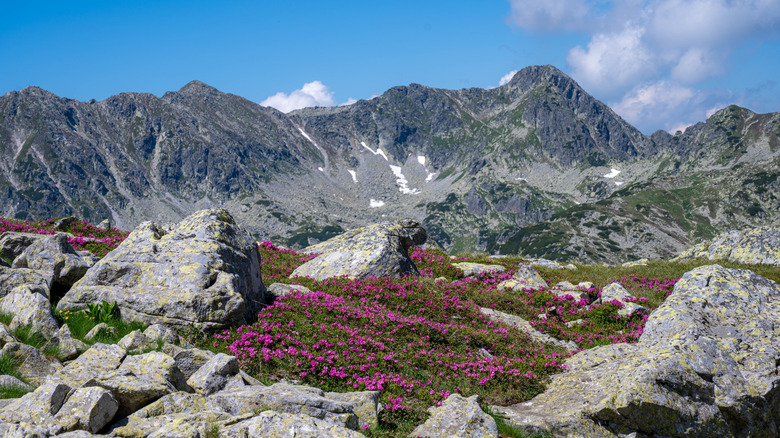
Retezat was Romania's first national park. It was established in 1935, and thanks to conservation efforts, it remains untouched by modern development. Boasting dozens of peaks over 6,500 feet and more than 80 glacial lakes, the rugged mountain landscape dominates, but with no cable cars or ski resorts, it has a very different vibe from other mountain attractions in Europe like Zermatt in Switzerland. Even on the more popular trails, the park can feel remarkably quiet compared with the major mountain destinations of the continent.
With so much untamed natural beauty, it is no surprise that Retezat National Park has some of the best hiking trails in Europe. A great place to start is Bucura Lake, one of the most popular camping spots in the park. From here, a loop route takes you up to Peleaga Peak, the highest peak in the park, as well as taking in the summits of Custura Bucurei, Curmătura Bucurei, and Bucura Peak. You'll discover the stunning, crystal-clear blue waters of the glacial lakes that give the Retezat its nickname "the Land with Blue Eyes," as well as some extraordinary panoramic mountain views. The trail is only 3.5 miles long, but it is extremely challenging with some serious elevation gain, and usually takes around four hours to complete.
If something that challenging doesn't appeal, the Sterminos Valley offers a more moderate route. Starting from the small town of Uricani, a roughly 7-mile out-and-back route leads you through some delightfully picturesque, flower-strewn countryside, taking in two spectacular waterfalls and some fascinating rock formations.
Discover fascinating wildlife and gorgeous flora
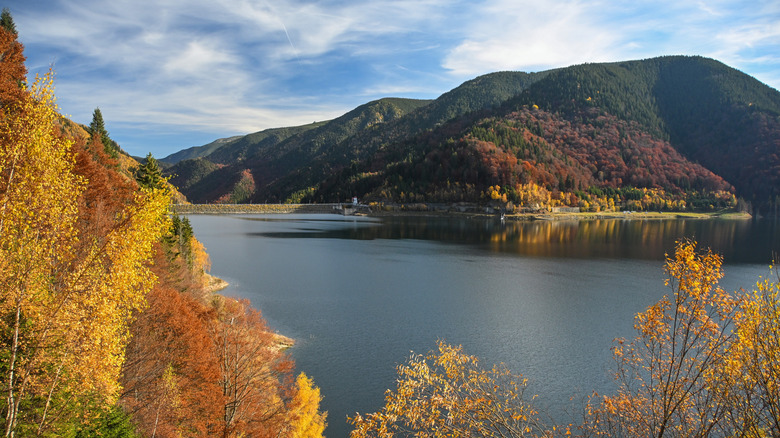
Retezat National Park is one of the most biodiverse regions in Romania, with more than a third of the country's flora found within the park's boundaries. The mountain slopes are covered in spruce, fir, beech, and pine. The high alpine meadows are filled with wildflowers, and the terrain is just as interesting, with limestone caves and sinkholes dotted throughout the deep gorges and terraced valleys.
It is also an excellent place in Romania to go wildlife watching. Chamois, red deer, and roe deer graze the meadows, while wild boar, bears, wolves, foxes, and lynx stick to the shade of the forests. Sharp-eyed visitors might even catch sight of otters playing in the streams and rivers that flow from the glacial lakes high in the mountains. There are also around 120 species of nesting birds that reside in the park, including golden eagles, eagle owls, crag martins, scarlet rosefinches, and horned larks.