

Oregon's Largest Artificial Lake Is An Outdoor Paradise With Scenic Mountains & A State Park
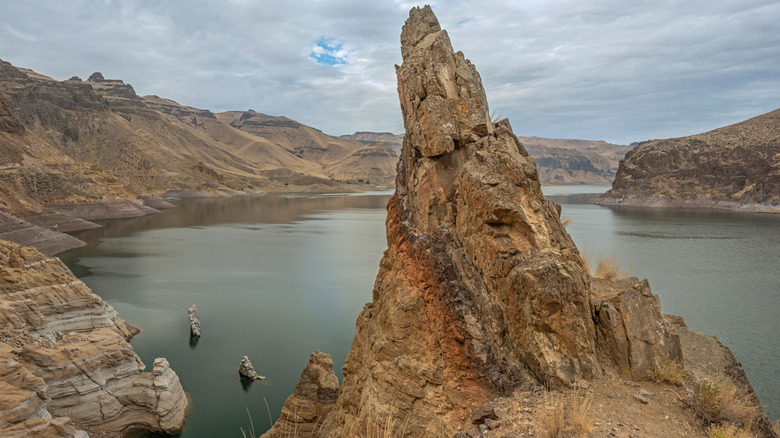
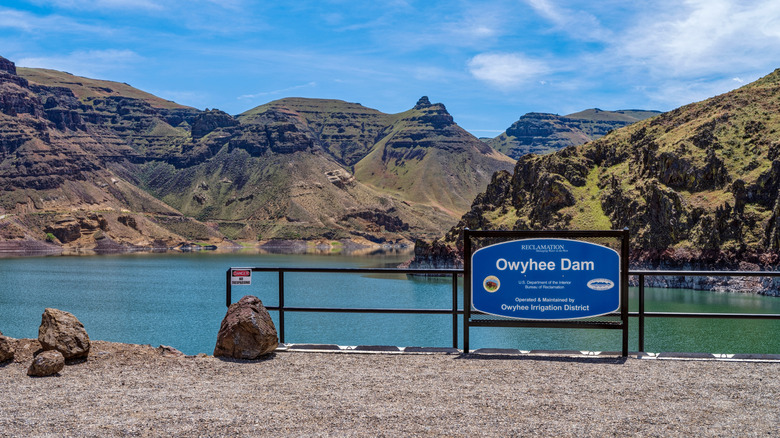
In the remote southeastern corner of Oregon, not far from the Idaho border, lies a 53-mile-long lake surrounded by colorful canyons and carpets of fresh green sagebrush, thriving in the high desert altitude. Space and solitude reign around Lake Owyhee (also known as Owyhee Reservoir), Oregon's longest lake. As wild as it looks, it is in fact a man-made reservoir. It was formed by the construction of Owyhee Dam on the Owyhee River, forging a path through Oregon, Idaho, and Nevada. Built primarily for irrigation in 1932, it began generating hydroelectric power in the 1980s and served as a kind of testing ground for engineering methods later used to build the Hoover Dam. The name Owyhee is an old way of spelling Hawaii and takes its name from Hawaiian fur trappers who disappeared while working for the North West Company in 1819.
Along the northeastern shores lies Lake Owyhee State Park, a jumping-off point for camping, picnicking, and all kinds of water activities. From here, you can wave goodbye to any signs of civilization and get down to the serious business of hiking and biking in the even more remote Owyhee Canyonlands, including Leslie Gulch and Succor Creek. The surrounding canyons may not be the deepest in the country, but they still have the power to make you feel incredibly small. A feeling enhanced by the rising or setting sun casting monumental shadows, and feeding your curiosity to explore further.
The only paved road into the state park is Owyhee Lake Road, coming from the small town of Adrian, 25 miles away. To reach the more remote shores, you'll need a high-clearance vehicle to tackle the rough dirt tracks, some of which are impassable after heavy rain. Boise, Idaho, is around 75 miles away and has the nearest commercial airport.
Activities in and around Lake Owyhee State Park
You can't visit a lake without spending some time on the water, especially at Lake Owyhee where the best views of the canyonlands can only be seen from a boat. In Lake Owyhee State Park, several boat ramps are at your disposal, and you can take your pick of activities from canoeing, kayaking, paddleboarding, and swimming. The lake is also popular with anglers who come for the largemouth bass, crappie, and catfish. For a relaxing soak in warmer water, head through the canyons to Oregon's secluded hot springs on the Owyhee River.
There are two campgrounds in the park that sit facing each other across a small inlet. McCormack Campground is seasonal and the larger of the two, with 38 campsites that can be reserved up to six months in advance. Indian Creek Campground has 22 sites and two cabins. Open year-round, you'll need to reserve in the summer months, but it's first come, first served out of season. Take everything you need in with you, as there is no longer a park store, although firewood is still sold seasonally.
Day trippers should visit the Gordon Gulch Day-use Area, where there are several picnic tables and a boat ramp. Being so remote, don't expect any lifeguards on duty if you go for a swim. With no visitor center in the park, you'll need to head up to the 417-foot dam, where there's a small information center featuring an exhibit about life in the Owyhee River Valley through the years. Day-use parking permits cost $10 for in-state visitors and $12 for out-of-state visitors.
Exploring Owyhee Canyonlands
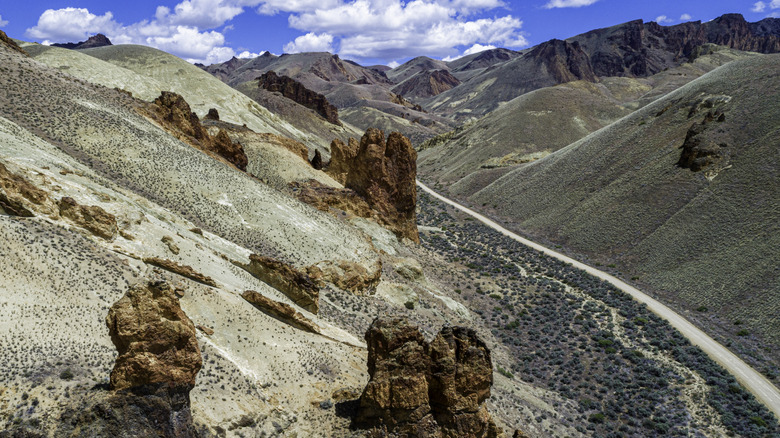
A lack of human presence usually means the animals feel right at home, and Lake Owyhee is no different. The high elevation of around 2,670 feet, together with the rocky landscape, provides a welcoming habitat for California bighorn sheep and pronghorn antelope, which you can sometimes spot along the canyon walls. Birds also thrive in this environment, and while golden eagles soar above the canyon, chukars, quail, and water birds make the most of the thick undergrowth and close proximity to water.
You stand a better chance of spotting wildlife if you head out on the trails. The further out the better. To enjoy the unique rock formations at the same time, the Leslie Gulch Wilderness Area has it all — except cell service. Only accessed by dirt tracks, it's not too far south of the park as the crow flies but takes around two hours nevertheless. Once there, take the picturesque Juniper Gulch Trail. While only 1.6 miles long, the trail climbs between steep rocky cliffs and hillsides, which in early summer, are covered in the colorful tones of Indian paintbrush and lupine. The sight of Honeymoon Rock, a stunning orange-hued amphitheatre scattered with hoodoos, awaits at the end.
Equally as remote but further east is Succor Creek State Natural Area. While there is no established trail network here, it's a haven for rockhounds keen to get their hands on a few pieces of thunderegg, jasper, and agate. You can also walk a section of the Oregon Desert Trail to see why Oregon is one of the best states for hiking. It covers 750 miles of the wild and wonderful Beaver State from Lake Owyhee in the east to Steens Mountain in the west, where wild mustangs run free.