
This Remote National Park Is One Of North America's Least Visited Gems For Outdoor Adventure
The problem with visiting North America's national parks these days is that they're full of people who've had exactly the same idea. While the sights are there for everyone to see, when you have to battle with crowds or stand in a line to see them, it kind of takes away from the pleasure of the moment. Fortunately, for those who are happy to travel a little further into the wilderness, there are still many national parks that have managed to stay off the radar. Granted, many are in Canada, but what better country to experience such a variety of landscapes on such a grand scale?
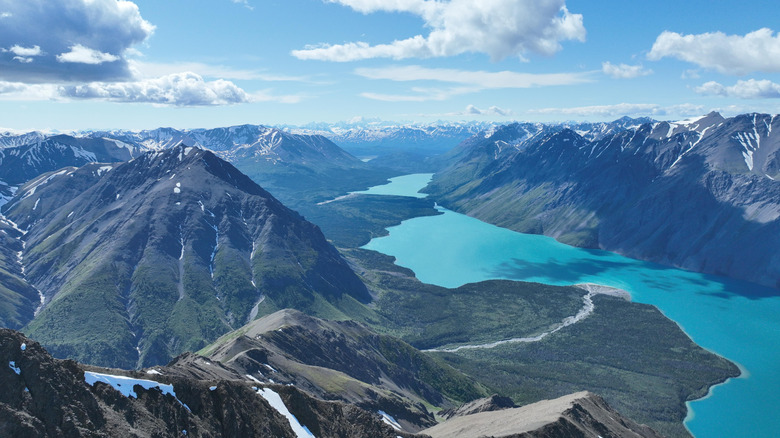
In southwestern Yukon, on the border with Alaska, lies Kluane National Park and Reserve, its 8,500 square miles full of mountains, glaciers, lakes, rivers, and boreal forest. Despite its massive size, much like the lesser-visited Pukaskwa National Park, limited road access into the depth of the park's interior means the majority of the landscape can only be reached on foot. Hence the main reason Kluane attracts fewer than 50,000 visitors annually, compared to over four million visitors to Banff National Park.
The park is open year-round, but the visitor centers and other facilities are only open seasonally from mid-May to mid-September. With the trails free of snow, summer is the best season for hiking, mountain biking, camping, and paddling, and despite its remoteness, getting there is fairly straightforward. The Alaska Highway skirts the eastern side of the park, and if flying into Whitehorse, it's a two hour drive from there to Haines Junction, the main gateway town. Entry is free, but permits are required and fees apply for hiking, fishing, camping, and mountaineering.
Viewing the landscapes of Kluane National Park and Reserve
More than 80% of Kluane National Park and Reserve is covered by mountains and ice. Seventeen of Canada's 20 tallest mountains are found here, including Mount Logan, Canada's highest at 19,545 feet. Outside of the North and South Poles, it's also home to the world's biggest ice fields, which are an incredible 3,280 feet thick in places. This outstanding glacial landscape has earned it UNESCO World Heritage status, together with the Wrangell-St. Elias/Glacier Bay/Tatshenshini-Alsek complex. With much of Kluane's interior inaccessible by road, flightseeing is one way to appreciate the views. Rocking Star Adventures offers a choice of flights that get close to the peaks and glaciers, as well as the chance to see icebergs floating in the incredibly blue waters.
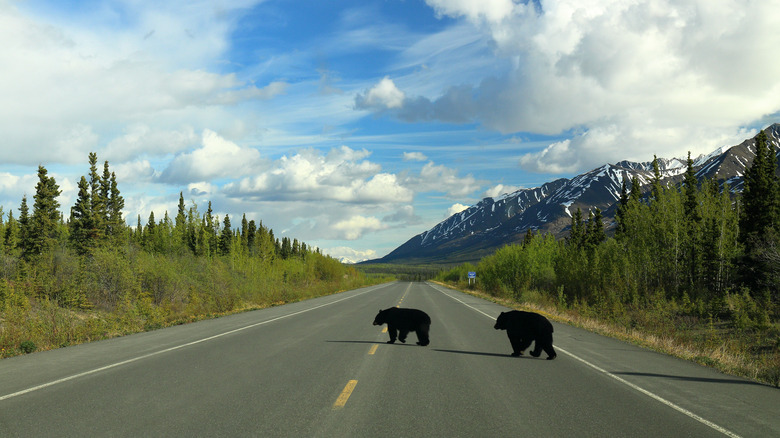
From the high alpine landscape toward the glacial valleys and boreal forest, Dall sheep, mountain goats, caribou, and both black and grizzly bears roam the park – here's how to tell the difference between the two – while bald and golden eagles soar overhead. Learn more about the land and its history and wildlife on a tour with Yukon Roots Adventure Company. Their Dakwäkäda sightseeing tour includes transport from Whitehorse and a visit to Da Kų Cultural Centre in Haines Junction. The center contains exhibits and artworks expressing the culture and traditions of the Champagne and Aishihik First Nations, whose traditional territories cover much of this region.
More exhibits and artifacts are on display at the Haines Junction Visitor Center, located inside the Da Kų Cultural Centre, which is worth popping into even if it's just for an update on trail access or weather conditions. The Thechàl Dhâl' Visitor Centre, about an hour's drive north on the Alaska Highway, has a viewing deck where you can scan the mountains for grizzlies and Dall sheep, and get some stunning photos at the same time.
Outdoor adventures in Kluane National Park and Reserve
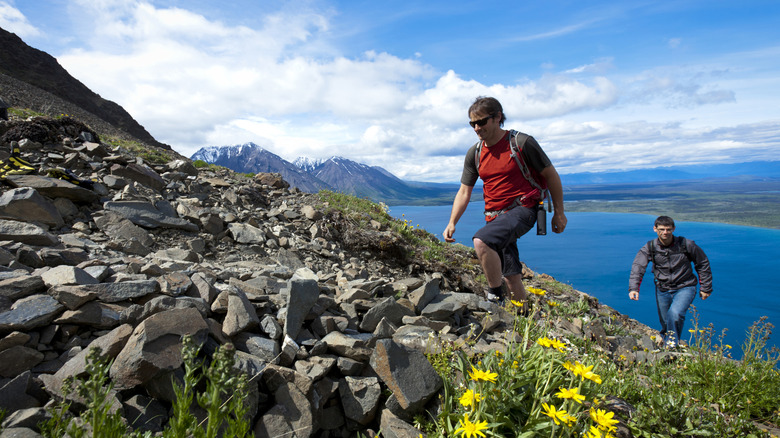
You don't need to be an experienced mountaineer to visit Kluane National Park and Reserve. Some of the trails are surprisingly accessible, many of which set off from the stunning Kathleen Lake, where there's a parking lot and picnic area. The Kokanee Trail is an easy 0.6-mile wheelchair-accessible boardwalk trail that follows the shoreline and has clear views of the mountains. The more difficult 8.3-mile out-and-back King's Throne Summit Trail follows an old mining road before climbing through forest and along rocky paths to a picturesque plateau known as the King's Throne. The steep climb is worth every step for the views over the surrounding peaks and Kathleen Lake sparkling below, although sturdy shoes and trekking poles are recommended. The trails aren't always well indicated, so if navigation isn't your strong point, opt for a guided trip with Yukon Guided Adventures.
Kathleen Lake is ideal for boating, kayaking, and canoeing, with a boat ramp available for easier access. More experienced paddlers looking for bigger thrills should head to the Alsek River and its Class III-IV rapids. A stay at Kathleen Lake Campground is a great opportunity to make the most of the clear night skies and a chance to see the Northern Lights. Note that bears frequently pass through this area, so brush up on your bear safety skills and make sure all food is stored in the bear-proof lockers provided. Here are some other unwritten rules American visitors should know before visiting Canada.
More accommodation can be found at Mount Logan Ecolodge near the visitor center, which has a choice of cozy rooms and cabins. Open year-round, in winter, they organize activities like snowshoeing, ice fishing, and dog sledding. Haines Junction is also where you'll need to stock up on food and supplies, as there are no restaurants or shops inside the park.