

Flight Attendants Immediately Notice This Type Of Passenger Before Takeoff
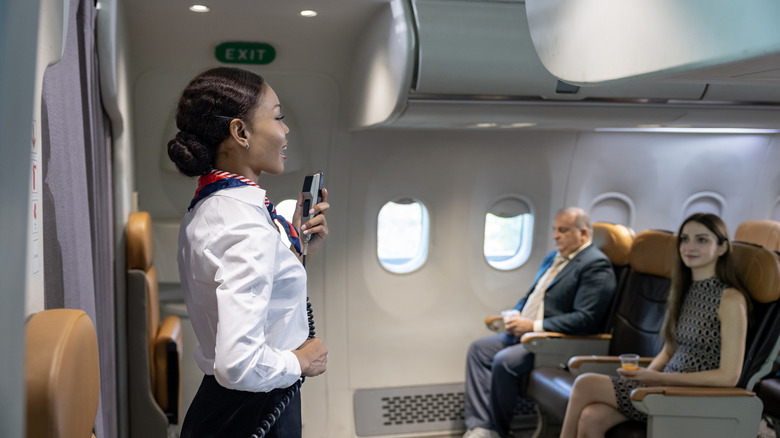
If you're the type of passenger who prefers to zone out the minute you find your assigned seat on the airplane, then you're certainly not alone. Flying is a wonderful way to get from one place to another in the fastest possible amount of time, but it can also be a stressful experience. Navigating crowded airports, waiting in long lines at security, and packing yourself into an overly full plane can leave even the most responsible traveler feeling overwhelmed. Your flight attendants totally understand that things can feel a bit uncomfortable, but they still notice the passengers who don't pay attention to the safety demonstration before take off.
For frequent flyers, the inflight safety demo can start to seem extremely redundant. You may even think that the basic operation of a seatbelt and the location of emergency exits are common sense. While there may be some truth to that, there could also be information in the safety demo that is specific to the type of aircraft you're traveling on. Additionally, evidence shows that in an emergency, even frequent flyers can forget basic safety procedures, so refreshing that information before each flight could save your life.
Passengers' comfort is important to flight attendants, but their most critical job is ensuring the safety of every single passenger on board the aircraft. The safety demo that they perform before each flight helps make sure that everyone is prepared in the unlikely event of an emergency. From their vantage points in the aisle of the aircraft, crew members can immediately spot who isn't paying attention and they take note.
Flight attendants are always watching you
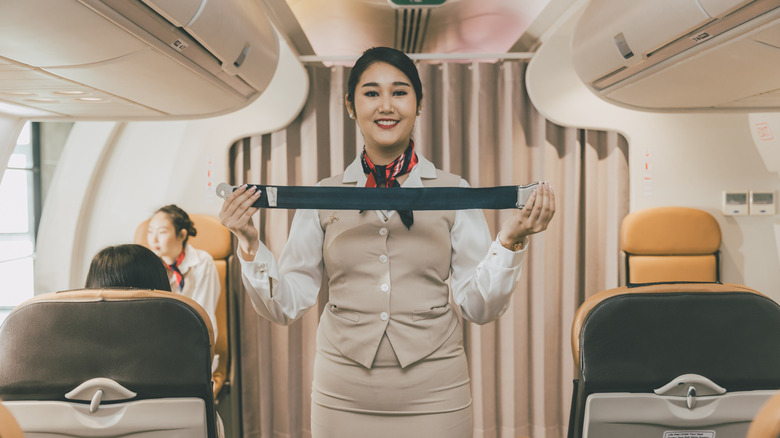
Flight attendants always pay attention to crucial information throughout each and every flight. While passengers are boarding, they are looking for suspicious behavior and simultaneously making note of passengers who might be able to help in an emergency. They notice certain types of passengers, like nervous fliers and people who need extra assistance. They also immediately notice the people who aren't paying attention to the safety demo.
From 2015 through 2021, I worked as a flight attendant in the United States. I would work between two and four different flights on most days. Hundreds of passengers stepped on board the aircraft each day, but only a handful of them would actually watch and listen when my colleagues and I would perform the safety demo before takeoff. While standing in the aisle, I could see the faces of every single passenger in my section, and almost none of them were watching as we pointed out emergency exits or demonstrated the operation of seatbelts, oxygen masks, and personal floatation devices.
The vast majority of passengers stared at their phones with their headphones in throughout the safety demo. Some had already fallen asleep. Others would be talking amongst themselves or sorting through their belongings. While I understood that many passengers had heard some of the information we were presenting many times before, I always felt curious as to why so few seemed to care about the important safety information. I definitely noticed the passengers who were zoned out. Those who refused to pause their conversations came across as down right rude.
The importance of paying attention during the safety demo
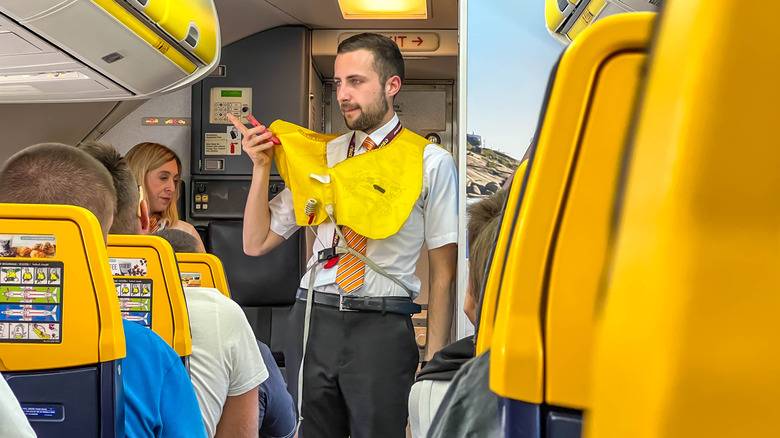
Flight attendants are extensively trained to handle all types of in-flight emergencies. While rare, aviation accidents can and do occur. Crew members are taught how to safely evacuate every single passenger from the aircraft in 90 seconds. People can freeze up or panic in emergency situations. Although the operation of a seatbelt may seem like common sense, aircraft seatbelts work slightly differently than the ones in your car. If you're panicking during an evacuation and unable to release your seatbelt quickly and effectively, it could put you in danger. It could also cause you to block the path of the other people in your row. That's exactly why crew members demonstrate how to use it before each and every flight.
The same reasoning applies for every other piece of information that is mentioned in the safety demo. You are told over and over again to secure your own oxygen mask before assisting other passengers, because if the cabin pressure drops you may only have 15 seconds until you lose consciousness. Seconds count during an aviation emergency, and the safety demo is designed to make sure important information is fresh on your mind so that you're more likely to know what to do if a dangerous situation occurs. You don't want to be a passenger who puts everyone in danger by ignoring important emergency procedures.
I have taken hundreds of flights throughout my lifetime, but I still make sure to pay close attention during every single safety demo. Most of the information is second nature at this point, but there are subtle differences between aircraft types. As an example, the emergency exits might not be in the same place that you are used to. Even if you think you know exactly what crew members are going to say, it's worth sparing a few moments of your attention. It's the polite thing to do, but it also has the potential to save your life.