

Flight Attendants Always Pay Attention To These Types Of Passengers During Boarding
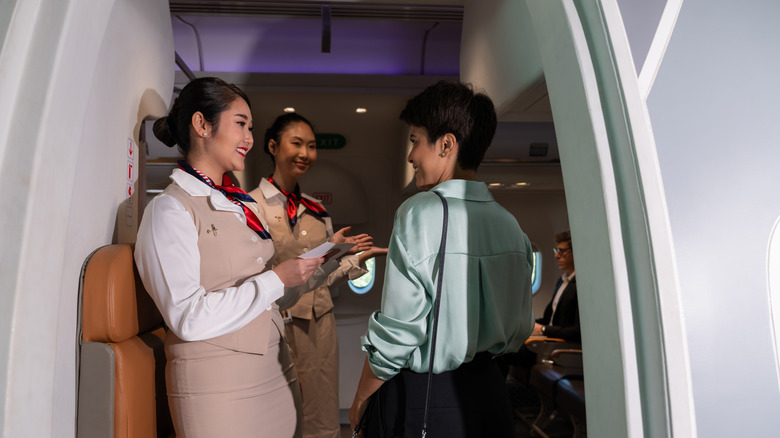
The moment you step from the jet bridge onto a commercial airplane, you're immediately being watched. Flight attendants are likely going to greet you with a big smile, but underneath that calm and friendly exterior, they're quietly noticing certain things about you. Although flight attendants are tasked with making sure passengers are comfortable, their most important job is ensuring the safety of everyone on board. In order to do so, it's important that they pay special attention to passengers who could potentially require extra assistance at any point during the flight.
Flying is generally considered a safe and effective way to travel. Accidents and emergencies are rare, but they can and do still occur. Luckily, flight attendants go through extensive training to be able to handle a variety of situations that can happen in the air. They're trained to respond if you have a medical emergency on your flight and they're able comfort nervous fliers and help them overcome flying anxiety. They've been drilled on emergency procedures and are even trained on how to evacuate every single passenger from the aircraft in 90 seconds or less. Crew members know that passengers' lives could depend on them, which is exactly why they always pay attention to passengers who may need their help.
Requiring extra assistance from crew members isn't anything to be ashamed of (and it's just one of many things flight attendants notice about you when you board a plane). It should also be noted that an emergency situation isn't the only time it may be important for a flight attendant to help someone out. Crew members are always looking for opportunities to lend a helping hand, so they notice passengers traveling with small children, people traveling with service animals, elderly people, and people with disabilities just in case they need extra assistance during boarding, inflight, while deplaning, or in an emergency.
Flight attendants immediately notice passengers who may need extra assistance
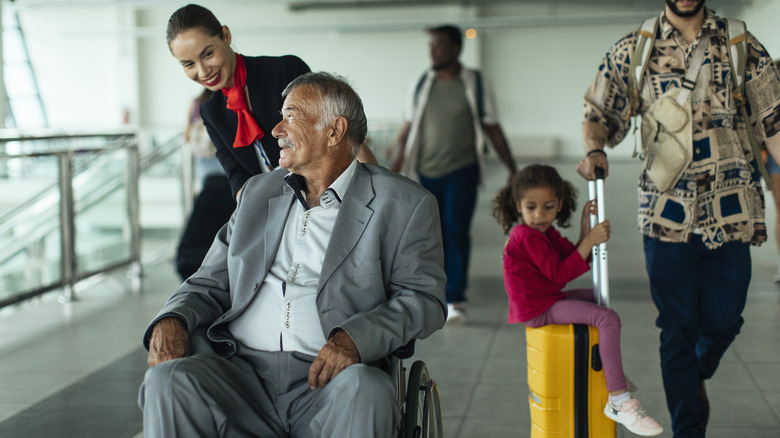
Although flying has made travel easier, that doesn't mean it's always a stress-free (or pleasant) experience. As a former flight attendant who worked in the aviation industry for around seven years, I've noticed that everyone needs a little extra assistance on occasion. For me, trying to navigate through the crowded aisle and lift my heavy carry-on into the overhead bin is a challenge sometimes. Just imagine trying to do that while wrangling an enthusiastic toddler, pushing an infant in a stroller, walking a service animal, or using a mobility assistance device. Crew members always notice passengers who are boarding with children, elderly travelers, and people with disabilities right away because those passengers may be more likely to require assistance during boarding and after the plane takes off.
Flight attendants are always paying attention during boarding in case passengers need a little extra support. Some may immediately offer to help as soon as they notice, and others may wait to see if the passenger asks for assistance as many people prefer to handle things independently. Either way, your flight crew members are watching and they're ready if anyone needs a helping hand. Never hesitate to ask a crew member if you need extra support or if you have a non-visible disability.
Flight attendants are trained to ensure every passenger's safety
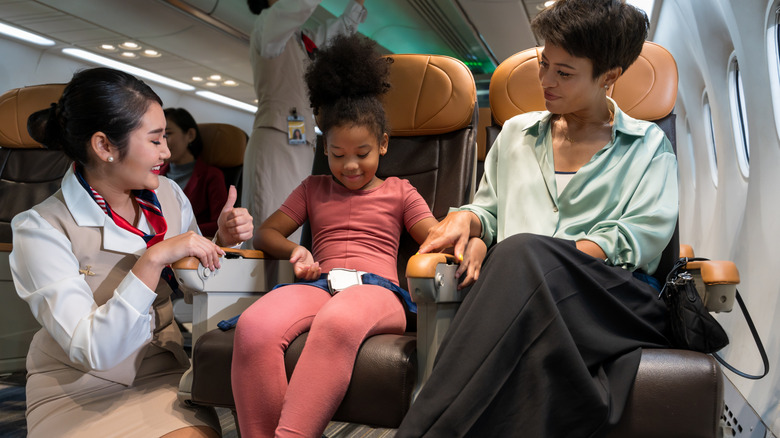
Although emergency situations on commercial flights are rare, crew members are always ready for them. They are trained to be on high alert at all times, and are always on the lookout for dangerous situations, including dangerous situations that have nothing to do with an aircraft emergency.
If a passenger with limited mobility has to get up and use the bathroom during a flight, turbulence could make that situation very dangerous for them. Similarly, if a single mom has to use the bathroom, it could be dangerous for her to leave her small children unattended. If flight attendants noticed those passengers during boarding, they'll be ready to jump in and help. They may offer a supportive arm to an elderly passenger on their way to the restroom, or babysit kids for a few moments. I once even had the privilege of holding an adorable puppy who was training to be a service animal while a passenger took care of their needs.
In the event of a serious emergency that requires the airplane to be evacuated, it's crucial that flight attendants are aware of passengers that may require extra assistance. During boarding, crew members may approach those types of passengers and ask what they can do to best assist them in the event of an emergency. For someone with limited mobility, that may mean pairing them with another passenger to help them towards the exit. For someone with impaired vision, it might mean telling them how many rows are between them and the nearest exit. Flight attendants know that assisting these types of passengers has the potential to save lives, so they're always paying attention to them during boarding.