
Hiking In One Of North America's Least Visited National Parks Isn't For The Faint Of Heart
Visitor numbers vary wildly across North American national parks. More popular parks like Zion and the Grand Canyon receive millions of visitors every year, while fewer than 10,000 visit Kobuk Valley National Park, a northern Alaska park where Arctic sand dunes meet polar days and nights. But even Kobuk is a crowded mess compared to Canada's Tuktut Nogait National Park, a difficult and far-flung destination that can often count annual visitors on one or two hands. Each year over the past decade, only 0 to 15 visitors have made the trek to the remote park, which sits at the northern edge of Canada's Northwest Territories, 106 miles north of the Arctic Circle.
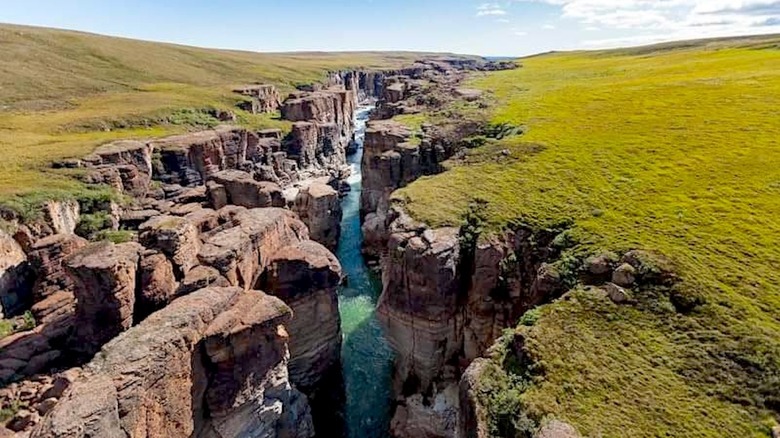
The name Tuktut Nogait means "young caribou" in the Indigenous Inuvialuktun language, reflecting one of the main reasons for the park's establishment: to protect critical habitat for the Bluenose West caribou. It encompasses 7,293 square miles (18,890 square kilometers) of rolling tundra, crystal-clear lakes, and the Roscoe, Brock, and Hornaday Rivers, which in some areas wind through the gorges as deep as 500 feet. Besides caribou, the park is home to a vast array of wildlife, including muskoxen, grizzly bears, wolves, red foxes, wolverines, arctic ground squirrels, collared lemmings, and many migratory and resident birds.
Indigenous tribes — presently, the Inuvialuit and Sahtúgot'įne, and in the past, the Thule and Copper Inuit — have called this region home for thousands of years, hunting caribou on the open tundra and harvesting Arctic char from the rivers. More than 400 archaeological sites scattered across the park testify to these peoples' longstanding relationship with the land, with at least one site dating back 3,000 years. Today, peoples of the Inuvialuit Settlement Region and the Sahtú Settlement Area help oversee the park, ensuring the preservation of their traditions along with the precious lands, the caribou, and other valuable wildlife.
Hiking and other activities in Tuktut Nogait National Park
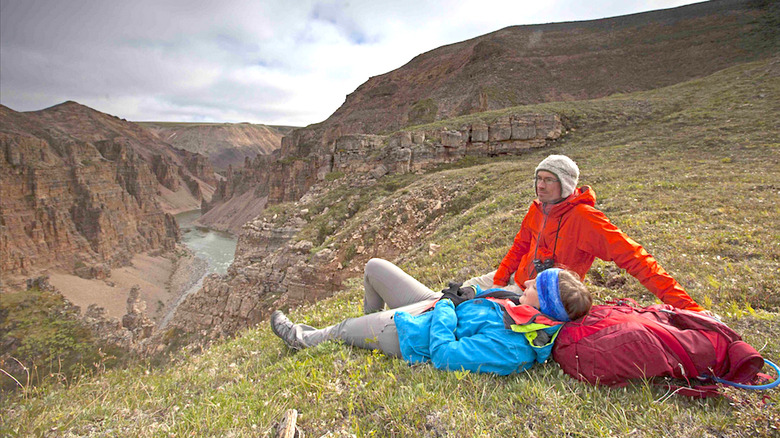
Exploring Tuktut Nogait National Park is definitely not for the faint of heart. Visitors must be experienced in remote wilderness settings, exceptionally fit, and knowledgeable in first aid, as no services of any kind are available nearby. The main ways to experience the park are by hiking and backpacking through its rugged landscapes or paddling the rivers and their tributaries. Keep in mind that there are no established trails in the park, so hikers must navigate using natural landmarks like rivers, valleys, lakes, and hills.
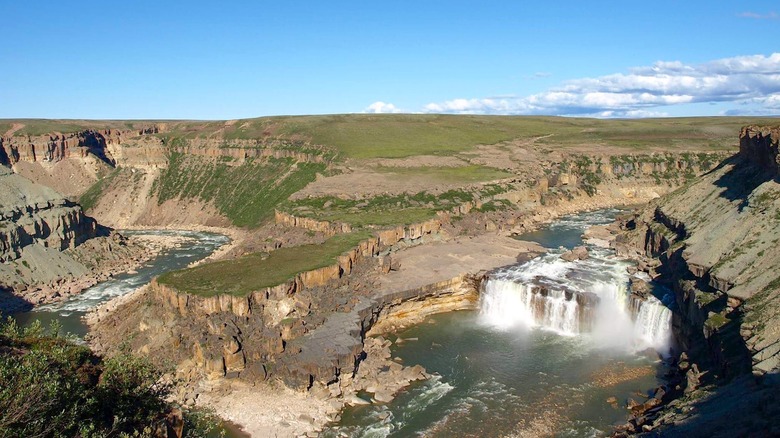
Prime areas for hiking and backpacking trips are the Brock and Hornaday River canyons. Landscape photographers would do well to focus on the lower Hornaday, where the striking 75-foot-tall La Roncière falls are located. On multi-day trips, backpackers can camp on any hard surface as long as it's not an archaeological site. All cooking must be done via camp stoves, as campfires are not allowed. In addition, it's especially important to employ the Leave No Trace principles to protect the fragile environment, which means avoiding simple, harmful mistakes like leaving food scraps or toilet paper behind at your campsite.
As you move through the park, expect to have amazing wildlife encounters without even trying. You're highly likely to see caribou, which number in the tens of thousands in the park, in addition to other large mammals like bears and wolves. Steven Evans, a contributor to Backpacking Light, wrote about his experience hiking and paddling in the park: "It seems that the animals do not fear humans here at all. There was wildlife galore, every day in the valley had Caribou around me, a wolf in camp, and a grizzly at the side of the river while I paddled (very quickly) by. He came to the rivers edge to investigate, and lost interest and trotted up the river bank."
Planning your visit to the remote park
To ensure optimal conditions for hiking, backpacking, river trips, and photography, late June to early August is the best time to visit Tuktut Nogait National Park. This is when the midnight sun is shining and average temperatures range from 40 to 60 degrees Fahrenheit (5 to 15 degrees Celsius). It's also when the tundra is speckled with Arctic poppies and purple saxifrages and the caribou are migrating. By late August, temperatures drop to freezing and heavy fog can roll in, making backcountry travel more difficult.
Reaching the park is not for the faint of heart, either — one needs patience, persistence, and an ability to chat up the locals. Flights are available from other parts of Canada to Inuvik, a small Northwest Territories community with a population of around 3,600 people. Here, visitors must register with the Parks Canada office and attend a park orientation session. From Inuvik, there are a few different ways to proceed to the park. One is by charter floatplane to lakes within the park, such as Uyarsivik Lake, Cache Lake, Brock Headwater Lakes, Hornaday Lake, and others. Another option is to fly via Aklak Air from Inuvik to the town closest to the park, Paulatuk.
Paulatuk is an Inuvialuit hamlet on the Arctic coast, located 25 miles (40 kilometers) west of the park boundary. With a small hotel, a grocery store, and an ATM, it's the last bastion of civilization before entering the vast wilderness. It's also a convenient place to swap stories with the Inuvialuit locals — among them, artists known for their soapstone, caribou antler, and muskox horn carvings along with fishing and hunting guides. These local guides can assist with the final leg of the journey to the park, sometimes through boat shuttle services to the park's northwest coast. If you love exploring remote parks, you should also consider Ivvavik National Park, another Canadian national park with incredible Arctic hiking experiences.