

Forget Yellowstone National Park, This Underrated Destination Is Full Of Wild Bison
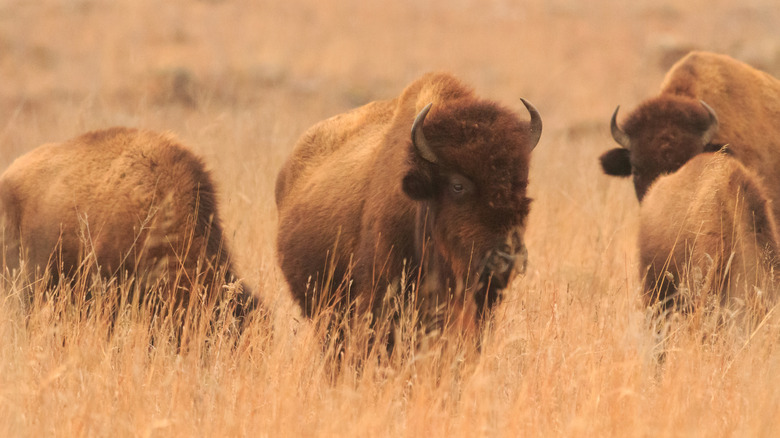
There are few sights more memorable than seeing a herd of bison roaming free, especially in the outstanding backdrop of one of North America's national parks and preserves. While Yellowstone National Park or one of these other best parks to see beautiful wild bison may be the first place you think of to see the country's largest land mammal, there's another lesser-known destination that should be on your radar. Tallgrass Prairie National Preserve may be the only unit in the National Park System dedicated to protecting the tallgrass prairie ecosystem, but there's much more to the preserve than just grass.
Located halfway between Wichita and Topeka in the rolling grasslands of the Flint Hills in Kansas, the preserve was established in 1996. It's one of the last remaining places where North America's once-vast tallgrass prairie still survives, of which less than 4% remains today. The nearly 11,000-acre preserve provides an essential habitat for many species of insects, birds, and other wildlife as well as more than 500 species of plants.
The 13 bison that were introduced from Wind Cave National Park in South Dakota in 2009, in an effort to protect their unique genetic lineage, have since grown to a herd of around 85. They've made themselves at home in the tall prairie grasses, which make up roughly 90% of their diet. The bison also play a role in the protection of the wild grass habitat by spreading seeds and encouraging new growth through grazing. If you're planning an idyllic road trip on one of Kansas's scenic byways, the nearest town to Tallgrass is Strong City, just five minutes away. The closest major airport is Wichita Dwight D. Eisenhower National Airport (ICT), around 85 miles away, but you'll need a car from there, as there's no public transport to the preserve.
Where to spot the wild bison of Tallgrass Prairie National Preserve
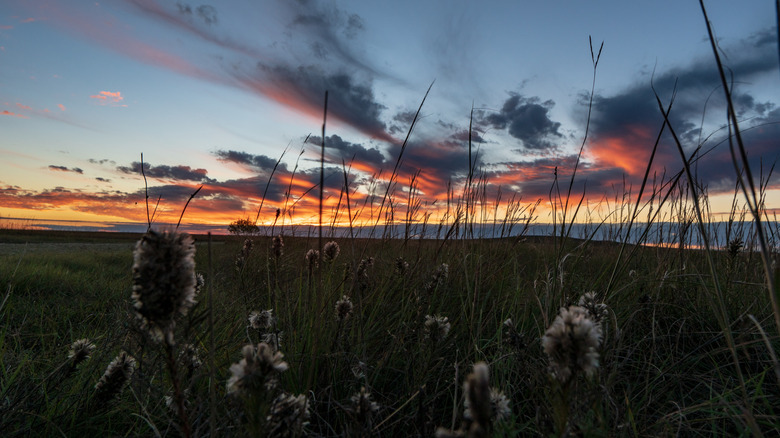
Although the bison roam free in Tallgrass, they are usually found grazing within Windmill Pasture and West Traps Pasture, both in the heart of the preserve. Being wild animals, sightings are never guaranteed, but your best chance of seeing them is out on the trails. Make your first stop the visitor center, where you can pick up a trail guide, find more information on recent sightings, and watch a 10-minute orientation film.
Over 40 miles of trails wind their way through the preserve, but for the best chance of seeing the bison, take the Scenic Overlook Trail. This 6.5-mile out-and-back trail passes directly through Windmill Pasture and after a fairly flat start, rises to give you clear views over the Flint Hills. If the bison are blocking the route, you can continue along the Davis Trail to turn it into a loop whilst not risking getting too close to the herd.
You might also get lucky on some of the shorter trails leading off from the visitor center, such as the 1.9-mile Southwind Nature Trail, or the longer Prairie Grass and Gas House Trails. They may not get you as close, but they will put you amongst the prairie's unique grasses, including big and little bluestem, Indiangrass, and switchgrass. These grasses can reach heights of up to 7 feet in late summer/early fall, but you'll still have sweeping views across the prairie. To further improve your chances of seeing the bison, head out early morning or late afternoon when temperatures are cooler, and don't forget to take your binoculars. If you do encounter a bison on your outdoor adventure, be sure to keep a distance of at least 100 feet.
Things to see beyond the bison at Tallgrass Prairie National Preserve
Bison aren't the only residents of Tallgrass. You may also see white tailed deer, bobcats, and coyotes. Your binoculars will come in handy for spotting some of the 200 odd bird species, including the greater prairie chicken. When you're out on the trails, be sure to keep your eyes peeled for copperheads and prairie massasauga rattlesnakes, especially in the summer.
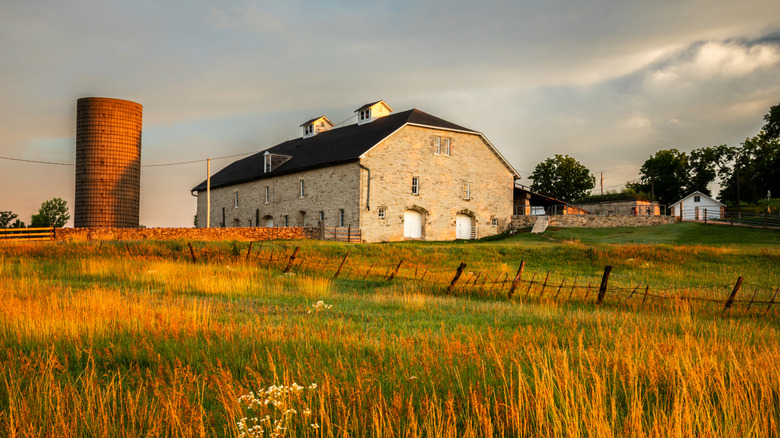
For those interested in history, the Spring Hill Ranch National Historic Landmark is worth a visit. It's one of the best-preserved cattle ranches in the Flint Hills, dating back to the 19th century. Composed of a number of beautifully restored limestone buildings, including the ranch house, barn, and schoolhouse, they give you a glimpse into what prairie life used to be like down on the range. Ranger-guided tours take place throughout the year, and dogs are welcome too as long as they're kept on a leash. Kids needn't miss out either with the chance to earn a Junior Ranger badge upon completion of a few fun activities. The preserve is open year-round, but opening hours change throughout the seasons. Admission is free as is parking, but no camping is allowed on the preserve.
If you're staying overnight, you'll find accommodation, campgrounds, and restaurants in nearby Strong City and Cottonwood Falls. Unless you're planning on spending the day hiking the trails, half a day should suffice, but bring plenty of water, sunscreen, and insect repellent. Given the rapidly changing weather conditions in Kansas, check the forecast before setting out. Thunderstorms are common across the prairie, especially during the warmer months, and the prairie grass offers no shelter from lightning.