

The Longest Highway In The World Boasts A 19,000-Mile Journey Through The Americas
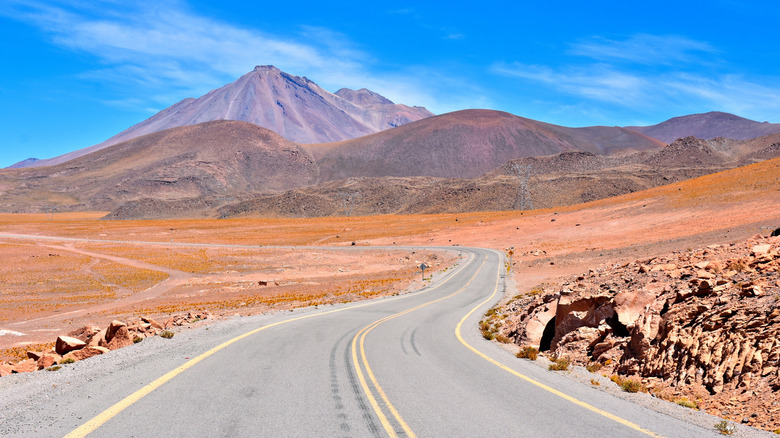
America is one of the world's great road trip destinations. From historic scenic byways filled with relics to incredible coastal roads and cross-country routes, the U.S. could hardly have been designed better as a place to explore by car. The country is packed with incredible stretches of road that beg to be driven, and loading up the car and hitting the highway is a fantastic option for a family trip, guaranteeing an epic vacation, no matter the destination or route.
But the longest road trip routes in the U.S. pale in comparison with the Pan-American Highway, the longest highway in the world that stretches 19,000 miles from the Arctic Circle in the north to just short of the Antarctic in the south. It spans the globe from top to bottom, and while driving the entire length of the route is impractical for some, it is a fabulous option for anyone who wants to take on a serious road trip challenge.
The route of the Pan-American Highway is debated. It begins in Prudhoe Bay, Alaska, in the most northerly region of North America. It crosses Alaska to Fairbanks and continues into Canada to reach Edmonton, where road trippers can then choose to either go via Winnipeg-Minneapolis-Dallas or Calgary-Billings-Denver-Albuquerque. Either way, you'll end up in Nuevo Laredo on the Mexico-U.S. border, where the route officially continues through Mexico, Guatemala, El Salvador, Honduras, Nicaragua, Costa Rica, Panama, Colombia, Ecuador, Peru, and Chile, before ending in Ushuaia, Argentina, at the southern tip of South America.
The Pan-American Highway is the world's ultimate road trip
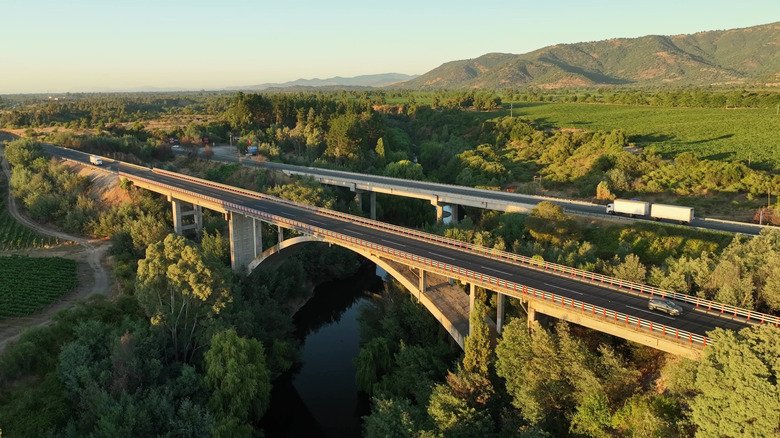
The Pan-American America first began to take shape in the early 20th century. The idea was to build a partnership that could encourage tourism right across North and South America. The 14 participant countries signed an agreement in 1937 to create and maintain their sections of the highway in order to build a route that spanned both continents. The project wasn't without its issues. It took until the 1970s before the full route was available, and creating a completely continuous network was never possible, as the Darien Gap between Panama and Colombia was found to be impassable due to geography, environmental concerns, and political instability.
These days, the Pan-American Highway represents the world's ultimate road trip. It takes in frozen tundras, scorching deserts, verdant jungles, and deep, dark pine forests. It passes through an uncountable number of charming villages and towns, as well as some of the most famous and exciting cities in the world, including Los Angeles, Las Vegas, Mexico City, Quito, Lima, São Paulo, Rio de Janeiro, and Buenos Aires. You'll see glaciers in Alaska, huge snowfields in the Yukon in Canada, rugged mountains across the U.S., and incredible, unique cultures and traditions across Central and South America. It is an extraordinary challenge, and one that should be undertaken only by the hardiest and most committed of travelers.
What to consider before hitting the road
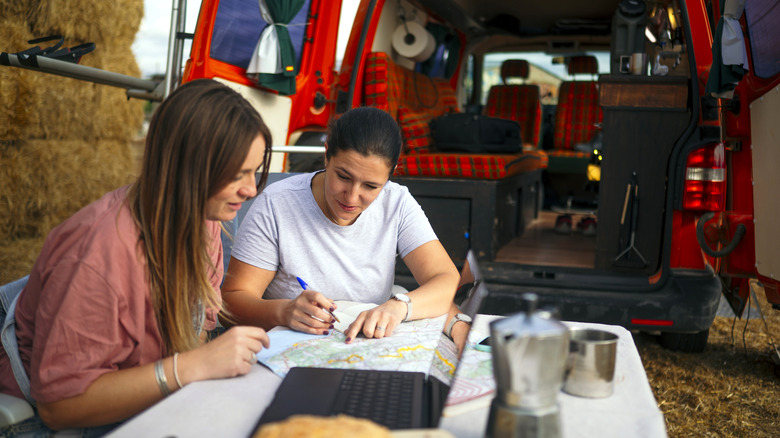
If you want to take on the entire cross-continental road trip, there are a few things you'll want to keep in mind. A trip of this magnitude obviously requires plenty of planning and organization, and it is important to be ready. First up, you'll probably want to allocate around a year to complete the entire route, so this isn't for anyone tied to the nine-to-five grind! One of the most important things about any road trip is knowing how many hours a day it is feasible to drive, and you'll need at least 12 months to fully appreciate the route and complete it safely. Many travelers recommend 18 months.
Given the range of climates, seasons, and landscapes, it is worth paying attention to when you are going to be at various spots along the route and ensuring you don't end up in difficult conditions. For example, driving in Alaska in the winter is unwise, while the rainy season in South America from October to April also comes with its own driving challenges. And while the vast majority of the route is on paved highways, there are a few unpaved sections, particularly in Central and South America, which means an all-terrain vehicle is recommended.
With so much to see along the route, it is important to be choosy when it comes to places to stay and things to do. If you are taking a year to drive the entire stretch, you'll have loads of time to explore, but it is still worth considering what your absolute non-negotiables are when it comes to experiences and destinations. Highlights include the picturesque town of San Miguel de Allende in Mexico, the Uyuni Salt Flats in Bolivia, Lake Atitlán in Guatemala, Cusco and Machu Picchu in Peru, and the Torres del Paine National Park in Chilean Patagonia.