
Not Yosemite Or Great Smoky Mountains: This Popular National Park Has The Most Campsites
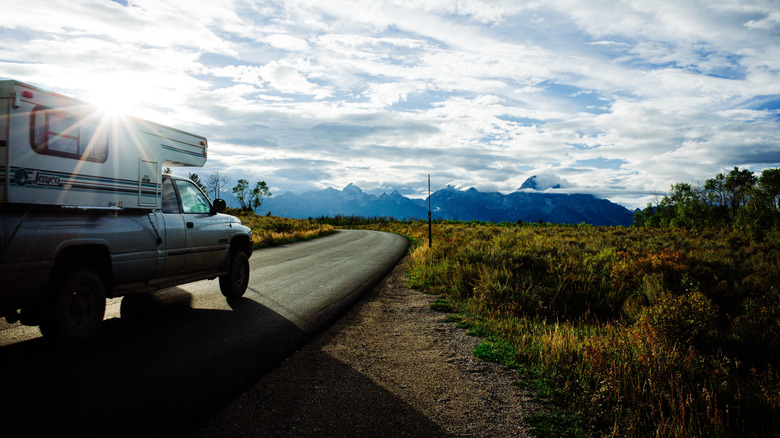
Waking up to the spectacular sights and sounds that surround you in America's national parks is a dream come true for many camping enthusiasts. What could be better than watching a herd of bison crossing the plains as you sip your morning coffee, or the sight of millions of stars overhead as you cosy down for the night under clear, dark skies? Once upon a time, you could have rolled up at a campground and been guaranteed to find a place. These days, it's become increasingly difficult to find a campsite that isn't already full, as more and more people embrace this popular pastime.
While Yosemite National Park in California, with around 1,545 campsites, and Great Smoky Mountains National Park in North Carolina and Tennessee, with around 1,000 campsites, are two of the best U.S. national parks for camping, it's the granddaddy of them all, Yellowstone National Park, that comes out on top when it comes to campsites. With more than 2,000 campsites, as well as nearly 300 designated backcountry campsites spread across the park, you're spoiled for choice when it comes to choosing where to pitch your tent or park your RV for the night.
Spread out over the park, the 10 open campgrounds range from primitive campsites right up to RV sites with full hook ups. (The 11th campground at Pebble Creek has been temporarily closed since the area was flooded in 2022, and still isn't open at the time of writing). Despite the large number of campsites, they do fill up quickly, which is why reserving a spot is essential if you want to ensure waking up with Old Faithful or Lower Falls as your neighbor.
Camping in Yellowstone National Park
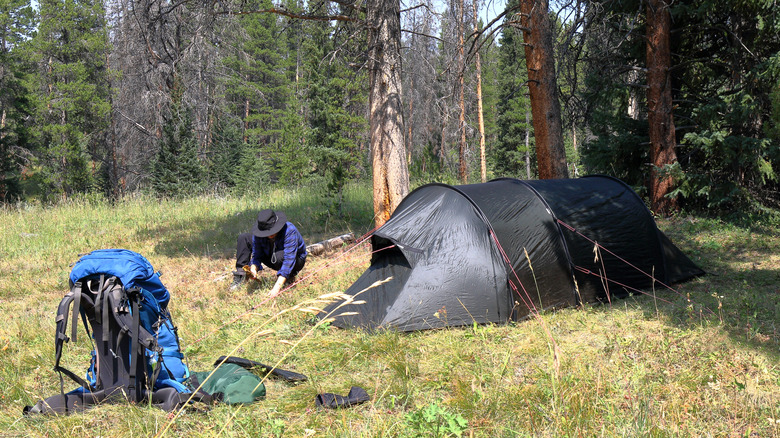
The campgrounds can be split into two groups. The five fairly basic campgrounds, reserved through Recreation.gov, are Indian Creek, Lewis Lake, Mammoth, Slough Creek, and Tower Fall. With the exception of Mammoth Campground, they have vault toilets and fewer campsites. The other five campgrounds, Bridge Bay, Madison, Canyon, Fishing Bridge RV Park, and Grant Village, are bigger and have flush toilets and dump stations, and the latter three have showers. They must be reserved through Yellowstone National Park Lodges for now, though in 2027, Recreation.gov will be handling reservations for all campsites.
With an area of around 2.2 million acres, it's no wonder Yellowstone is on everyone's camping bucket list, but you'd best prioritize what you want to see before planning which campground you want to stay in. If you're in your RV, Fishing Bridge is your best bet, as it's the only campground with water, sewer, and electrical hookups. No tents are allowed at this site, as grizzly bears are frequent visitors. Groups should head to either Bridge Bay, Madison, or Grant Village, the latter of which is one of the largest campgrounds and conveniently located near the visitor center, stores, a restaurant, and a gas station. Plus, being on the shore of Yellowstone Lake, there is an easy-access boat ramp.
As one of the best national parks where you can see wildlife, Yellowstone has its fair share of ideal viewing spots. Tower Fall Campground, in the more remote northeast corner of the park, is one of the best places to stay if wildlife watching is high on your to-do list. It's located near Lamar Valley, where you stand a good chance of seeing bison and gray wolves. It's also located near several hiking trails, such as Lamar River Trail and Slough Creek Trail. Slough Creek Campground is also quite remote, has plenty of fishing spots nearby, and you'll have a cracking view of the Milky Way if you're lucky enough to have clear skies.
Planning your Yellowstone camping trip
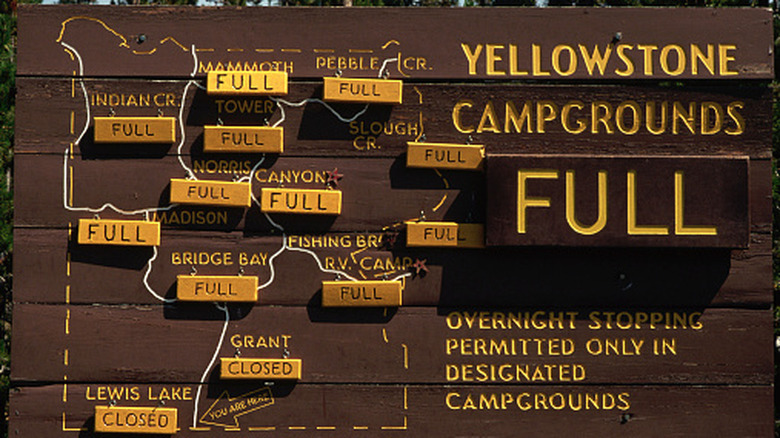
You can reserve a spot in one of the more basic campgrounds up to six months ahead, with prices starting at $20 per night. For the other campgrounds, for the moment, reservations can be made up to 13 months in advance, but this will drop to six months when Recreation.gov takes over the bookings. Prices for these sites range from $38 up to $94 per night. Most campgrounds need to be reserved in advance, and the sooner the better. The only exception is Mammoth Campground, which operates on a first come, first served basis between October 15 and April 1.
If you're heading off grid into the backcountry, you'll need a permit, which is available through the National Park Service. You don't always need to reserve the backcountry campsites, but given the number of people heading out camping these days, it's recommended. You should also be aware that even though backcountry camping is allowed all year-round, snow can remain on higher elevations well into July. Of the main campgrounds, the only one that stays open year-round is Mammoth. The others differ, closing between mid-September and mid-October before opening again in May or June.
If you don't manage to reserve one of the campgrounds, there are other options. Several cabins, including Old Faithful Lodge Cabins, Roosevelt Lodge Cabins, and Lake Lodge Cabins, are available to rent. Obviously these also need to be reserved, but if you have your heart set on camping, it's worth looking on Hipcamp, where you may find somewhere just outside Yellowstone. Don't be tempted to sleep in parking areas, picnic grounds, or roadside pullouts, as camping is not allowed anywhere other than the designated campgrounds or backcountry campsites. And unlike in many national forests, dispersed camping is also prohibited.