

Between Birmingham & Chattanooga Lies An Underrated City For First-Timers In The South
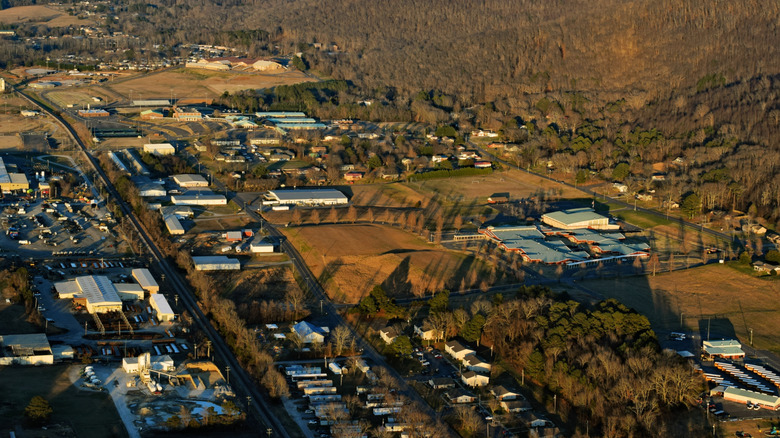
Located in the heart of the Appalachian Mountains in northeast Alabama, Fort Payne has a world of outdoor adventure and fascinating history right on its doorstep. It's conveniently situated on I-59 between Birmingham, 95 miles to the south, and Chattanooga, Tennessee, 53 miles to the north, and is the gateway to one of the best national parks in the south. Fort Payne may be officially classed as a city, but it feels more like a small town, filled with the warm hospitality and Southern charm for which Sweet Home Alabama is famous for. For those visiting the South for the first time, you can expect a friendly atmosphere, unique country music heritage, and easy access to the spectacular surrounding mountain landscapes.
The town itself is full of history, some of which covers one of the most tragic periods in North America's past. Built around a fort of the same name, Fort Payne was originally called Wills Town after Cherokee Chief Will Weber. It was an important place for the Cherokee Nation, where intertribal councils once met. It was also once home to another famous chief named Sequoyah, who singlehandedly created a written form of the Cherokee language that helped a whole nation of Native Americans learn to read and write. As we know, it didn't end well for the Cherokees. Under the command of Major John Payne, they were held against their will at the fort before being forcibly removed to Indian Territory, in present-day Oklahoma, on what is now known as the Trail of Tears.
Outdoor adventure in Fort Payne, Alabama
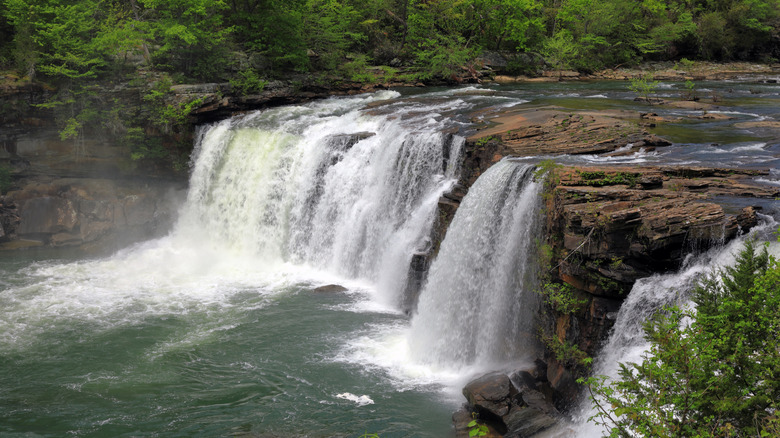
For those who love the outdoors, Fort Payne is ideally situated in a narrow valley between Lookout Mountain to the east and Sand Mountain to the west. Sitting on top of Lookout Mountain and just a 10-minute drive from town lies Little River Canyon National Preserve, a beautiful park with waterfall views and huge sandstone cliffs that rise up to 600 feet above the canyon floor. The forests are filled with nearly 50 miles of hiking trails and backcountry roads, with more than 23 miles of dirt tracks for mountain biking and horse riding in Fort Payne's most popular attraction.
Little River Canyon is also renowned for its world-class kayaking, with Class IV and V whitewater rapids including the infamous Suicide Run, a 3-mile section of the river that thunders through the canyon. For those who don't want to venture far from their vehicle, follow the Little River Canyon Rim Parkway, a particularly scenic section of the Lookout Mountain Parkway. The route meanders between scenic overlooks with views over one of Alabama's most beautiful waterfalls, Little River Falls. During the rainy season, you'll also see Grace's High Falls, which, at 133 feet, is Alabama's tallest.
Next to the preserve is DeSoto State Park, equally as beautiful but perhaps a little more family-friendly. Gentle woodland walks lead to waterfalls and quiet spots for picnicking beside the river where you can swim or kayak in calmer waters. Wildlife watching is also a favorite pastime, with the park's mild climate providing the ideal habitat for white-tailed deer, foxes, armadillos, and a variety of birds from the brightly colored northern cardinal to the northern flicker, Alabama's state bird.
Exploring Fort Payne's history
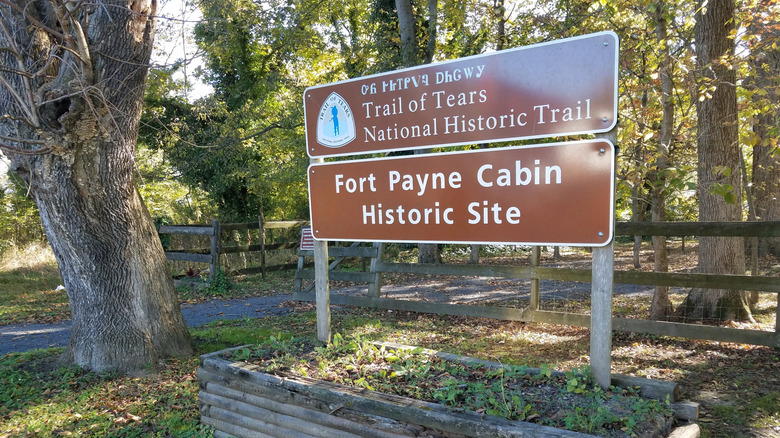
The mountains may be calling, but you'll find plenty to see in downtown Fort Payne too. To take a journey through the history of the town, it's worth stopping off at Fort Payne Depot Museum. Housed in the former railway depot, there are Civil War artefacts and Native American relics on display, as well as information on Fort Payne's past. Staff can then point you in the direction of Fort Payne Cabin Historic Site. Here you'll find a series of interpretive panels that recount the story of the Trail of Tears, alongside the remains of the chimney, which is all that's left of the original fort.
Fort Payne Opera House is a rare find and Alabama's oldest operating theatre. Built in 1889 during the Boom era, when the town was thriving thanks to the discovery of iron and coal ore, it's still occasionally used for special events. Next door is the Hosiery Museum, full of vintage machinery and the story of when Fort Payne was known as the Sock Capital of the World. Both buildings are listed on the National Register of Historic Places.
Another museum music lovers won't want to miss is the Alabama Fan Club & Museum. Alabama was a hugely successful country music band that came from Fort Payne. The museum is full of memorabilia, awards, instruments, and costumes from a band who sold more than 75 million records worldwide. Music is still very much a part of the town's identity. Each September, the Boom Days Heritage Celebration takes place with live music, arts and crafts, food stalls, and other activities in celebration of the town's history and culture. There's more live music at Vintage 1889, this time served up with some of the best burgers and craft beers in town.