

Wild Horses Roam Freely At This Mountain Destination On The Border Of Wyoming And Montana
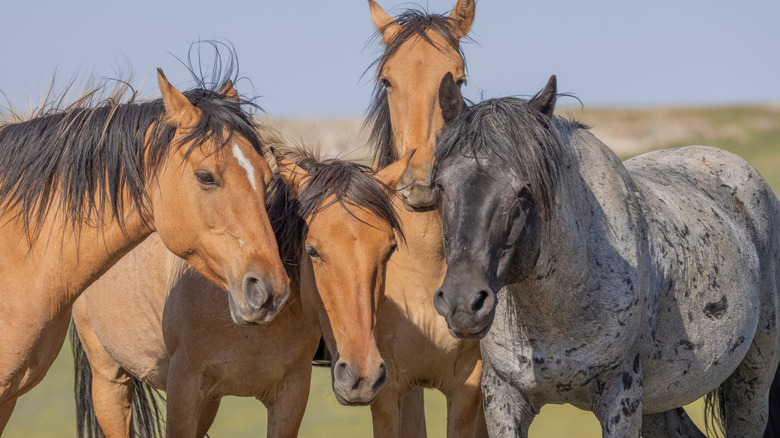
Spotting wildlife is one of the most popular pastimes while on vacation. But there's a big difference between seeing animals in the caged confines of a zoo and watching them running free in the wild, as they should be. And running, or rather galloping, is a favorite pastime of the wild horses of Pryor Mountains.
The herd, currently numbering around 200 horses, has been roaming these mountains for centuries, but has only been protected since 1968. These magnificent animals faced a real threat of extinction during the 1950s when the government made proposals to remove the entire herd. Thanks to a committed group of local residents, those efforts were thwarted following a lengthy campaign and legal battle. This resulted in the creation of Pryor Mountain Wild Horse Range, the first public wild horse range established in the U.S., and today one of only four wild horse and burro ranges in the country.
Covering around 38,000 acres across southeastern Carbon County in Montana and northern Big Horn County in Wyoming, the horses here move freely between the sagebrush-covered valleys, pine and juniper forests, and in the spring, grasslands full of wildflowers. Access to the Pryor Mountain Wild Horse Range is just north of Lovell, Wyoming. It also borders the spectacular Bighorn Canyon Recreation Area, one of the most underrated tourist spots in Wyoming. If you're flying in, the nearest major airport is at Billings, Montana, roughly 90 miles away.
Meet the wild horses of Pryor Mountain
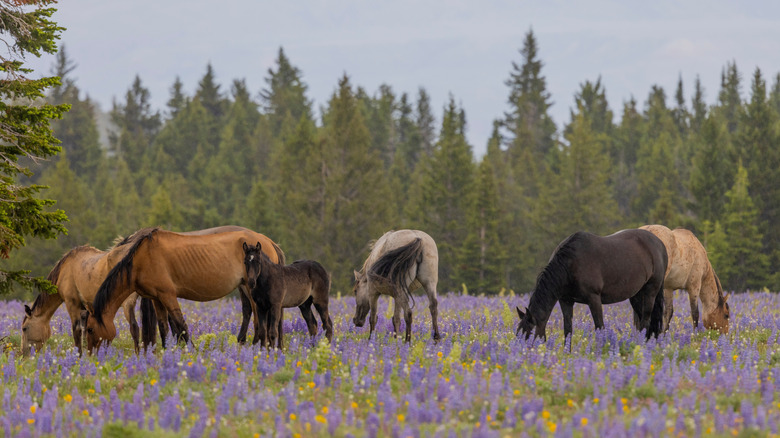
The wild horses of Pryor Mountain are a colorful breed, their coats ranging from black and dun to palomino and chestnut. Some have dorsal stripes and bicolored manes, while others have tiger-striped legs or cobwebbed facial markings. Small and sturdy, they average around 13 to 14 hands high and are well suited to the sometimes harsh conditions of the mountain landscape. Most likely descended from a mix of domestic breeds, the Pryor horses are particularly distinctive because of their Spanish ancestry. Studies show that they have a rare genetic marker associated with the Iberian horses brought to the New World when Spanish and Portuguese settlers arrived, and then later brought to Montana by Native Americans.
To find out more about their history and habits, it's worth visiting the Pryor Mountain Wild Mustang Center in Lovell, a nonprofit dedicated to safeguarding the future of the horses. Open from Monday through Friday from 9 a.m. to 4 p.m. and weekends from 9 a.m. until 1 p.m., the center is full of information on the herd and its ongoing conservation projects. Perhaps the most famous horse of all was the stallion Cloud, a legend among wild horse enthusiasts. Made famous by filmmaker Ginger Kathrens in the PBS "Nature" documentaries, he was the inspiration behind the nonprofit Cloud Foundation in Colorado. He disappeared in 2016 and was never found, but his legacy lives on in Pryor Mountain, and if you're lucky, you may catch a glimpse of his daughter Encore.
Where to see the Pryor Mountain wild horses
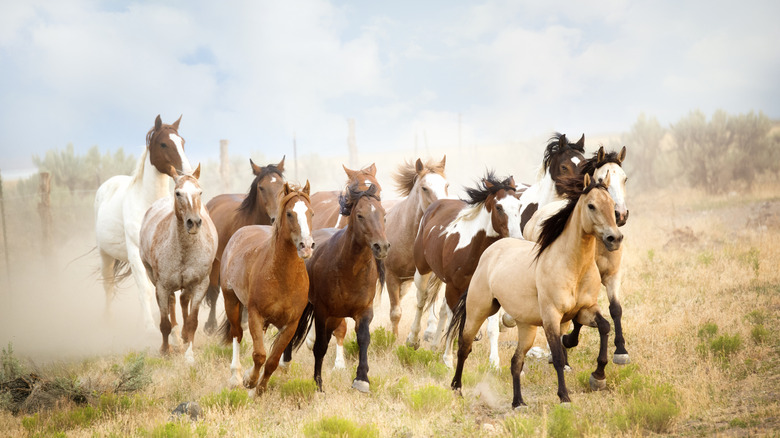
There's nothing quite as thrilling as seeing a herd of wild horses galloping down the mountainside, manes flowing and hooves thundering across the valley. As one of the best U.S. travel destinations for seeing wild horses, explore Pryor Mountain on your own or take a guided tour. If you go with the first option, a few of the horses live in the desert lowlands and can be seen along Highway 37 in Bighorn Canyon National Recreational Area. This is probably the easiest option as it's accessible with any vehicle, and there are places to pull over. But if you want to take a closer look, most of the herd live on East Pryor Mountain, and are usually easier to find. However, the roads here are rough, steep, only suitable for high-clearance 4WD vehicles, and practically unpassable in winter. If that hasn't put you off, take Burnt Timber Ridge Road and Sykes Ridge Road, which both wind through the range. Before you set out, stop by the Wild Mustang Center and ask staff for up-to-date locations. They'll also provide maps and other useful viewing advice.
Like any other wild animal, the utmost care must be taken when viewing the horses. Even if they seem at ease, they are still wild animals and you should keep a distance of at least 100 feet. Your patience may be rewarded further, as bighorn sheep, mule deer, coyotes, and the occasional mountain lion have been spotted here too. Because of the unpredictability of the herd, who move with the seasons, not to mention the state of the roads, your best bet is to take a guided tour with PryorWild, who organize day trips from mid-May through October. Tours cost $240 per person and should be reserved in advance. Then drive through Wyoming's stunning White Mountain if you want to see more unique horses running wild.