

This Affordable Asian Country Is A Vibrant Destination To Stretch Your Dollar In 2026
Southeast Asia has always been a paradise for travelers seeking vacation destinations that won't break the bank. From backpackers on Bangkok's Khao San Road to solo travelers looking to splurge on an amazing getaway in Cambodia, there are fabulous, fantastic places to travel for surprisingly low prices all across the region. And it's not just for shoestring backpackers either. Bali is a great, affordable, family-friendly destination, while anyone looking for a luxury escape at a bargain price will be spoiled for choice in Indonesia or Malaysia.
But even the most affordable destinations have gotten more expensive over the last few years, so travelers who want to make their budget go further are searching for new places to explore. One of the best, most vibrant, and still one of the cheapest countries in Southeast Asia is Vietnam, making it the perfect place to head to for savvy travelers looking to stretch their dollar in 2026. In fact, it was even named as one of Condé Nast Traveler's 16 Cheapest Countries to Travel to in 2026.
Vietnam is situated on the eastern edge of Southeast Asia, a long, thin strip of land running from China in the north to the Philippine Sea in the south. The country is bordered by Laos and Cambodia to the west, and the South China Sea to the east. Its two major cities are Hanoi and Ho Chi Minh City, which are the main transit hubs for travelers, with large international airports served by carriers from around the world. Da Nang International Airport, in central Vietnam, is another great option, particularly for travelers coming from other parts of Asia.
Best things to see and do in Vietnam
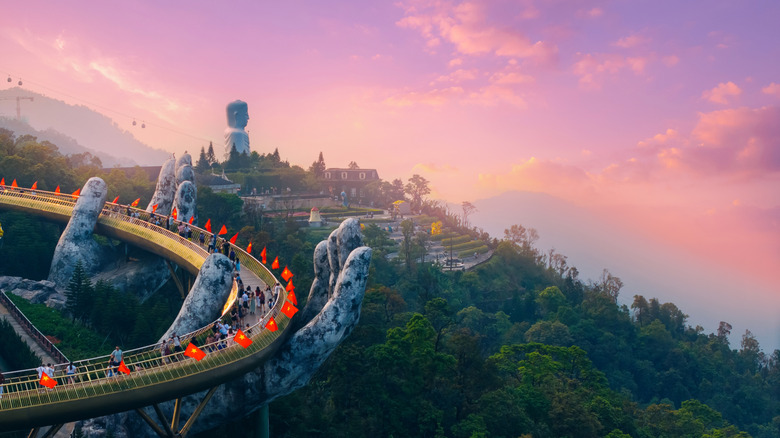
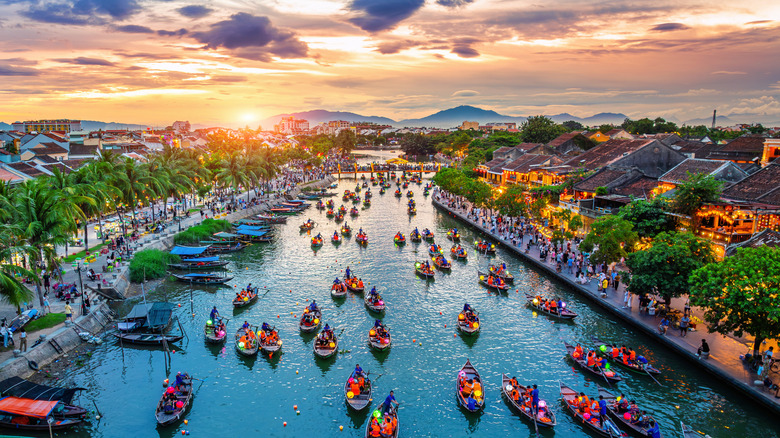
Vietnam is a stunningly diverse country, with breathtaking landscapes, beautiful beaches, dramatic ancient ruins, and vibrant, buzzing cities. You can eat extraordinarily well for very little, and it is an ideal shopping destination, both for delightful souvenirs and for more serious items. Hoi An and Ho Chi Minh City, for example, are famous for their tailoring, and you can get made-to-measure clothes for a fraction of the cost back home!
The best way to consider what to do in Vietnam is to split the country up into regions. In the north, Hanoi is an incredible city, a wonderful blend of old and new, where bars, cafes, restaurants, and music venues rub shoulders with ancient temples and traditional street food vendors. A cruise around Ha Long Bay to see the mind-blowing limestone karst formations is a must, and the gorgeous hill country around Sapa is a glorious oasis of natural beauty. In central Vietnam, Da Nang offers miles of pristine beaches, while Hue and Hoi An are drenched in history and charm, ideal destinations for culture lovers.
In the south, Ho Chi Minh City is a vast urban jungle, the country's largest city, and a glorious blend of traditional Vietnamese culture, French colonial architecture, and modern dynamism. Modern history is thoughtfully and sensitively explored at places like the War Remnants Museum and the wartime tunnels at Cu Chi and Long Phuoc, while the fascinatingly varied history of Vietnam can be seen at spots like the Jade Emperor Pagoda, the Independence Palace, and the Notre Dame Basilica of Saigon. Finally, a riverboat cruise out into the lazy meanders of the Mekong Delta offers a laidback journey through the traditional towns and villages dotted around this enormous marshy estuary near the border of Cambodia.
When to go and how to save
Traveling in Vietnam is incredibly affordable, and you can tailor your experiences and luxury level to match your budget with a minimum of fuss, compromise, or sacrifice. Estimates for what you will need vary, understandably, with some travelers saying they are able to get by on as little as $10 a day! Most sources reckon that $40-70 dollars per day will provide a comfortable experience with food, experiences, transport, and accommodation included, and a more luxury experience can be had starting at around $100-150 per day.
The best ways to save are to stay in guesthouses or private rooms in hostels rather than international hotel chains, to travel around using Grab (the local Uber equivalent), and to eat where the locals eat, at no-frills, family-run restaurants or on the street. Vietnam boasts some of the best street food in the world – it was one of Anthony Bourdain's favorite travel destinations – and you'll be able to gorge yourself on bánh mì, pho, BBQ, and bún bò xào while struggling to spend more than $3!
Shoestring travel guides usually advise visiting places during shoulder season or off-peak in order to save, but this can be tricky in Vietnam. Because the country is so long, the seasons vary enormously depending on where you go, and it is important to avoid the wet, hurricane season, as this often results in serious flooding and massive disruption. Northern Vietnam is best visited from November to April, when the climate is cool and dry (although December to February can be too cold for some). Central Vietnam is glorious from January to August, with sun-drenched days that are perfect for lazing on the beach. The south is warm year-round, but it is best to go from November to April to avoid the wet season.