

5 Ways To Connect With Locals Without Knowing The Language

Even if you're one of the lucky few who are extremely gifted with languages, at some point or another, you're going to land in a country where you don't know the local lingo. You're already in a fortunate position if you speak English, as it's the official language in more than 70 countries. It's also the most widely studied language around the world, the lingua franca of the internet and international businesses, and firmly established in global organizations, including the United Nations and NATO.
That said, learning to communicate with locals is one of the best parts of being abroad. It helps make your experience so much more enriching. Even with the language barrier, there are still many ways to make yourself understood and pick up what's being said, or at least what's implied. In any language, the most important part is making a connection. That doesn't come from having a flawless accent or perfect grammar. It comes from making an effort, being curious, and not being afraid to make mistakes. That's often how we learn and how conversations begin.
Not speaking the language should never hold you back from visiting a place you've always dreamed of going. If you learn a few basic words, have your phone as a back-up, practice communicating without words, involve yourself in the community, and put in a little preparation before you go, you're already well on your way to having some meaningful connections and a lot of fun.
A few words go a long way
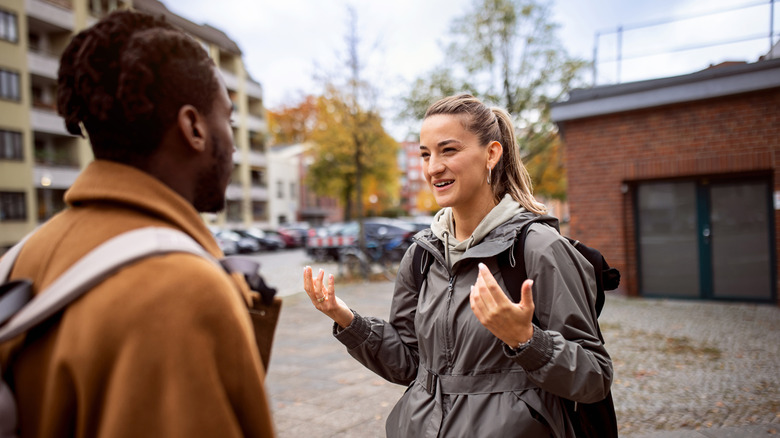
There's something extremely satisfying about learning how to say some simple expressions in a new language. It's amazing how effective and rewarding a few everyday words can be. "Hello," "goodbye," "please," and "thank you" may be basic, but they show locals you're trying. This is seen as a sign of respect, and even just one or two words can affect how someone responds to you.
The key is to keep it simple and use basic phrases. Pronunciation matters more than perfection, a tip Rick Steves has shared for overcoming language barriers abroad. On his website, Steves advises speaking slowly and clearly, and most of all, keeping it simple. There's no need to come out with long sentences when a couple of words will suffice, especially if you combine them with gestures.
The longer you stay in a country, the more you naturally pick up new words and phrases, helping you build your vocabulary and confidence. You'll often find that some people, as soon as they realize you speak English, may use the opportunity to practice themselves. One barrier that can stand in the way of us speaking out is fear of making a mistake, but that's often the quickest way to learn new words. Most people appreciate the effort and are happy to help with your pronunciation.
Use technology as a back-up
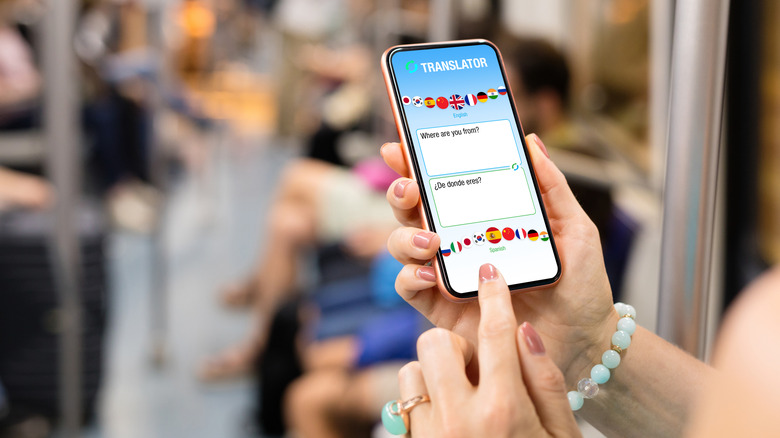
It may seem like cheating, but resorting to using your phone is sometimes necessary. Many travelers rely on Google Translate for real-time conversations or to translate signs, menus, or maps. It can be handy if you're in a hurry, in an emergency situation, or simply don't want the hassle of having to memorize long phrases. You can also download language packs in advance for when you're offline. Google Translate currently has over 100 languages installed, with more being added on occasion.
Other translation apps include DeepL, Microsoft Translator, and iTranslate. DeepL is particularly popular with travelers, with u/objectivehooligan on Reddit explaining, "Deep L also shows you alternative translations which is great because words often have more than one meaning or there is more than one way to explain a concept. This is also great if the language has distinctions between formal and informal speech and you can toggle between the two."
Having a language learning app on your phone can be a great idea if you're planning on spending a long time in the country or region and want to enrich your vocabulary. Apps like Duolingo, Babbel, and Speak cater to different learning techniques and can help improve conversational skills up to a certain point when it comes to ordering food, catching a train, or asking for directions. At the end of the day, there's no substitute for human connection, so it's best not to rely completely on apps, but it's nice to have them as support if needed.
Actions speak louder than words
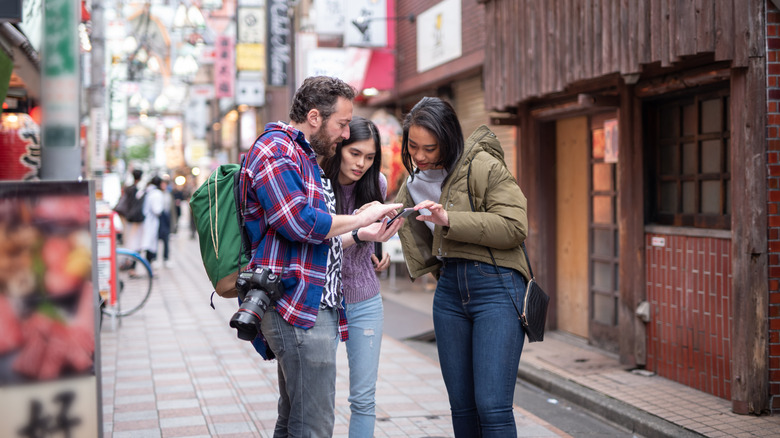
Never underestimate the power of a few well-meaning hand gestures, frantic pointing, or exaggerated grimaces. It's amazing how much you can communicate with actions rather than words and how much you can learn from watching others do the same. Body language, whether through eye contact, facial expressions, hand gestures, posture, or touch, is an important part of communication and a highly effective way of getting your meaning across.
Pointing at objects, menus, or maps usually works. Observing others, along with being aware of the context of the situation, will help you understand what someone is trying to say. You can learn a great deal by watching how locals interact, and it's a fantastic excuse to people-watch.
Gestures and hand signals can mean different things in different countries, so it's a good idea to brush up on local customs before you arrive. Even something as simple as a thumbs up can be offensive in parts of the Middle East and South Asia. If you're heading to Europe, these gestures highlighted by Rick Steves are worth knowing. A friendly smile, however, is universal.
Live life like a local
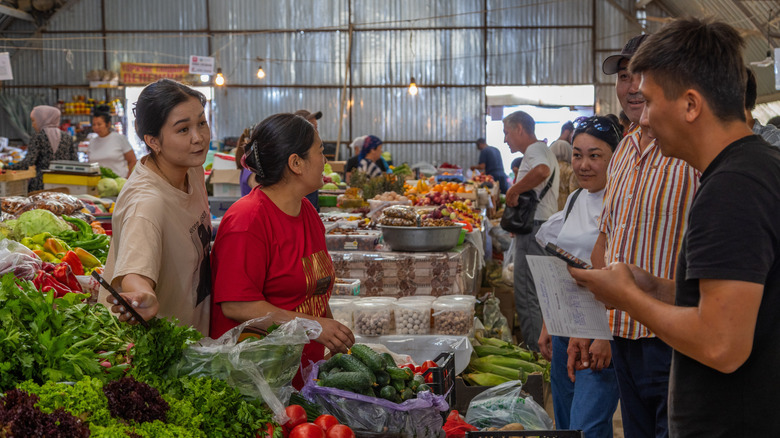
There's nothing more effective than delving into the heart of a community to make connections. Start by volunteering for local projects. Helping with environmental work shows you care about the place you are visiting and the people in it and naturally opens up conversation. Some European cities even reward tourists for sustainable travel choices, such as Copenhagen. If you take part in city clean-up schemes or urban gardening, you may be rewarded with free activities, food, or drinks.
Getting involved in community events such as festivals helps you find out more about everyday life. Markets, tours, and cafés are often a great way to meet people and the easiest places to connect. If you're struggling and need help, you can always ask if anyone speaks English. Younger generations are more likely to speak English, even if it's just the odd word, and people are often more willing to help than you expect. Places like tourist offices, transport stations, or hotel receptions are usually dependable. If your budget allows and it helps you feel more comfortable, consider hiring a local guide to make sense of a place and get valuable insight.
Be prepared

For all the ways you can connect with locals once you're in another country, a little preparation before you go goes a long way. While buying a guidebook may seem a little redundant in this digital age, it's where you'll find all the information you'll need to make your trip run more smoothly. It also makes a treasured souvenir in its battered, stained, and torn state when you get back home. Not only will you find suggestions on the best places to go, but there's also all kinds of useful information on customs, what to do in an emergency, not to mention some handy phrases and maps. Even if you don't use half of it, there could be some useful snippet that may help you out of a sticky situation.
Taking screenshots and making a note of important details such as hotel addresses, bookings, transport information, and phone numbers on the off chance you get lost is a good idea, as is translating essential information like medical needs in case of an emergency. If you're relying on translation or navigation apps, remember to download them before you leave. Brush up on a few key phrases and learn about local customs and etiquette, as knowing how to communicate respectfully matters just as much as what you say.