

These 5 US States Boast The Most Mountain Ranges By Far
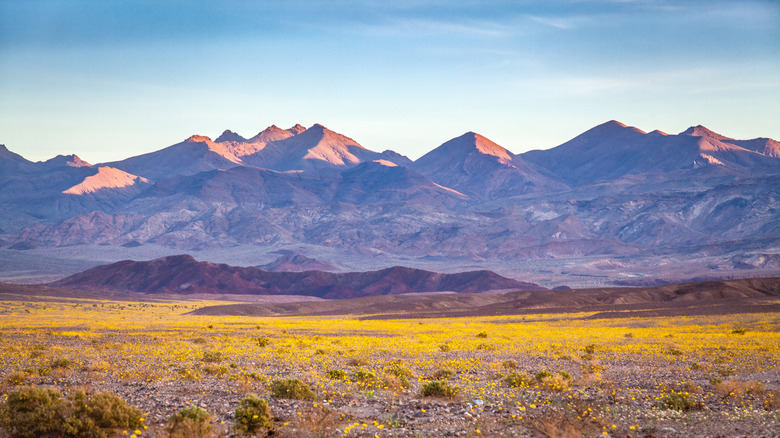
In 1873, John Muir famously wrote, "The mountains are calling, and I must go," in a letter to his sister. Over a hundred years later, his simple statement still resonates with thousands of people who experience the same magnetic pull towards mountain ranges all over the world. If the mountains have been calling your name lately, it may be time to plan a trip to one of the five U.S. states with the most mountain ranges.
Traveling to the mountains can be an awe-inspiring experience. There's something majestic about the rocky peaks extending towards the sky, and the lush valleys that lie peacefully between them. In the mountains, life seems to slow down ever so slightly. The United States is home to some of the world's most stunning mountain ranges, which are scattered all across the country. There are hundreds of different ranges to choose from, and they make wonderful destinations for nature lovers.
We researched mountain ranges across the nation using maps, blogs, articles, and government data. Although the definition of what exactly counts as a mountain range varies slightly depending on the source, we identified several states with hundreds of different ranges. If you're looking to fully immerse yourself in the gorgeous mountain scenery, then California, Nevada, Alaska, Arizona, and New Mexico should be at the top of your travel bucket list.
California

If you're looking for a destination that offers epic mountains, iconic cities, and pristine beaches, California is the place for you. Located on the West Coast, the Golden State is a place that everyone should visit at least once in their lifetime and is ideal for mountain lovers. Even in a bustling city like LA, you can spot the San Gabriel Mountains from nearly anywhere you are.
According to California.com, the state has around 352 mountain ranges, and the Sierra Nevadas are one of the most famous, stretching along the eastern edge of the state for around 250 miles. Travelers can experience the gorgeous range by visiting Devils Postpile National Monument, Sequoia National Park, Kings Canyon National Park, or Yosemite National Park. Mount Whitney, the highest peak in the continental United States, sits within the Sierra Nevada range.
The Trinity Alps is a pristine California mountain range with incredible views and plenty of hiking trails. The Trinity Alps are less popular amongst tourists than the Sierra Nevada range, so they're a great place to visit if you're looking for solitude in nature. The world's smallest mountain range, the Sutter Buttes, is also in California, located in the Sacramento Valley. The range is just 10 miles long and almost entirely located on private property.
Nevada
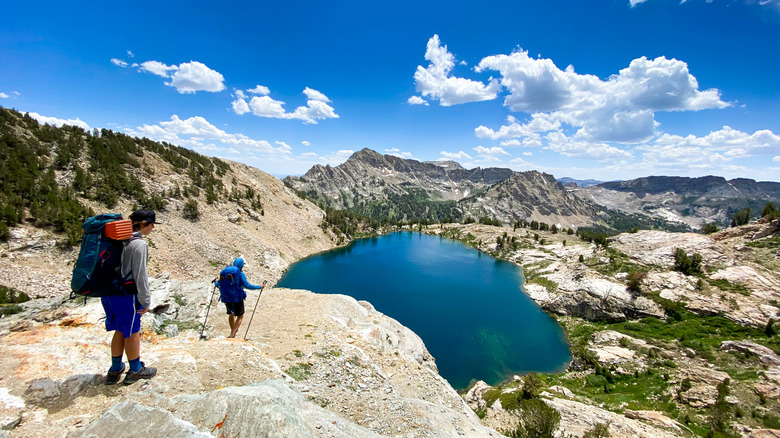
Most travelers who visit the western state of Nevada head straight to the sparkling city of Las Vegas. Nicknamed Sin City, Las Vegas is one of the best cities to visit if you love to party. If you're more into nature than nightlife, Nevada is still well worth a visit. There are 314 different mountain ranges throughout the state, according to the United States Fish and Wildlife Service (FWS). The mountains aren't just abundant in Nevada — they're massive. There are 35 different peaks with elevations towering over 10,000 feet.
From the top of Nevada's mountain ranges, you can see for miles. The rugged desert scenery seems to stretch endlessly in every direction. While it may seem like the landscape is barren, it's actually teaming with life. Species like deer, mountain goats, and marmots call Nevada's mountains home.
The Ruby Mountain range is particularly stunning. This mountain range is often called the Swiss Alps of Nevada. The area has sparkling alpine lakes and meadows filled with wildflowers. Visitors can enjoy hundreds of miles of hiking trails. The Ruby Crest National Recreation Trail is over 35 miles long, and hikers will gain around 10,000 feet of elevation during the hike. Great Basin National Park, which includes most of the South Snake Range in east-central Nevada, is one of the most underrated national parks in the West. A road trip up Wheeler Peak offers stunning views.
Alaska
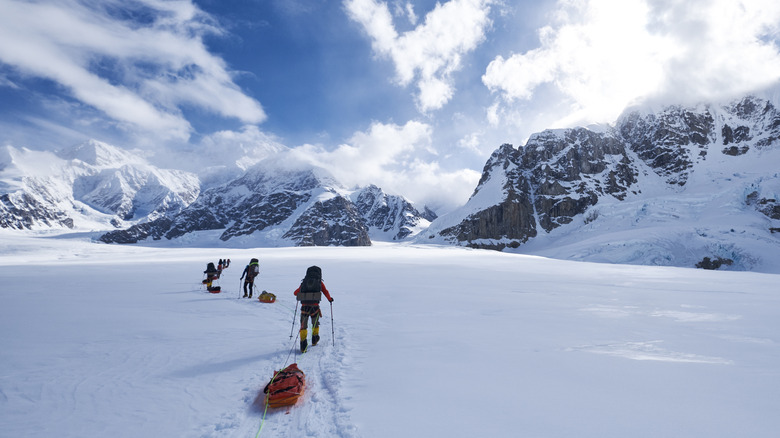
Alaska is rugged and wild. Many of the last true wilderness areas in the United States are located there. Tourists from around the world flock to Alaska to enjoy the natural beauty and the majestic mountain ranges scattered across the state. Exploring the Alaskan wilderness isn't for amateurs, but there are plenty of stunning national parks with well-maintained trails that allow outdoor enthusiasts of all experience levels to enjoy the mountains.
There are over 300 mountain ranges spread out across the massive state and more than 3,800 named mountains. The 600-mile-long Alaska Range is one of the most iconic. There you will find America's highest and most dangerous peak — Denali.
Denali, which is also known as Mount McKinley, has an elevation of 20,310 feet. It is the tallest mountain in North America, and hundreds of expert mountaineers attempt to reach the summit each year. Only about half of them make it. Climbing the mountain comes with a hefty price tag, but the views are priceless. Even if you don't want to make the challenging climb, visiting the stunningly beautiful Denali National Park should definitely be on your bucket list if you're someone who loves mountain scenery.
Arizona
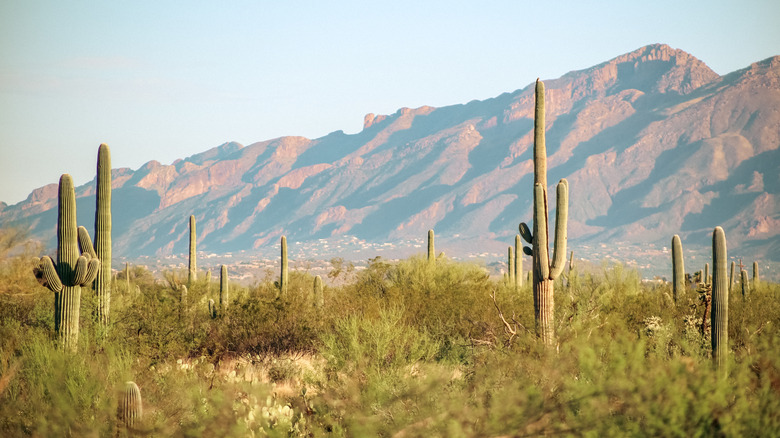
Out of all the western states, Arizona best embodies the spirit of the Wild West. With towering Saguaro cacti and sprawling desert landscapes, the scenery conjures images of cowboys riding into the sunset. Arizona has warm weather year round with sweltering summers and pleasant winters. Travelers flock there to enjoy the natural beauty. Saguaro National Park and the iconic Grand Canyon National Park are two of the most popular tourist destinations, but you shouldn't skip visiting a few of the state's epic mountain ranges while you're there.
The author of a blog called Desert Mountaineer, who is a self-proclaimed avid outdoor explorer, wrote that they identified 193 different mountain ranges in Arizona after studying around 2,000 topographic maps in the library. There are over 4,000 different named mountains within the state.
Arizona's "Gateway to the White Mountains" is a year-round gem near the Apache National Forest, and it makes a wonderful destination if you want to begin exploring the state's mountain ranges. Head to the Bradshaw Mountains for scenic hiking and peaceful recreation. Coronado National Forest is an underrated outdoor paradise that encompasses 17 different mountain ranges in southeastern Arizona, and the beautiful Santa Catalina Mountains are near the city of Tucson. For a relaxing way to explore, the 27-mile-long Catalina Highway is perfect for a scenic mountain drive.
New Mexico
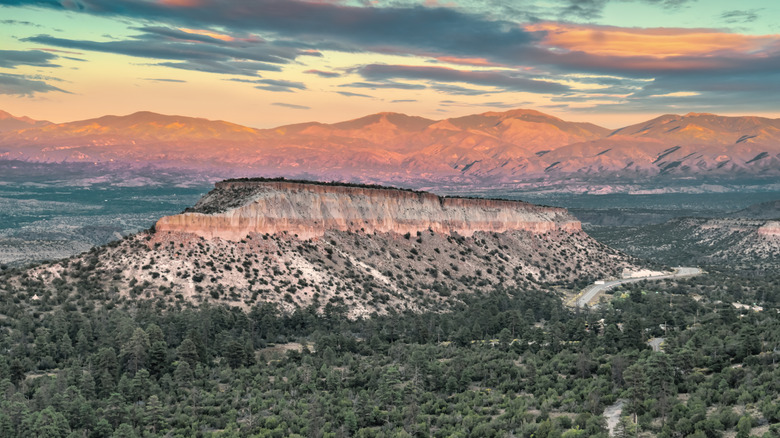
New Mexico is a wonderful place to visit for nature lovers and history buffs. It's home to beautiful desert scenery, some of the best ancient sites within the United States, and a plethora of epic mountain ranges. According to a New Mexico Museum of Art article, there are around 88 named mountain ranges in the state. Peakbagger.com, a website geared towards hikers and climbers that provides statistics about mountain peaks around the world, lists 111 different ranges within New Mexico.
The state's mountains provide the perfect opportunity for idyllic winter getaways complete with stunning alpine towns. The enchanting town of Taos is nestled within the stunning Sangre de Cristo Mountains with their snowcapped peaks. The Enchanted Circle Scenic Byway provides captivating foliage views in the fall. Alto is a great home base for exploring the Sierra Blanca Mountain range.
Chaco Canyon National Historic Park, one of America's most awe-inspiring historical sites, is located in New Mexico's high desert region on top of the Colorado Plateau. It's surrounded by three different mountain ranges: the Chuska Mountains, the San Juan Mountains, and the San Pedro Mountains. The entire region is well worth exploring.
Methodology
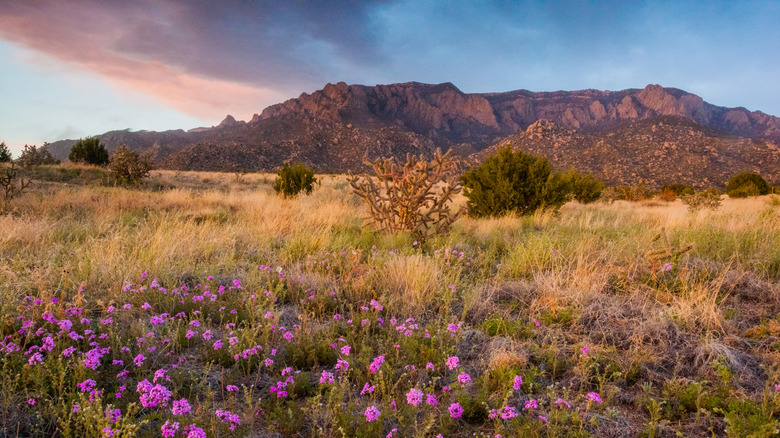
In order to formulate our list of the five U.S. states with the most mountain ranges, we began by studying topographic maps. We focused on researching regions with multiple stretches of mountains. Once we identified the most mountainous states, we focused on researching specific mountain ranges.
We used data gathered by the United States government, along with information provided by tourist websites. In some cases, we even pulled from research gathered by real mountaineers. We discovered that information on the exact number of mountain ranges within each state varies depending on the source. Some people only count major mountain ranges, whereas others include any stretch of mountains with a unique name. Many smaller mountain ranges are part of larger more well known systems, and many ranges are interconnected. Based on our research, Alaska, California, Nevada, Arizona, and New Mexico are the five states with the most mountain ranges.