

Helpful Tips For Hiking Downhill That Will Save Your Joints Over Time
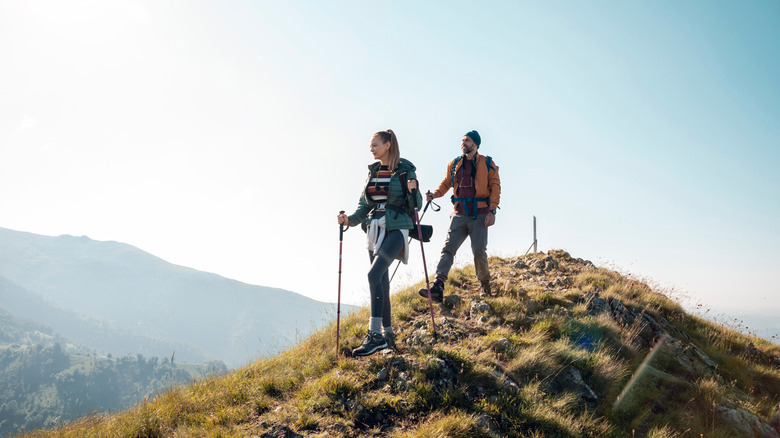
Whether you're just getting into hiking or planning on tackling spectacular long-distance hiking trails, the uphill stretches on a route are usually the things that initially appear to be the most daunting. Those steep scrambles up the side of a mountain or long, endless inclines along forested trails that sap your stamina and drain your energy seem scary and exhausting, and plenty of hikers will spend most of their training time preparing for them.
However, the reality of long hikes is rather different. For most hikers, it isn't the climbs that take their toll in the long run, but the descents. Hiking downhill can be surprisingly tricky if you aren't prepared for it, and can also be painful, both on your joints and your whole body, if you lose your balance and take a tumble on a steep slope. Hiking downhill requires a different set of skills than hiking on the flat or an ascent, and requires more concentration than both.
Luckily, there are plenty of tips and tricks to make hiking less intimidating. With a little preparation and a few helpful pieces of advice, you can easily take the strain off your knees and improve your overall downhill hiking technique. Whether it's using the right kit, doing strength training, loosening up, or just paying attention to where you're going, here are some of the best ways you can get better at those tricky descents!
Watch your feet
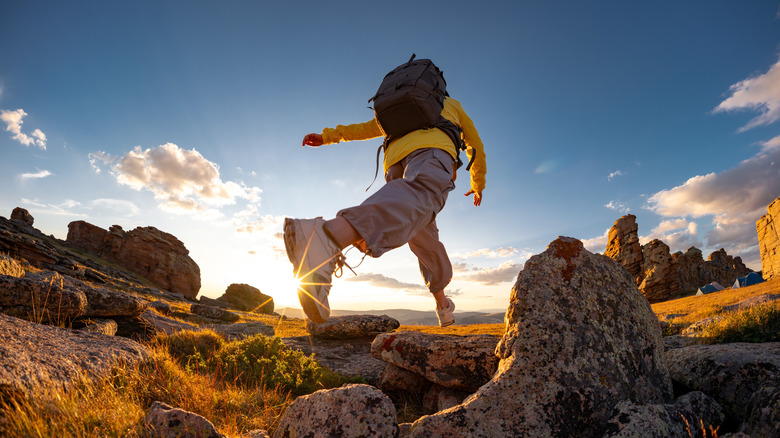
Hiking uphill tends to be a slow, considered process, as you're struggling against gravity and the terrain. While this does increase the effort required with every step, it also reduces the risk of injury.
If you slip or stumble while hiking uphill, you probably aren't going to fall too far or hurt yourself too much, beyond a grazed knee. However, when hiking downhill, if you miss your footing, you'll keep going down the hill, just in a much faster and more painful way!
As a result, watching your feet and paying careful attention to every step is a vital part of descending safely. Always find the flattest spot to land before loading your weight onto your standing foot, take small steps, and watch out for loose stones, dust, and gravel. Look out for tree roots that present a trip hazard, and consider side-stepping on the steeper sections.
Use the right gear
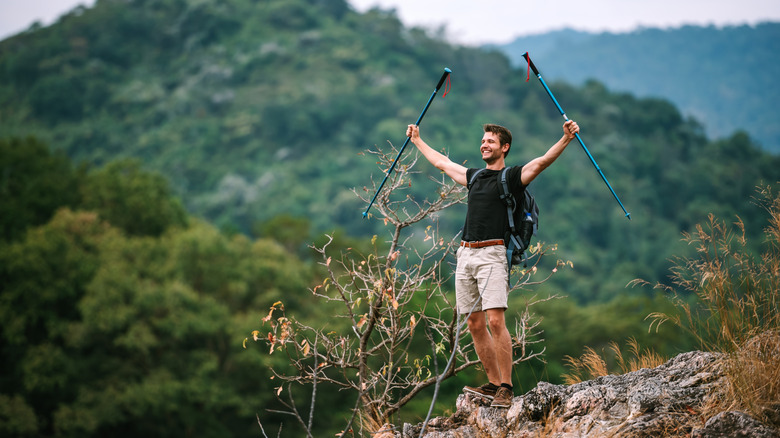
Trekking poles can be a controversial topic for many walkers and through-hikers, but are a great way to prevent knee pain after a route that has many descents. Descending without support means that all of the weight, pressure, and effort of each step goes through your knee joint, which can put undue strain on it.
Poles help to redistribute the impact, and allow your core and upper body to get involved in the work. They can also help you avoid hyperextension.
If you suffer from knee pain after a downhill hike, it might be worth reconsidering your choice of footwear as well. Most trail walking shoes come with a flexible sole to help with grip, but for more scrabbly, loose descents, a stiff, hard sole can actually help to avoid stumbles and sprains. It might also be worth considering extra support for your ankles and knees, like athletic tape or a dedicated ankle or knee brace.
Stay loose
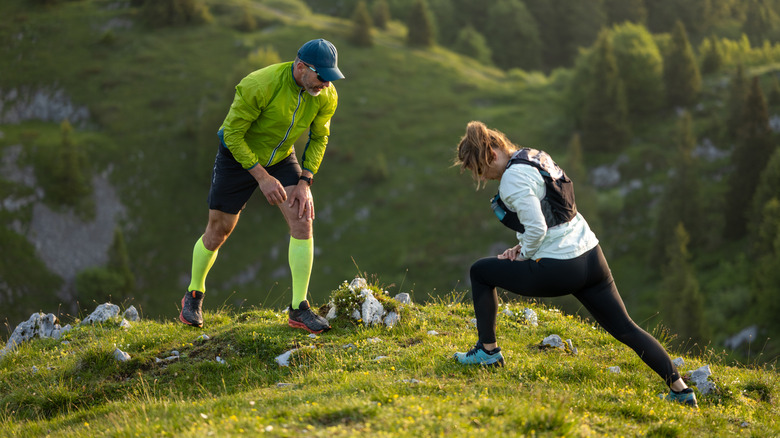
Staying loose is a hugely important part of hiking. Travel writer Rick Steves says his stretching routine is what helped him conquer the Tour du Mont Blanc. Being warmed up and keeping your muscles loose and relaxed helps avoid injury on longer hikes. But being loose on the trail isn't just about stretching beforehand. It's also about body position, thought process, and attitude while hiking, and it's this that can make a huge difference when hiking downhill.
If you're trying to take on steep descents or scrabbly downhill sections while stiffening your body, locking your joints, and tensing in anticipation of a slip or fall, you're actually more likely to stumble than with a more relaxed approach.
Speaking to Outdoor Magazine, expert physical therapist Mandie Majerus advises hikers to keep their knees bent and their muscles loose, like a basketball player. This allows your body to react smoothly to minor slips and stumbles, cushioning the impact, reducing stress and strain on the knees, and helping avoid major falls.
Build up surrounding muscles
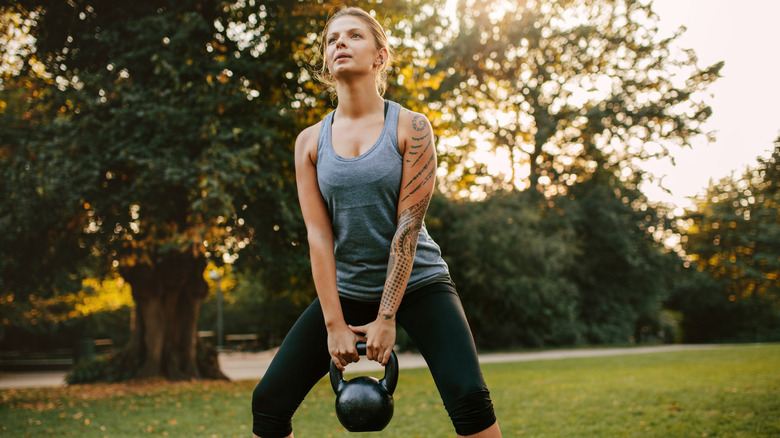
While hiking sometimes feels less intense than other sports, it isn't something to be underestimated. It's just as important to train and build up strength for hikes as it is for running or other team sports, particularly if you find your knees and ankles complaining after a day on the trails. Bodyweight exercise and light dumbbell workouts can make a huge difference to your longer treks.
Strength training is a vital part of any exercise regimen, and with hiking, it's about building up a whole range of muscles that will do the work, rather than putting unnecessary strain on your joints. Your routine should include exercises to strengthen your glutes and hip flexors, the most important muscles for hiking.
Weak glutes and hips make your knees do too much work and can result in injury. It's also a great idea to do some stability and balance training so that you're not overcompensating on your stronger side.
Practice and prepare
The old adage, "fail to prepare, prepare to fail," is hugely applicable when it comes to downhill hiking. Plenty of people believe they can just head out onto the trails without any practice, because how hard can walking be?
Ultimately, finding ways to practice going downhill is one of the best ways to get better at it and to avoid knee pain and injury. This might be something as simple as walking up and down streets with a decent gradient, or as intense as adding hill repeats to your weekend running program. Either way, a gentle but steady increase in the hills you walk or run on a regular basis can make a huge difference.
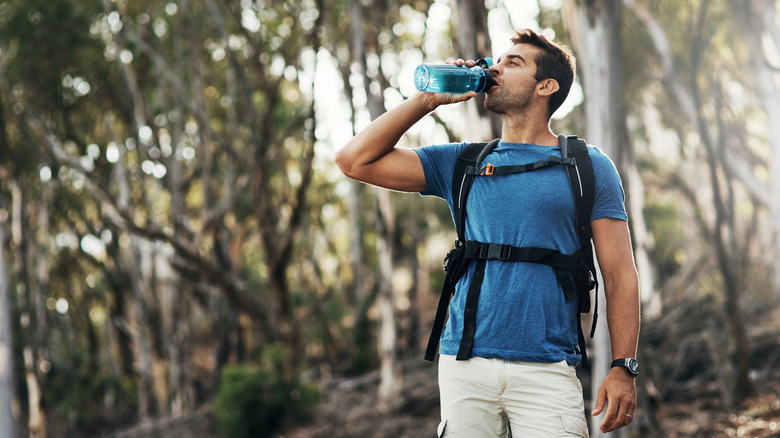
Of course, it's also worth preparing for every serious hike, regardless of how much elevation you'll be facing. Hydration and nutrition are important aspects of trail walking, and will have a big impact on cramping and muscle strain. Being properly prepared will also help you feel more comfortable and enjoy hiking more!