

Rick Steves Says This Neo-Medieval Castle In The UK Boasts 'Fairytale Mystique'
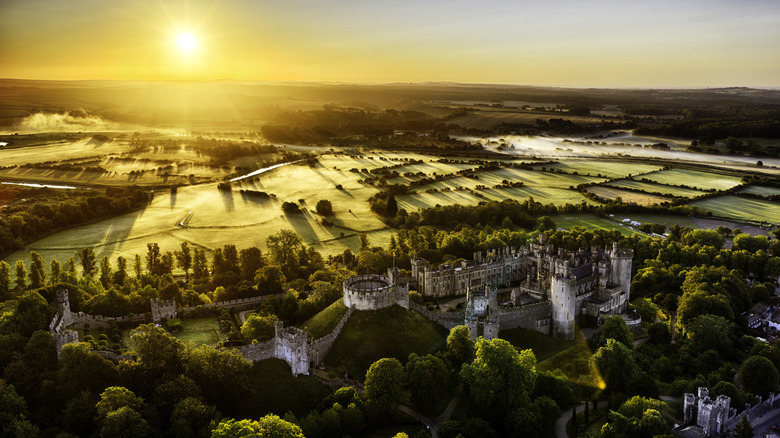
Few places in the world do medieval travel vibes quite as well as the United Kingdom of Great Britain and Northern Ireland. Any trip to the U.K. is guaranteed to be filled with stunning Gothic castles, grim ancient stone ruins, and massive fortified structures that dominate the surrounding area and offer up tangible evidence of the incredibly rich history of this magical country.
For dedicated history seekers planning a U.K. vacation, it can be hard to choose where to start. You might be tempted by Wales, "the castle capital of the world," with its brooding Marcher castles and remote hilltop forts. Or you might want to discover the massive structures of the northeast, like Bamburgh Castle, built to subdue and dominate the wild expanses of the North. But according to European travel expert Rick Steves, one of the best spots to visit is Arundel Castle in the south, filled with "fairytale mystique" and "wow-appeal."
Arundel Castle overlooks the small town of Arundel in West Sussex, just a stone's throw from the south coast of England, between Portsmouth and Brighton — both of which can be reached by car in around 45 minutes to an hour. The nearest international airport is London Gatwick (LGW), the U.K.'s second-busiest airport, just under an hour's drive away, which serves destinations around Europe and across the world. If you are arriving by air, do plan ahead, as Gatwick Airport is known for having some of the worst flight delays in the U.K.
Arundel Castle's intriguing blend of ancient and modern
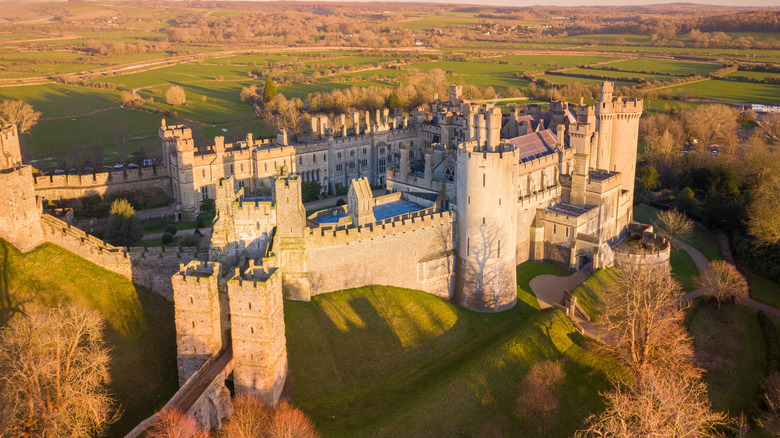
Arundel Castle is one of the most impressive and magical medieval castles in southern England, and it boasts an interesting and unusual history. The original stronghold was built in 1068-1070 by Roger de Montgomery, Earl of Arundel. It was a classic Norman motte-and-bailey construction, with a tower perched atop an artificial mound (the motte), surrounded by a walled courtyard (the bailey). The castle was improved and fortified over the centuries, held for over 850 years by a single family, the Dukes of Norfolk and their ancestors, who played a significant role in vast swathes of British history, from the Wars of the Roses to the Civil War.
There are nearly 1,000 years of history on the site of Arundel Castle, and yet, as Rick Steves points out, "what we see today is the fancy of a fabulously wealthy nobleman in the 19th century...all neomedieval, rather than truly historic." The original structure was severely damaged during the English Civil War in the 17th century, and although various inhabitants carried out limited repairs, it fell into disrepair over the next 300 years.
However, towards the end of the 18th century, Henry, the 15th Duke of Norfolk, took it upon himself to completely renovate, restore, and remodel the castle, adding electricity, lifts, central heating, and a gravity-fed water supply. The current structure is therefore a neomedieval recreation built on an ancient site, although original elements like the Norman keep, the medieval gatehouse, and the barbican remain.
Opulent interiors and beautiful gardens at Arundel Castle
While the exterior of the castle is a study in medieval magnificence, all dramatic stone walls, crenellated battlements, and impregnable towers, the interiors are another world entirely. Stepping inside the doors, you immediately understand why Rick Steves calls the Duke of Norfolk "the top dog among all English dukes." Steves highlights the "wonderful library with rich mahogany woodwork and 10,000 musty leather-bound books on two levels," while the state rooms, like Barons' Hall and the decorative Drawing Room, are filled with amazing artworks and antique furniture. The bedrooms offer a glimpse into the private lives of the nobles who lived here in the 19th and early 20th centuries, and there is also a small museum with an exhibition that changes annually.
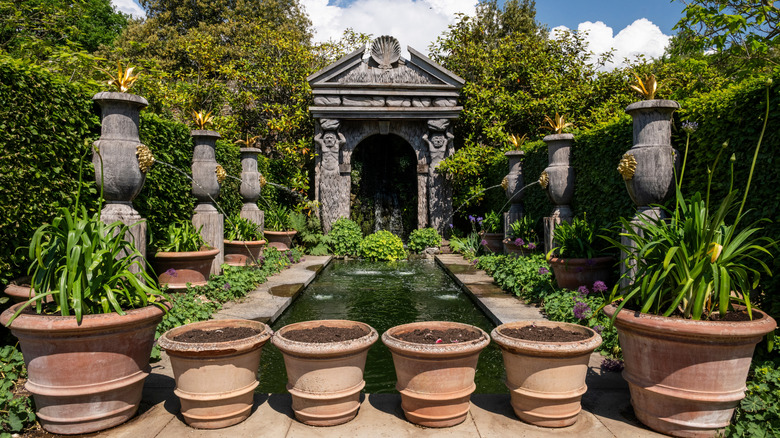
The gardens of Arundel Castle are also spectacular and well worth exploring. Transformed over the last 20 years, they include a fabulous Rose Garden, the award-winning Tropical Garden, and a beautifully wild Wildflower Garden. Rick Steves particularly recommends the Collector Earl's Garden, which contains a stumpery made from upturned oak trees, as well as gorgeous Italianate terraces, several pergolas, and exquisite follies like Oberon's Palace and the Antler Temple.
Just below the castle itself, the town of Arundel is a delightful little slice of English countryside charm and is the perfect accompaniment to a day spent exploring the medieval fortifications. The small museum is very reasonably priced and offers a more in-depth look at the history of the castle and the region, while the ruined abbey next door is evocative and atmospheric. The River Arun that flows through the town offers a picturesque backdrop to a stroll down the high street, and there are plenty of excellent cafes and restaurants for a quick bite to eat.