

America's Abandoned Ski Resorts Offer Fun Mountain Recreation For Outdoor Adventurers
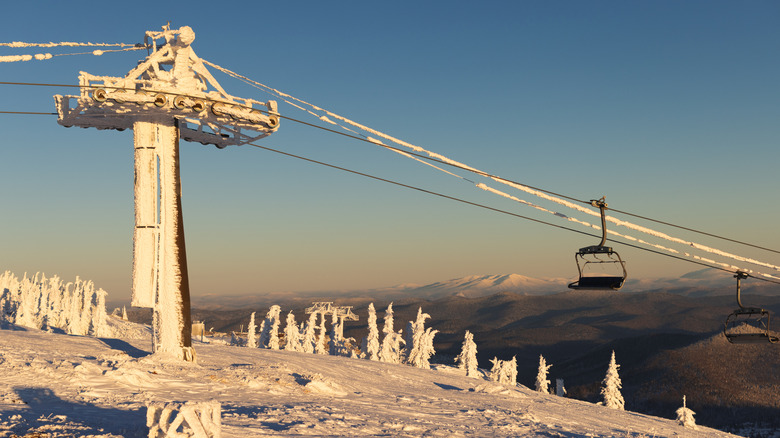
There's something hauntingly beautiful about abandoned places. Resorts once full of life and laughter often hold on to a dreamlike state that transports you back in time. This is especially true of the growing number of abandoned ski resorts across America — and in Europe — now frosted with an air of sadness rather than a layer of snow. Happily, several of these long-deserted ski resorts are filling up with life again. Some with a new generation of backcountry skiers in winter, when the unpredictable snow makes an appearance, and more recently with mountain bikers, drawn by the excitement of discovering new territory, escaping crowds, and tackling some pretty fierce downhills.
In the U.S., specifically across the midwest and northeast, rising temperatures have inevitably meant less snow. This has been catastrophic for many ski resorts, especially those in lower elevations, which have been forced to close. Back in the 1960s, more than a thousand ski resorts were operating. Today, fewer than 500 remain.
As with most abandoned places, nature gradually reclaims the landscape, spreading its foliage over deserted ski runs to cover them as if they never existed. The silver lining to these closures is that the land is increasingly being reclaimed as an adventure playground for mountain bike trail development. Where ski trails once formed straight lines down the mountainside, new trails are zigzagging their way across the terrain for a different kind of downhill sport.
From ski slopes to mountain bike trails
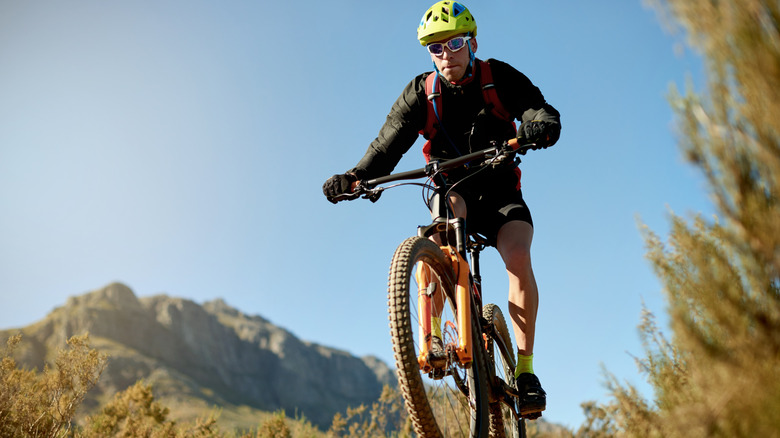
The idea of mountain bike trails at ski resorts isn't new. In fact, many were built next to ski areas, with skiing happening in winter and mountain biking in summer, once the snow had gone. Resorts had to market themselves as year-round destinations to pull in much-needed income. But with a lack of snow, many resorts were unable to make ends meet, resulting in their closure.
Ski resorts were at their peak between the 1950s and 1970s, and many were built at lower elevations, relying heavily on natural snowfall. But the gradually rising temperatures from the 1980s onward made snowfall irregular and unreliable. Snow-making saved some resorts, but increasing insurance and operating costs made it impossible for many to continue, especially smaller ones.
As the vegetation slowly crept onto the abandoned ski runs, the ghost slopes became the perfect terrain for mountain bike trails. Old access roads often remain, while wide pistes are turned into berm-heavy flow trails, technical descents, and jump lines. The existing vertical drops were almost made for downhill and enduro riding. Whereas early mountain bike trails were mostly built on public land, many of the new trails are situated on privately-owned land, meaning faster development and fewer land-use restrictions.
Where to find mountain bike trails at abandoned ski resorts
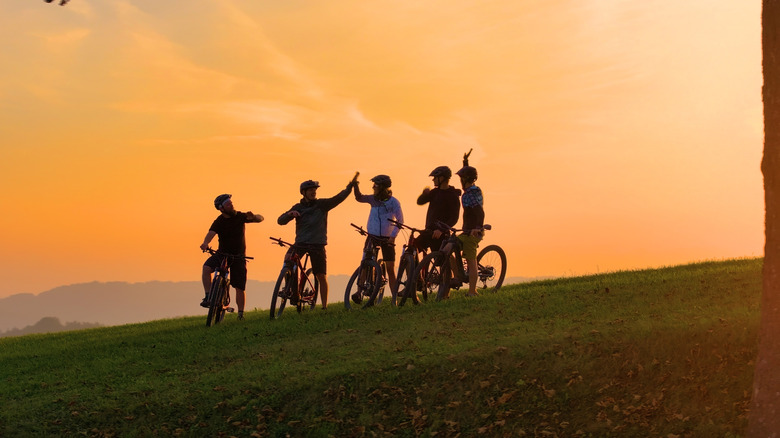
Some of the best mountain bike trails on abandoned ski slopes are in the upper midwest. This region once had a high number of low-elevation ski resorts, and with them, the inevitable closures that followed. Because many have been repurposed for mountain biking, you'll find a strong local mountain bike community in these places.
In Colorado, which has lost well over a hundred ski areas, the Geneva Basin Ski Resort Trail is accessed from the cute historic town of Grant. The route combines singletrack, old access roads, and old 4x4 trails taking you all the way up to the abandoned ski slopes, before following the old ski runs back down. It's suitable for experienced mountain bikers with a sense of adventure, searching for a mix of technical descent and raw, backcountry terrain.
For a more intermediate-friendly descent, Mount Telemark in the booming tourist destination of Wisconsin has around 16 miles of trails that have brought the former ski resort back to life. After closing down in 2010, the area now has a network of purpose-built trails, with access from the nearby town of Cable. Like most of the abandoned ski resorts, these are both entirely pedal-accessed. There's some lift-assisted mountain biking trails in a few places, but they're less common and tend to be found in more commercial-type bike parks.