

What Tourists Visiting California Should Know About Earthquakes, According To An Expert
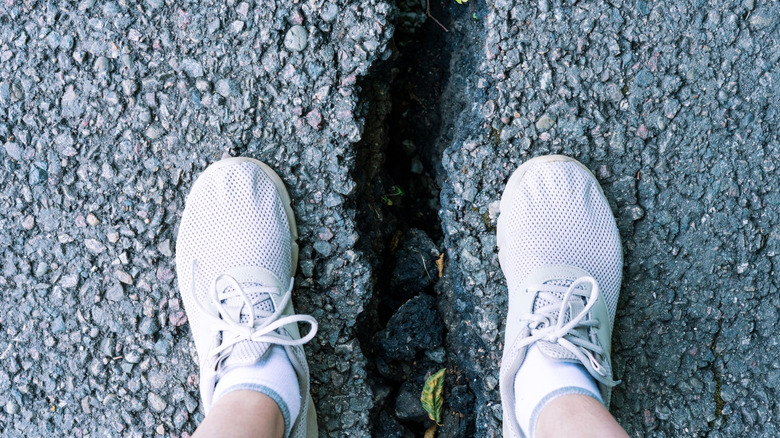
California is famous for its stunning beaches, bustling cities, iconic road trip routes, and being the state with the most national parks in America. But it's also known as "earthquake country." Sitting along a complex network of active fault lines, including the San Andreas Fault, California experiences constant geological movement. Scientists estimate that a large earthquake — often referred to as "The Big One" — could reach a magnitude of 7.8 or higher, potentially causing huge damage affecting either Southern California or the San Francisco Bay Area. While this might sound alarming, understanding what it really means is key to keeping things in perspective. Especially if you're just traveling through.
Explore spoke with Bryan Castillo, an earthquake geologist and geoscience communicator, for expert insights. "Statistically speaking, the probability of Californians experiencing a large ... earthquake is very high within the next 50 years," he explained. And while it's unlikely that you will be visiting an affected area of California on the day an earthquake occurs, it doesn't hurt to be prepared.
The risk of an earthquake mainly applies to residents, not to individual travelers on a short road trip to see the best of California's attractions. "[T]he probability of visiting a different place and experiencing a chaotic life-changing hazard is extremely low but not zero," says Castillo. "Which is why it is important to never be discouraged to travel and visit different places — just take the time to learn about the local hazards."
How to be prepared in the unlikely event of an earthquake

Earthquake preparedness isn't about fear but awareness. "[L]earning what to do before, during and after an earthquake can help ease some of that anxiety one might have while visiting," Bryan Castillo explains. He recommends preparing before the trip by visiting the U.S. Geological Survey (USGS) website and downloading the MyShake app, which sends notifications when there are notable earthquakes anywhere in California.
During the earthquake, Castillo suggests you: "Stay calm and do not panic. Drop, cover and Hold on when the earthquake is happening. Refrain from running while the ground is Shaking." Once you feel steady and the earthquake seems like it's over, "Assess your current surroundings, help the people around and prepare for aftershocks." Aftershocks are smaller earthquakes that can occur in the following days or even years. As a tourist, you might decide it's time to wrap up your trip to California.
Just as you might research hurricanes before visiting the Caribbean or volcanic activity before visiting Iceland, understanding California's seismic risk is simply wise trip planning. And if you're not from an earthquake-prone region, knowing what to do in the event of an earthquake can give you peace of mind. "Earthquakes are incredible, complex and unpredictable phenomena that occur here on our beautiful mother Earth," Castillo says. "[J]ust because we do not fully understand them does not mean we can't take the necessary steps to be as prepared when the inevitable hits."
How likely is an earthquake in California, really?

Earthquakes in California are frequent, but experiencing one that you can actually feel or that is significant enough to cause damage is far less likely. According to data from Volcano Discovery, which sources information from 50 international and national seismic agencies, California had 38,411 quakes in 2025. Only one of those was above magnitude 5.
The vast majority were below magnitude 2, which are so minor most people don't even feel them. These small tremors are a reminder that the ground is constantly shifting but rarely causes damage. Occasionally, moderate earthquakes are felt by local communities, but even these are generally not dangerous.
Bryan Castillo makes it simple: "Just stay informed. We have the internet and access to information at the palm of our hands." He goes by EarthquakeDude across several social media channels, and you can follow him for earthquake-related news in California. If you're planning a camping or hiking adventure in the Golden State, be sure to stay aware of wildfire hazards on the rise due to climate change as well.