

5 Of North America's Least-Visited National Parks Worth A Trip
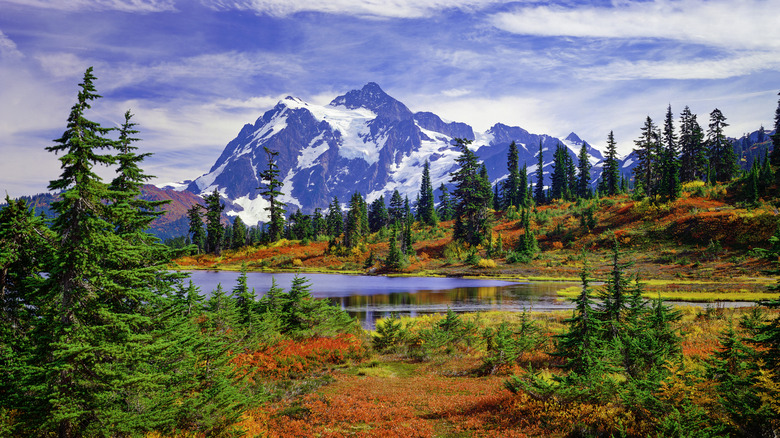
As Earth's third-largest continent, North America encompasses an area of over 9.3 million square miles. Spanning 3.8 million square miles, the U.S. accounts for just a fraction of that expanse. Countries such as Mexico, Canada, and Greenland make up the rest of that, with geographic marvels ranging from the fjords of the Arctic Steppe to leafy tropical forests. Given this diversity of landscapes, it makes sense that so many North American nations protect and honor them as official national parks.
In the U.S., the term "national park" applies both broadly to all National Park Service (NPS) sites (including preserves, seashores, monuments, and more) and specifically to "large natural places having a wide variety of attributes, at times including significant historic assets." Similarly, Mexico, Canada, and Greenland recognize various natural areas and distinct national parks. In total, Canada has 37 national parks, Greenland has one, Mexico has 79, and the U.S. has 63. Millions flock to the hiking trails of Grand Teton, the lakes and mountains of Banff, and the rainforests of Tulum. But what about the places that don't get much traffic?
When it comes to North America's least-visited national parks, several factors impact attendance, especially accessibility. If a park is hard to reach, fewer people will make the trip. For example, consider Alaska's Lake Clark National Park & Preserve. This site's lack of developed roads and remote location contribute to it getting less than 20,000 visitors a year. But for those willing to roam the extra mile, off-the-grid destinations can offer incredible experiences. Curious to travel where others dare not tread? Get inspired with this list of five under-the-radar, crowd-free North American national parks, including Northeast Greenland National Park, Gates of the Arctic National Park & Preserve, North Cascades National Park, Pukaskwa National Park, and Isle Royale National Park.
Northeast Greenland National Park — Greenland
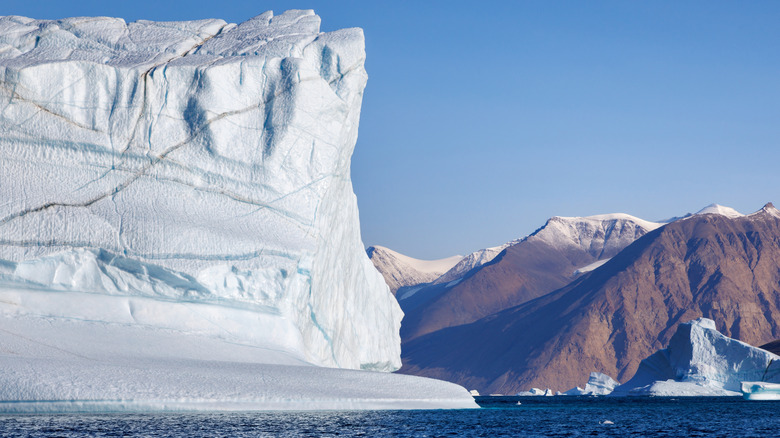
Welcoming under one thousand visitors a year, Northeast Greenland stretches across roughly 375,291 square miles as one of the world's largest national parks. It's also the planet's northernmost and Greenland's only national park.
As you might guess from Northeast Greenland National Park's low attendance, reaching this region can be difficult, for several reasons. First, infrastructure is practically nonexistent. As Visit Greenland explains, there are no roads, harbors, or commercial airports within the park. So, if you can't drive, fly, or ferry into the area, how can you access this fascinating natural wonder? For most travelers, an expedition cruise is the answer. This voyage won't come cheap, though. Several operators (including National Geographic in partnership with Lindblad Expeditions) offer cruises to the park, and most if not all of them charge thousands of dollars per person. You can expect many of these companies' itineraries to begin in Reykjavik (home to the best food in Iceland), though some do depart from Norway's remote island of Svalbard. When planning your trip, keep in mind you'll also need a permit to enter the national park. Applications for this permit need to be turned in at least 12 weeks before your visit.
After handling all the careful logistics and paying the hefty price for this excursion, travelers can finally look forward to witnessing some awe-inspiring Arctic landscapes. Angular icebergs, snow-covered mountains, and frosty fjords define this region, and though few species can survive such conditions, there are still cool critters to see here. For wildlife enthusiasts keen on spotting animals during their Greenland explorations, this park's ecosystems host polar bears, wolves, and walruses (among others). Additionally, birdwatchers may be able to catch a glimpse of rare species such as the ivory gull, as they have breeding grounds in the area.
Gates of the Arctic National Park & Preserve — Alaska, USA
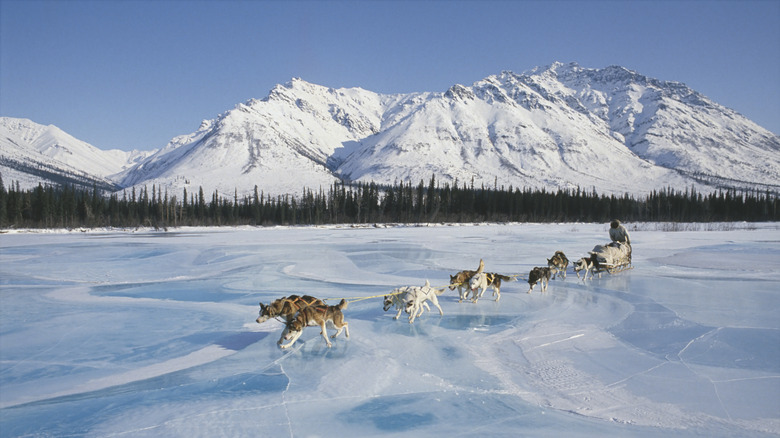
About 2,279 miles southwest of Northeast Greenland lies another secluded getaway — Alaska's Gates of the Arctic National Park & Preserve. While several U.S. national parks receive millions of visits a year, this spot has recorded under 300,000 total visits across over 40 years. Visitation peaked at 12,669 in 2014, fell to just 2,872 in 2020, and climbed up to 11,907 in 2024.
Given that the park hosts neither official trails nor roads by which visitors can access the area, the only ways in are by air taxi from Fairbanks or an off-trail hike through unkempt terrain. Those who choose to fly into Gates of the Arctic can find a list of authorized providers via the online NPS directory. There, travelers will discover similar listings for operators offering guided hikes and overnight backpacking trips. Not sure which company to go with for your excursion? Alaska.org, a handy travel resource with over 30 years experience sharing Alaska-based adventuring advice, suggests booking with Expeditions Alaska for backpacking and Golden Eagle Outfitters for plane charters and flightseeing tours. With Expeditions Alaska, you can book backpacking, basecamping, or packrafting excursions for a minimum of around $4,400 or up to $5,900. When it comes to flights with Golden Eagle Outfitters, you'll have to call or email the company for exact prices. That said, other operators in the area charge between $580 per traveler for short flightseeing tours and up to $5,620 for longer trips.
The sights you'll be shelling out all that money for include stunning mountainous landscapes, boreal and taiga forests, icy rivers, and glacial lakes. Gates of the Arctic National Park & Preserve spans 8.4 million acres, so there are thousands of miles of scenery to explore — should you have the resources to do so.
North Cascades National Park — Washington, USA
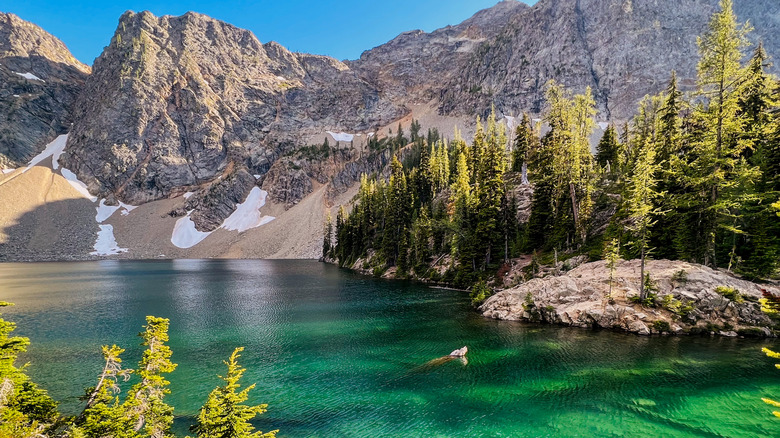
One of the most underrated national parks out west, North Cascades saw only 16,485 visitors in 2024. This destination hasn't always seen such low traffic, though. According to NPS Visitor Use Statistics, the park recorded 917,581 visitors in 1978. However, these decades-old records come with a caveat.
As North Cascades' Deputy Chief of Visitor Services Katy Hooper told The Bellingham Herald in 2024, pre-1990 numbers got a boost due to the park's visitorship being grouped in with that of Lake Chelan and Ross Lake national recreation areas. After 1990, North Cascades never hit the 900,000 mark again. In fact, between 1991 and 2024, annual visitorship remained under 70,000, and frequently fell below 30,000. Across this time period, the average number of visitors per year was just 25,704. For context, Great Smoky Mountains National Park (aka the "salamander capital of the world") saw an average of over 10.2 million visitors during that same time span.
If you're wondering why North Cascades gets so little love, you're not alone. After all, this area has plenty going for it. Situated under four hours from major cities such as Seattle and Vancouver, this free-to-enter land of striking ridgelines, old-growth forest, frosty snowfields, and dazzling glaciers seems like the perfect place for city-dwellers to escape for a back-to-nature vacation. All that rugged, wild beauty might be partially responsible for the park's low attendance, though. Often described as a remote area with confusing borders that make it easy to wander out of park boundaries and into nearby recreation areas, North Cascades is great for backcountry adventures but hard to navigate for casual sightseers. Without robust infrastructure and local amenities, the destination also struggles to compete with Washington's two other national parks: Olympic and Mount Rainier.
Pukaskwa National Park — Ontario, Canada
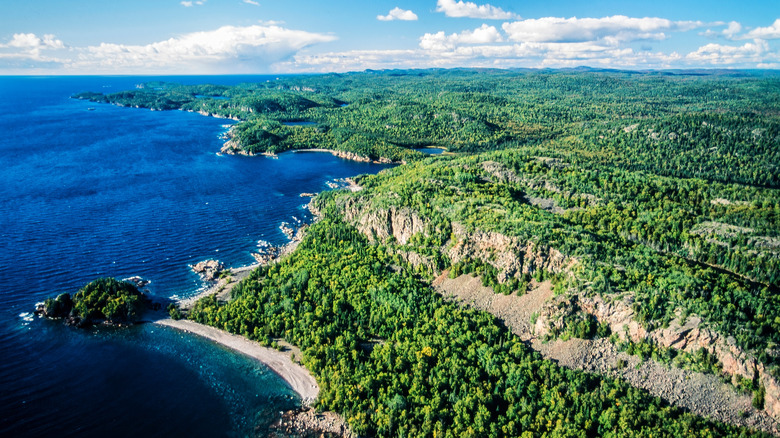
While not Canada's least-visited national park (that honor goes to Quttinirpaaq), Pukaskwa earns a spot here due to its combination of low attendance numbers and incredible natural wonders. Among all of Canada's national parks charting under 20,000 annual visitors in 2024, this location in Ontario has the highest Google rating (4.8 stars).
Situated on the heels of America's cleanest lake, Pukaskwa National Park received 18,447 visitors in 2024. That number isn't surprising when you consider that the park shutters its facilities between November and May. These closures are due to the region's extreme weather throughout winter and into spring. Further explaining the lack of crowds, a commenter in Reddit's Ontario community wrote: "it's not a great place for anyone with mobility issues, and it's drive-to, not drive-through." Though the park's official Government of Canada page states that the visitor center and comfort stations are accessible, only two campsites within one campground (Hattie Cove) are accessible facilities.
That said, if you're prepared to traverse rugged terrain, and can find time to squeeze in a vacation during Pukaskwa's limited open season, this unique national park can treat you to some outstanding outdoor experiences. The fun starts with Boardwalk Beach Trail, a quick and easy trek showcasing views of Horseshoe Bay. From there, you can follow the longer Southern Headland Trail as it traces the coast along scenic Lake Superior. Of course, for some of the best views in Pukaskwa National Park, you'll want to make a beeline for the White River Suspension Bridge Trail. For 98.4 feet of this roughly 11-mile hike, sightseers will journey across a walkway placing them 75 feet above the rapids of Chigamiwinigum Falls. The rest of the route doesn't disappoint either, thanks to local wildlife (moose on land, beavers in the water).
Isle Royale National Park — Michigan, USA
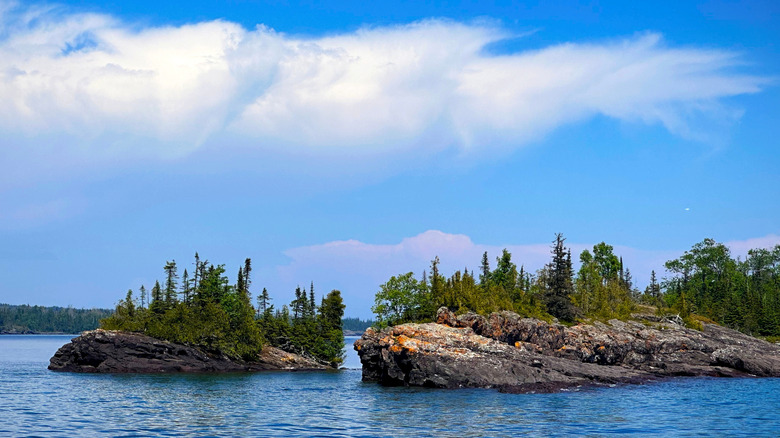
Across the water from Pukaskwa National Park, you can explore shipwrecks and underrated midwestern beauty at Isle Royale National Park. Located on an island in Lake Superior, this Michigan gem recorded 28,806 recreational visits in 2024. That number falls just shy of the peak visitation numbers (28,965) reached in 2023.
Similar to Pukaskwa, this destination has a limited open season — mid-April through October. Further impacting things is that the remote island is only accessible via boat or plane from the mainland in Michigan or Minnesota. Those flying in can hitch a ride with Isle Royale Seaplanes to Rock Harbor on the island's east end or Windigo to the west. Round-trip, these flights cost $396 per person. Prefer to take the ferry? From Michigan, your options include a ride aboard the Ranger III (departing from Houghton) or the Isle Royale Queen IV (departing from Copper Harbor). From Minnesota, you can catch the Voyageur II and Sea Hunter III in Grand Portage. Prices vary from $80 per adult roundtrip on the Ranger III to $175 on the Isle Royale Queen IV, $221 on the Voyageur II, and $120.50 on the Sea Hunter III. If sorting out all those details seems like a headache, don't worry. The NPS created a "First Timer Guide" to help you plan every step of your Isle Royale National Park vacation.
After sorting things out, visitors can discover what makes this Michigan island worth the trouble. Covering 132,018 acres, this park isn't just one island but rather a main island surrounded by more than 450 others. Perhaps best experienced from the water, Isle Royale's splendor can be explored by canoeing, kayaking, and diving. Visitors brave enough to don a scuba suit and peruse the water's depths can marvel at a treasure trove of nearby shipwreck sites.
Methodology
When creating a list of North America's least-visited national parks, you first need to define some terms. In the U.S., the NPS uses "national park" to refer to both the 63 official national parks and the hundreds of other park system units. The latter encompasses everything from historical sites to national seashores. For this roundup, only places with the specific "national park" title were considered.
"Least-visited" can be defined based on annual attendance stats. Using U.S. parks for reference, we started by excluding the top 50 most-visited spots. Since this list covers all of North America, we further whittled potential U.S. candidates down to the six least-visited areas. Why six? While we could round down to five, 2024 NPS stats show only minor variation between the total visitors recorded by the sixth and fifth-place least-visited parks (Isle Royale and Kobuk Valley, respectively). We then rounded up Isle Royale's 2024 total of 28,806 visitors to 30,000, and used that as the upper attendance limit for qualification as a "least-visited" national park. The final five were chosen based on which places seemed most worth a trip. Worthiness was decided based on how impressive each area's scenery was, how memorable the journey there would be, and activities available upon arrival.
During the research process, reliable visitation data was available for parks in America, Canada, and Greenland. However, similar information on Mexican national parks was difficult to find. Though the Mexican government does track how many natural areas it protects, and regional tourism departments share some visitation numbers, verifiable attendance stats for each of the country's 79 national parks remain elusive. Of course, plenty of these spots are worth visiting. Explore a couple of them by reading about the waterfall paradise of Cascada de Basaseachi National Park or picturesque Sumidero Canyon National Park.