

Hikers Share Their Favorite Trails In California's Pinnacles National Park

Nestled in Central California, approximately two hours south of San Jose, lies one of the state's most underrated national parks — a geological wonderland shaped by ancient volcanic activity and millions of years of erosion. Pinnacles National Park, although smaller and less visited than California's more popular national parks like Yosemite or Joshua Tree, is a natural treasure waiting to be explored. Here, nature tells a story through jagged peaks that rise dramatically toward the sky, talus caves plunged deep in shadow, condors soaring high above the cliffs, and canyons steeped in mystery.
Formed more than 23 million years ago by a series of volcanic eruptions, the park's striking formations are the remnants of a massive volcano that the San Andreas Fault tore apart. Despite its size, the park feels expansive, and its layout adds an element of adventure to any visit. Pinnacles National Park is divided into two distinct sections — the East and West sides — separated by the park's rugged heart and connected only by hiking trails. No roads cut through the park, meaning travelers must choose which side to explore or commit to a full-day trek linking the two. Each side has its own personality, so to speak.
The East Entrance near the town of Hollister is the more developed of the two, featuring a main visitor center, campground, and several of the park's most popular trails. This side is lush and accessible, with woodlands and clear streams that seem to soften the park's more jagged terrain. Across the park, the West Entrance near Soledad offers a different, more remote, rugged, and less crowded experience. The cliffs here rise abruptly from the valley floor, and the trails tend to be steeper and rockier, perfect for those seeking solitude and more of a challenge. So, which of the trails is right for you?
Condor Gulch Trail
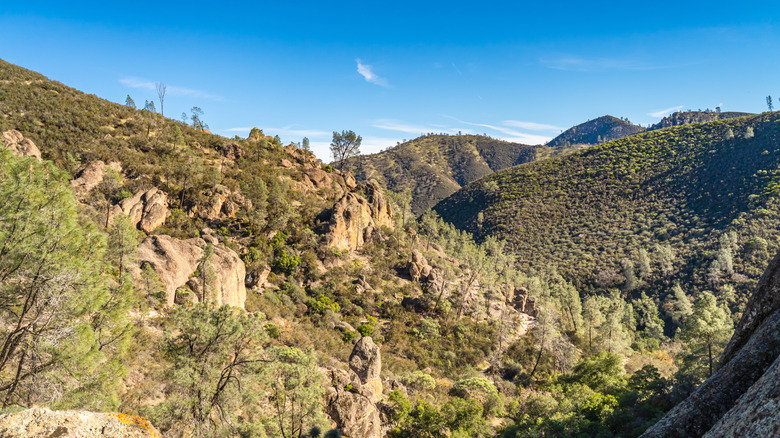
First up is the most popular hiking trail within Pinnacles National Park. Located on the East side, the Condor Gulch Trail begins near the Bear Gulch Nature Center, making it one of the most accessible and beloved trails in the park. Getting there as early as 8 a.m. is vital, as the parking lot fills up quickly. This trail is a favorite among hikers for a good reason; it captures the essence of Pinnacles National Park's landscape in just a few short miles, offering sweeping views, fascinating geology, and a chance to spot one of North America's rarest birds soaring high overhead.
The hike starts easily, winding through woodlands and hillsides before beginning a steady ascent. Along the way, hikers are treated to glimpses of the rugged peaks that define the park's skyline, as well as colorful wildflowers. After about a mile of moderate uphill trekking, hikers reach the Condor Gulch Overlook, a small viewpoint that delivers one of the park's most memorable vistas. From here, the scenery opens up dramatically with the entire Bear Gulch Valley spread below, framed by the rugged silhouettes of the park's volcanic core.
If you're lucky, this is where you might catch sight of the park's famous residents, the California Condors that give the trail its name. It's an ideal place to pause, take a breath, and soak in the view, especially in the soft light of early morning or late afternoon when the cliffs seem to glow. For many hikers, the Condor Gulch Overlook marks a perfect turnaround point. The round-trip hike takes about an hour, offering a satisfying workout without requiring an all-day commitment.
High Peaks Loop
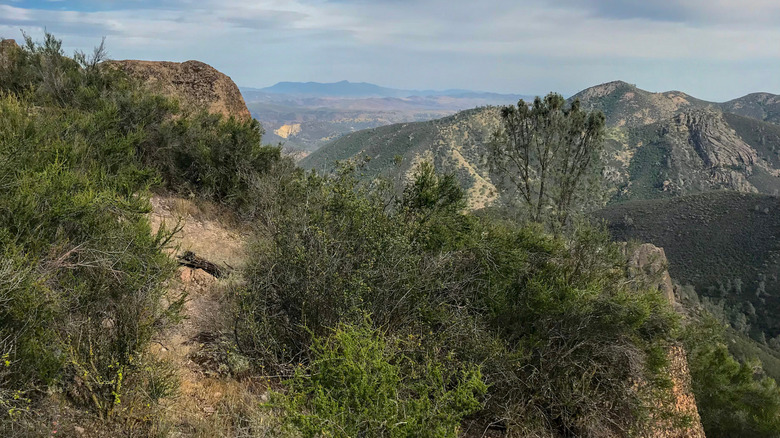
If you're seeking something longer and definitely more challenging, High Peaks Loop is a great way to experience a bit of everything the park has to offer. The trail can be reached from both the East and West sides of the park. From the east, most hikers connect to the trail via the above-mentioned Condor Gulch Trail, while those coming from the west often begin on the Juniper Canyon Trail. No matter how you approach it, the climb to the High Peaks is a steady ascent through chaparral-covered slopes and rocky outcrops that gradually open to reveal jaw-dropping vistas.
The most famous stretch of the hike, known as the steep and narrow section, takes visitors along a series of stone steps carved directly into the rock face. Metal handrails guide you through tight passages and across narrow ledges, and many hikers say it's not for those with a fear of heights. At the top, hikers are rewarded with panoramic views of the entire park. It's here that you'll really get a sense of how Pinnacles earned its name; the volcanic spires rise like ancient sentinels around you. From here, you can continue for a longer hike toward Bear Gulch via the Rim Trail or Bear Gulch Cave Trail, or head back the way you came along the 5.3-mile loop. It's recommended to begin the hike early and bring plenty of water, as most of the trail is not shaded.
Bear Gulch Cave Trail
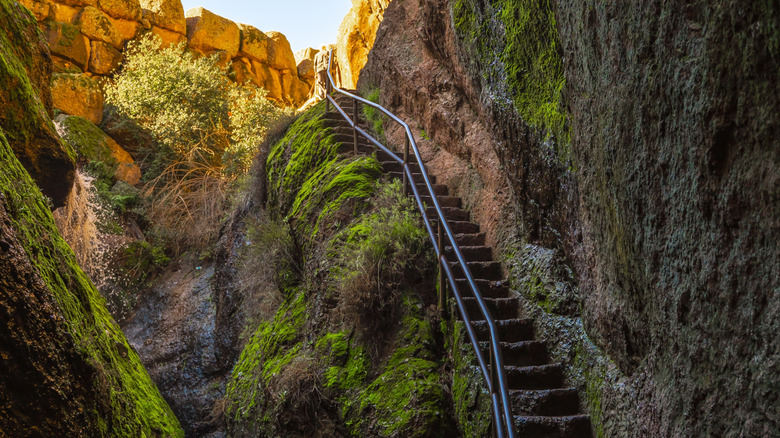
For something easy but unique, the Bear Gulch Trail is the perfect hike to start your day. At the east side of the park, the 2-mile loop begins in a quiet sycamore woodland near the Bear Gulch Day Use Area, following a path along a creek. As you move further into the canyon, you'll find yourself surrounded by towering volcanic cliffs, the first hints of the dramatic terrain that makes Pinnacles so fascinating. A short distance into the trail leads you to Bear Gulch Cave, one of the park's most famous features. The caves here are geological wonders known as talus caves. Formed when enormous boulders tumbled into narrow canyons and became wedged between the rock walls, this unique happenstance creates a labyrinth of dark passageways.
To enter, you'll need a headlamp or flashlight, as parts of the cave are completely dark. The pathway twists and climbs over and between large rocks and stone stairways, adding just the right amount of adventure to make you feel like Indian Jones himself. Depending on the season, you may also notice the presence of the Townsend big-eared bats, the resident species of Bear Gulch Cave, which roost in parts of the cave. (Both sections close temporarily to protect their habitat, typically from mid-May to mid-July; check the website for updates.)
Once you emerge from the cave, you'll make your way along the path to the Bear Gulch Reservoir. This small but beautiful body of water sits tucked among the cliffs, its rippling surface reflecting the surrounding rock spires. It's an ideal place to rest, enjoy a picnic, and take in the beautiful natural surroundings. From the reservoir, hikers can return the way they came or connect with the Condor Gulch Trail or the High Peaks Trail for a longer, more challenging route leading deeper into the park.
Balconies Cave Trail
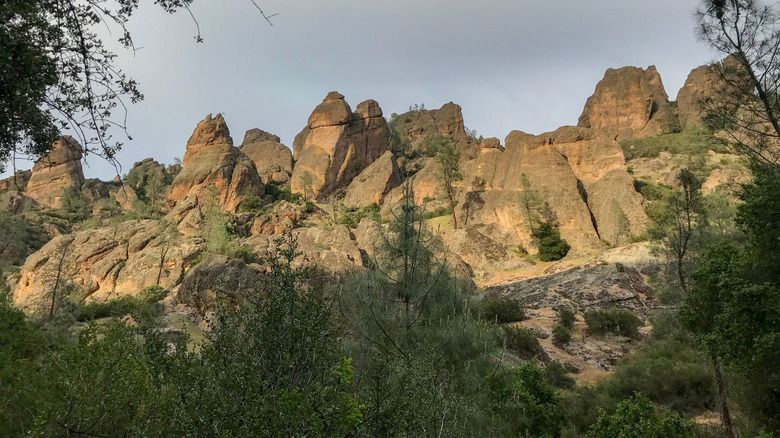
While the East side of Pinnacles draws many visitors to explore its beautiful trails, the Balconies Cave Trail on the park's West Side offers a completely different kind of adventure. The hike may be short, but it's a perfect adventure to add to your day of exploration. The trail begins at the Chaparral Parking Area, and right away, visitors are surrounded by towering volcanic formations, the jagged "balconies" that give the trail its name. These massive spires and cliffs are remnants of the park's ancient volcanic core, created by millions of years of erosion.
The path starts gently, winding through chaparral and oak-studded hillsides, before following a rocky wall into a narrow canyon. Soon, the walls close in, and the real adventure begins. Massive boulders, dislodged long ago by earthquakes and erosion, have wedged themselves between the cliffs above, forming a dark, labyrinthine cave below. This is Balconies Cave, one of Pinnacles' two main talus caves (the other being Bear Gulch Cave on the East Side). Inside the cave, you'll need a headlamp or flashlight, as some sections are steeped in complete darkness.
The cave itself isn't particularly long or difficult, but it has an aura of adventure to it, especially as you bob and weave your way through narrow passages. Some visitors also suggest bringing water shoes if visiting in the spring, as the water inside the cave can reach knee level. The hike is around 2.4 miles round-trip, or can be extended to 5.3 miles if visitors decide to continue through the Old Pinnacles Trail.
Methodology
To craft this guide of amazing places to hike, I drew from a mix of research across trusted travel and outdoor platforms. I cross-checked trail details and other pertinent information with the National Park Service, AllTrails, blogs, and recent visitor reviews on Tripadvisor, ensuring up-to-date, accurate information.
Hikers' insights and park materials helped provide a deeper look into the area's geology, wildlife, and history, especially the story of the park's famed California condors. Combined, these sources paint a well-rounded picture of what visitors can expect when hiking through this dramatic landscape of spires, caves, and sun-washed valleys.