

The 5 Most Mysterious Places You Can Visit In Europe
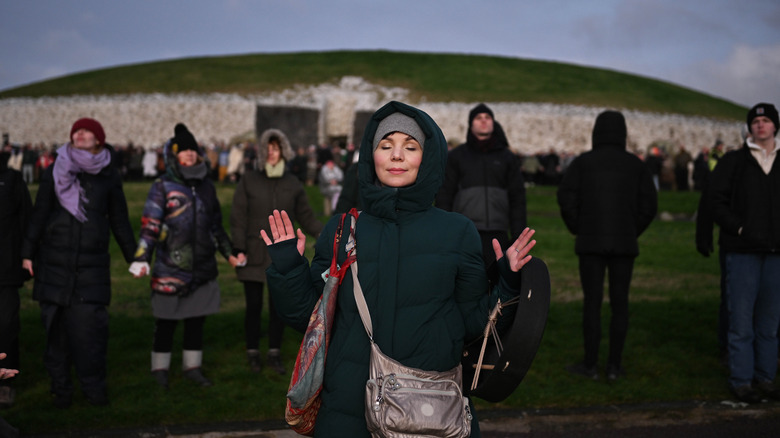
Europe is home to some of the world's most iconic destinations. Cities like London, Paris, Rome, and Barcelona attract travelers from all over the world. National parks offer endless opportunities to immerse yourself in nature. Tourists can swim in the sparkling Mediterranean waters or ski down mountains in the majestic Alps. History buffs can visit world-class museums and admire historic architecture. Foodies can dine at mouthwatering restaurants. There's something for everyone — including travelers who love to experience mysterious places.
Humans have inhabited the European continent for many thousands of years. According to recent archaeological evidence, people may have arrived over 50,000 years ago. The continent is scattered with ancient ruins that allow us to glimpse secrets from the past, and archaeologists have discovered peculiar tools, mystical sites, and unexplainable structures.
From castles shrouded in myth to standing stones that align with astronomical events, Europe is full of mysterious places to explore. Stonehenge is one of the most well known, and its construction still baffles archaeologists and historians. Newgrange, Skara Brae, Houska Castle, and Les Catacombs are a few more places you should visit if you're someone who loves all things occult, mystifying, and obscure.
Stonehenge
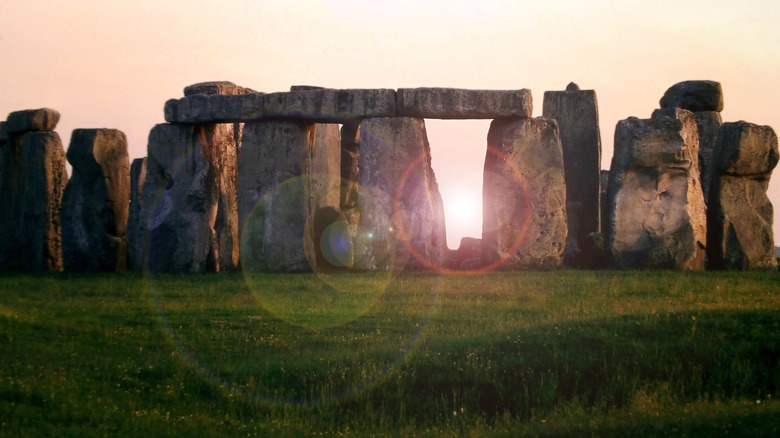
Since we're discussing mysterious places in Europe, we would be remiss not to mention England's Stonehenge. Although it's one of the most popular tourist attractions in the United Kingdom, there is so much that we still don't understand about the ancient ruins. Experts believe that the massive stone circle was likely constructed 2500 BCE, but there is evidence that humans first arrived in the area surrounding the ancient monument around 9,000 years ago.
Even though Stonehenge is one of the world's most iconic sites, experts still debate exactly how the ancient people built it. According to an article published by National Geographic, the largest stones are sandstone, and each weighs about 25 tons. Some argue that these stones were transported from around 20 miles away, but there have been tests that indicate the large Altar Stone could have come from Scotland, which means it would have been transported around 466 miles.
It's also unclear why Stonehenge was constructed. Most experts argue that it was either a spiritual site or an astronomical observatory. Some people believe that the stones were cut by giants and that the legendary wizard Merlin, who often assisted King Arthur, was responsible for moving them to their current location. Others argue that Stonehenge was designed as a landing site for alien spaceships. There are tons of theories, but what we do know is that Stonehenge was built in a way that aligns with the solstices and the movements of the sun. Today, it's still one of the most incredible locations to celebrate the summer solstice. Thousands of people still gather at the mysterious site to celebrate solstices and equinoxes each year.
Newgrange
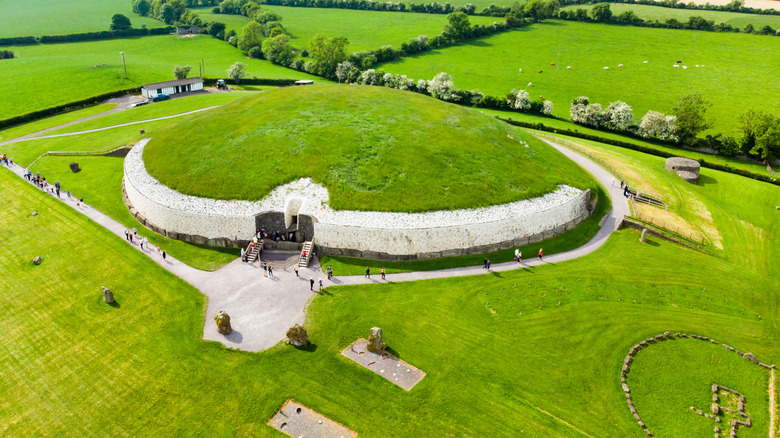
Ireland is full of lively cities, stunning natural scenery, and charming small towns. According to tourists, it is one of the most friendly European destinations, but it also has its fair share of mysterious places. Newgrange, about 30 minutes outside of the bustling city of Dublin, is one of the most fascinating.
The region where Newgrange is located is often referred to as Ireland's Ancient East. The verdant valleys were once home to an advanced ancient civilization during the Stone Age. Thousands of years ago the people raised livestock, farmed, and constructed mounds. Some of the mounds, like Newgrange, are known as passage tombs. For a long time they were believed to serve as burial sites involved with funeral rituals. Archeologists now believe that these cairns were deeply sacred places that were central to ancient Pagan spiritual practices.
Newgrange is thought to have been an ancient temple of sorts, and it remains remarkably well preserved. The dome mound structure is an impressive 279 feet in diameter and 43 feet tall. It was constructed around 5,200 years ago. It's surrounded by huge stones engraved with megalithic art. One of the most mysterious things about the passage tomb is that it is perfectly aligned with the sun as it rises on the winter solstice each year. Experts still aren't sure how the ancient civilization was able to achieve such precise measurements without advanced tools. As the sun climbs high into the sky, the inner chamber of the structure begins to glow with light. Some believe that the spectacle symbolized the victory of life over death and light over darkness.
Skara Brae
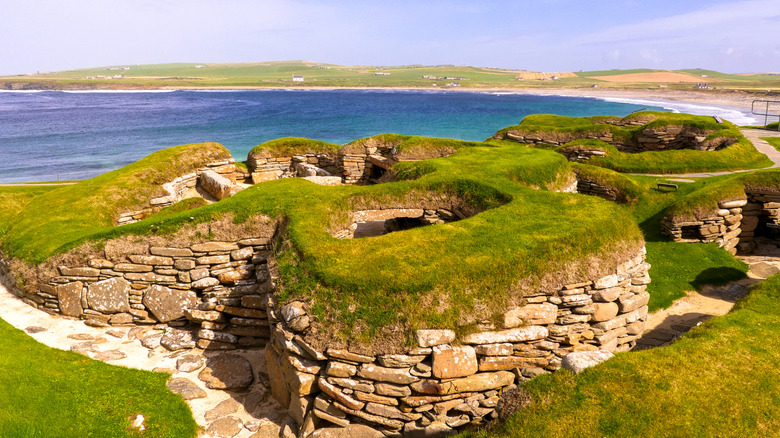
Scotland's remote Orkney Islands are breathtakingly beautiful. The archipelago includes around 70 different islands and inlets about ten miles from mainland Scotland's northern coast. The islands are home to over 20,000 people, and about 100,000 people visit every year. Tourists love the stark natural beauty, charming villages, abundant wildlife, and whiskey distilleries, but travelers who love mysterious places should head straight to Skara Brae.
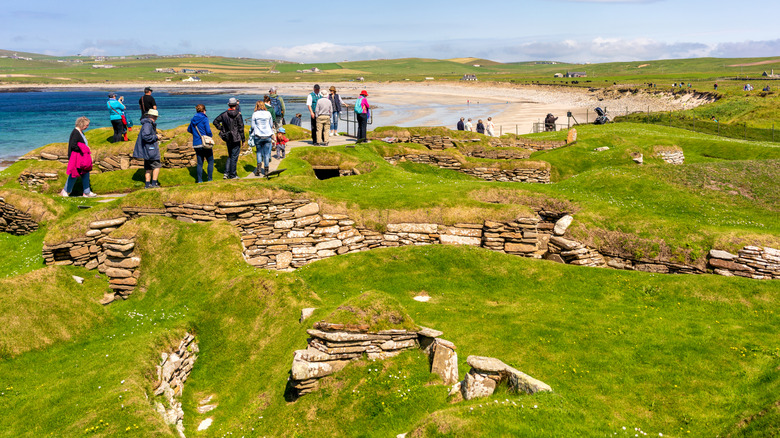
Skara Brae is one of the oldest archaeological sites in Europe and a must-visit destination for history buffs. The ancient ruins are believed to be over 5,000 years old. They provide a fascinating glimpse into what life was like for people during the Stone Age, but there is still a ton that researchers don't understand about the site. The mysterious ruins were first discovered around 1850 when a strong storm stripped away the top layer of soil and revealed the outline of stone buildings. William Watt of Skaill, the Seventh Laird of Breckness, was intrigued by the discovery and began the first excavations.
Today, eight stone houses have been uncovered along with a series of underground passageways between them. They're perched on a bluff with beautiful views of the coastline. Although the small village is remarkably well preserved, experts can't seem to figure out why the residents abandoned the village after living there for around 600 years. Artifacts like jewelry, sewing needles, buttons, and even games were discovered ononsite, but, strangely, no weapons have ever been found.Archeologists also discovered peculiar round objects that were carved from stone and decorated with elaborate designs like spirals and knobs. Some experts don't believe that it would have been possible for early humans to carve these perfect objects at the time, and their purpose remains a mystery.
Houska Castle
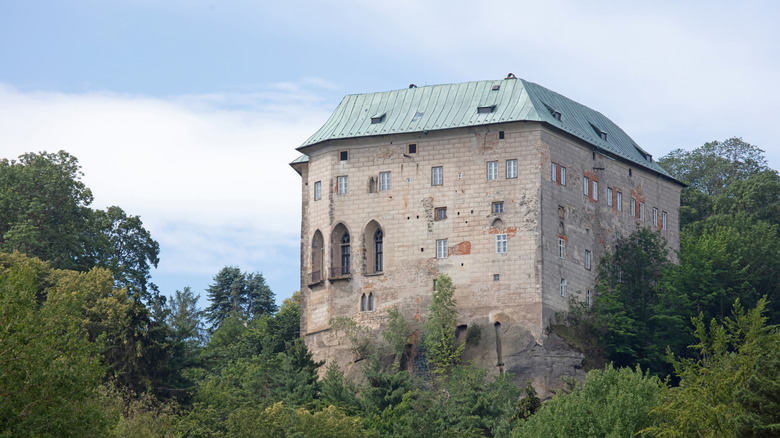
If you're a fan of spooky legends, haunted houses, and occult history, you should definitely plan a trip to Houska Castle. Located in the Czech Republic, about an hour from Prague in the thick forests of Central Bohemia, the castle has been fascinating locals and visitors for generations due to the dark legends surrounding its origin.
Houska Castle was constructed in the 13th century, and according to local folklore, it was designed to seal off a gateway to hell. Legends tell of a massive pit that was located where the castle now stands. People apparently spotted beast-like creatures that terrorized the community and believed that they were demons from hell. In order to contain them, the fortress was built. It was not designed to be used as a home, so it had faux windows and lacked practical amenities like a kitchen. One popular legend says that a prisoner was lowered into the pit to face hell as punishment. He entered the pit as a young man and was lowered down deeper and deeper until a scream was heard. When he was brought back up, he appeared to have aged 30 years and was incoherent and traumatized.
In the decades that followed, the castle was said to have been inhabited by various residents who dabbled in dark occult practices. When the Nazis invaded, some of them took up residence in the castle, and it was said that they conducted terrifying experiments. Hitler was widely known to have been fascinated by occultism, and many believe that the Nazis were attempting to connect with evil forces at Houska Castle. Now the castle is open to tourists, and many who visit claim to see ghosts and hear mysterious noises. It's considered one of the most haunted places in the world.
Les Catacombs
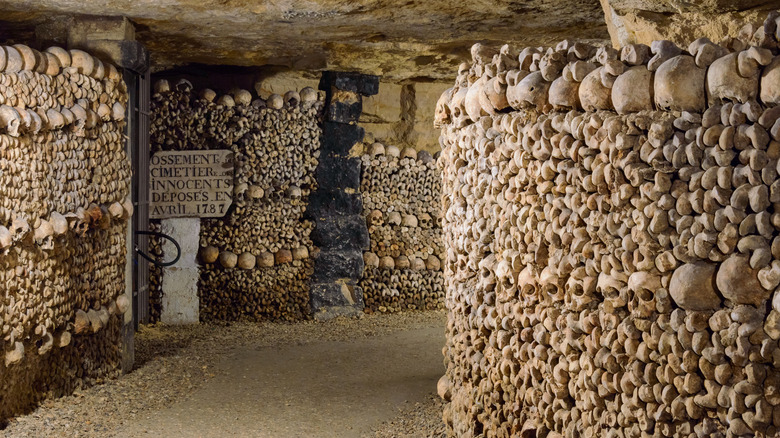
Les Catacombs are a stark contrast to the beautiful, bustling, and vibrant streets of Paris above. As you sip a glass of wine at a cheerful cafe and admire the stylishly dressed locals it's almost impossible to imagine that there are millions of skulls and other bones lining dark tunnels beneath the streets.
Visiting the Catacombs isn't for the faint of heart. Most casual tourists probably have never laid eyes on a real human skull, but after just a few moments in the Paris Catacombs, they'll have seen thousands. There are over 200 miles of tunnels under Paris that date back to the Middle Ages. They were carved into the limestone under the city to create a network of quarries. It was during the 18th century that the tunnels were filled with bones. Overcrowded cemeteries in Paris were becoming a real problem, and so the remains of around 6 million dead Parisians were relocated to the Paris Catacombs. Skulls, femurs, and other bones are stacked on top of one another to create hauntingly beautiful and macabre walls. The doorway to the underground tombs is crowned with the words "Arrête! C'est ici l'empire de la mort," or "Halt! This is the empire of death," carved into stone.
Les Catacombs have become a popular tourist attraction, and hundreds of thousands of people visit each year. The section that is open to the public is just under a mile long.The rest of the mysterious underground maze is off-limits, although there are "cataphiles" who opt to explore anyway. Underground parties within the tunnels are a common occurrence, and parts of the tunnels are covered with art. Over the years, there have been plenty of ghost sightings, and legends of strange happenings, disappearances, and spirits roaming the tunnels persist.
Methodology
Europe is full of mysterious places to explore. For our article, we opted to focus on places that are open to the public so that tourists can easily visit on a self-guided tour. We included destinations that are important historically, but we also wanted to make sure that there were plenty of local legends and folklore to keep things interesting. We pulled information from personal travel experiences, travel blogs, and "best of" articles. If you're fascinated by places like these, check out our guide to the most mysterious places in the whole entire world.