

5 Helpful Train Tips For Your Next Europe Trip, According To Seasoned Travelers
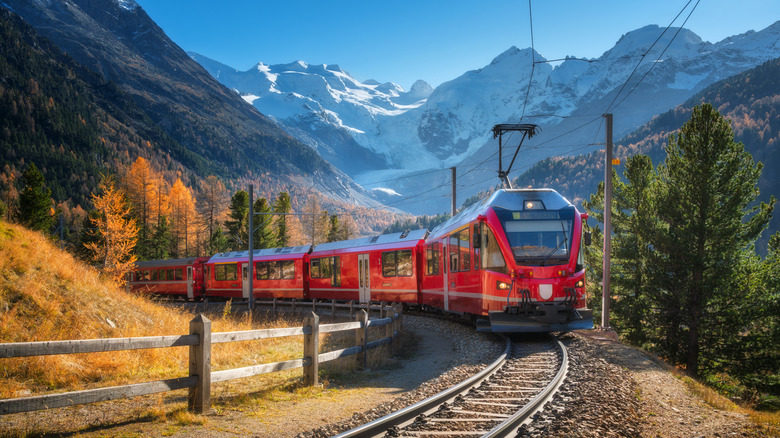
From night trains like the Caledonian Sleeper from London to the Scottish Highlands to stunningly beautiful rail journeys like the Bernina Express, Europe is an amazing place to explore by train. Its combination of impressive infrastructure, relatively small geographic size, and remarkable scenic and cultural diversity makes a train journey through Europe an amazing vacation option. Trains are a great way to get around, whizzing between sophisticated European capitals or picturesque fairytale towns, but they are also often an attraction in their own right, with journeys like the Santa Claus Express or the Orient Express worth traveling a long way just to experience.
Traveling by train is fun, safe, and often much less stressful than flying. But there are still pitfalls to be avoided, and even the most savvy traveler will want to avoid the mistakes people traveling by train often make. Whether it's preparing properly with snacks and bathroom essentials or choosing the best seats before you travel, there are plenty of simple ways to make train travel in Europe a breeze. We explored guides, advice, and feedback from seasoned travelers on social media to find the five most helpful and sensible tips for your next European railway vacation.
Choose your seat when you book
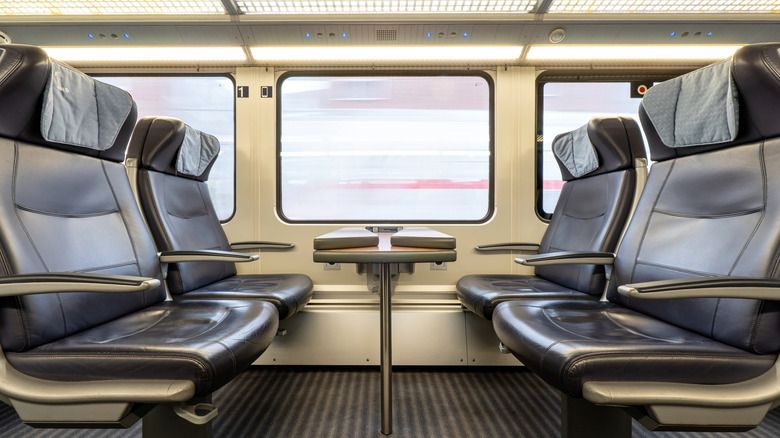
One of the simplest train travel hacks that can transform your journey is to always reserve your seat in advance. Almost all European train booking platforms offer the option to reserve a seat in advance, stating that reservations are recommended but not required. Nevertheless, TikTok user @sightsofsara says, "I always recommend booking them no matter what, because if you don't, you could risk not having a seat." Nothing ruins a vacation faster than having to stand with your luggage for hours on end while heading to your next destination!
Choosing your seats when you book your tickets also comes with other benefits, as it gives you the chance to pick exactly where you sit and take advantage of your personal preferences. Some train journeys, for example, have better views out of one side of the train than the other, while some people will want to sit near the dining car or away from the toilets. One of the best resources for European train travel, The Man in Seat 61, is named after the author's favorite seat in First Class on the Eurostar from London to Paris!
Bring a fan
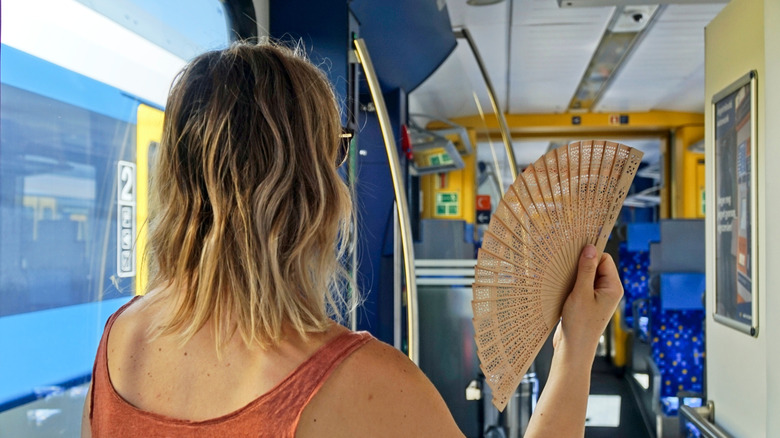
European attitudes to air conditioning can be confusing and hard to deal with for American travelers who are used to chill temperatures indoors and on public transport. European trains are no different and have a reputation for turning into ovens when the temperatures rise over the summer. While some trains in Europe will be air-conditioned, there is no legal requirement for trains to have air conditioning, so many won't. Even if there is AC, it may not live up to your expectations.
As a result, it is always worth bringing a hand-held fan with you on longer journeys, particularly if you are traveling during the summer. Countries like France, Italy, Spain, Portugal, and Greece can get extremely hot from May to August, and there's nothing worse than arriving at your destination sweaty, flustered, and overheated. A small battery-powered fan, or even an old-school, elegant paper one, can make all the difference and ensure a far more comfortable trip.
Bring spare tissues and toilet paper
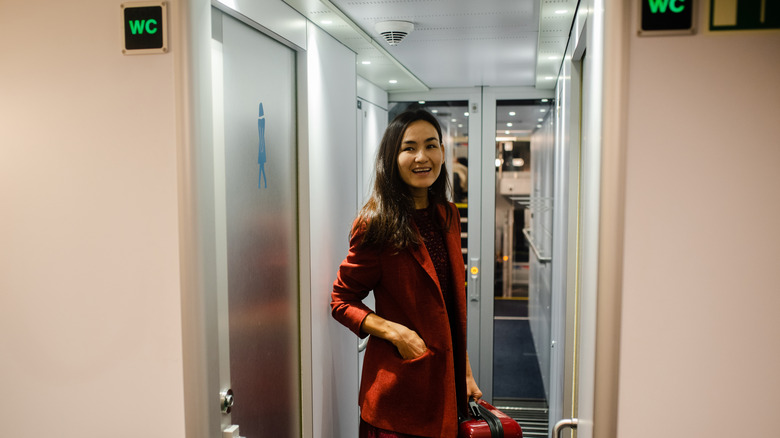
European trains tend to be extremely well-equipped. All intercity trains will have decent toilet facilities, so you won't have to worry about getting caught short. Even the more local, regional trains tend to have washrooms. However, even on the fanciest trains, supplies run out quickly, especially on longer journeys, and the train attendants aren't always the fastest when it comes to restocking things like paper towels, tissues, and toilet paper.
Bringing spare tissues when you are traveling is always a good idea, but particularly when you are on a train for a longer stretch of time. That way, you don't have to worry and can enjoy your journey with peace of mind. It is also a good idea to bring wet wipes or hand sanitizer, in case the soap dispensers haven't been refilled. This kind of preparation in advance is the key to reducing worries and minor annoyances that can take some of the joy out of otherwise great experiences.
Bring snacks
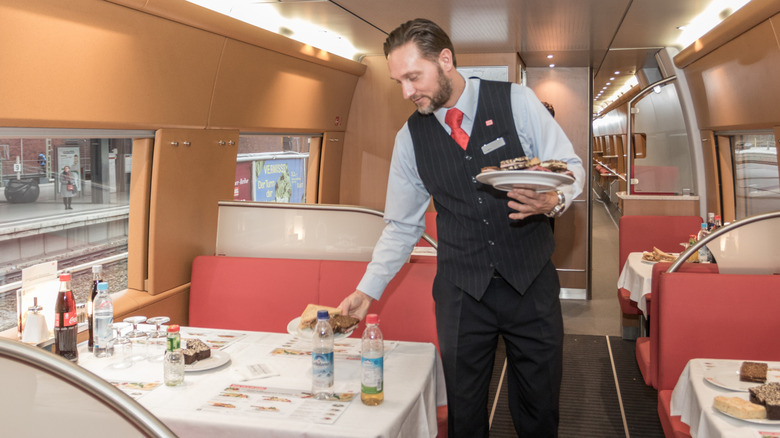
Everyone has seen old movies with sophisticated travelers sipping wine and eating three-course meals in the dining car of an elegant locomotive as it speeds its way through gorgeous landscapes. Sadly, the golden age of rail has passed, and dining on board a train isn't quite so glamorous anymore. Sure, some routes do still have traditional dining cars, but they are often only for first-class passengers, and they aren't standard issue. Most trains have some sort of concession, whether it's a small cafe, a refreshments trolley, or even just a snack machine. But it is still worth bringing your own snacks, just in case.
TikTok user @hungrypursuit explains, "high-speed trains usually have cafe/restaurant car or seat service, but station drinks and snacks are cheaper," meaning that buying food in advance is a great way to save money. Making a packed lunch or a full picnic for longer journeys can add a bit of fun and DIY magic to the experience and is sensible to make sure you don't get hangry if there isn't anything else to eat on the train or if the food offering isn't up to much.
Use a backpack instead of a suitcase
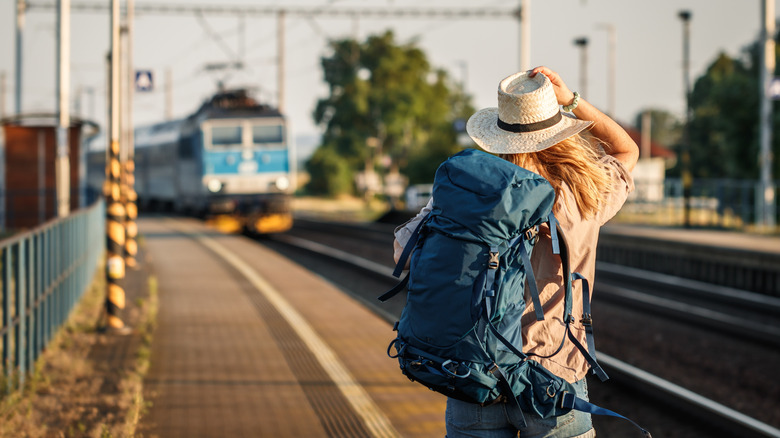
Trains tend to have far fewer limitations on what luggage you can bring with you than planes. While flying on an affordable airline usually means either paying huge additional fees for checked bags or desperately squeezing all your essentials into a tiny carry-on, baggage allowance on trains is far less restricted. However, this shouldn't be taken as encouragement to go wild when putting your bags together for your trip!
When traveling by train, packing light is an incredibly sensible way to go, and bringing a backpack rather than a suitcase is a no-brainer. A backpack makes you far more mobile, meaning that you can jump straight off the train and start exploring right away. Plus, dragging a wheeled suitcase around the narrow alleys and cobbled streets that are a feature of many European cities is a pain that you could do without. So pack light, use a backpack, and enjoy the flexibility and freedom that is the hallmark of a European train adventure.