

Campers And Hikers Swear By This Rule To Stay Warm During Winter Adventures
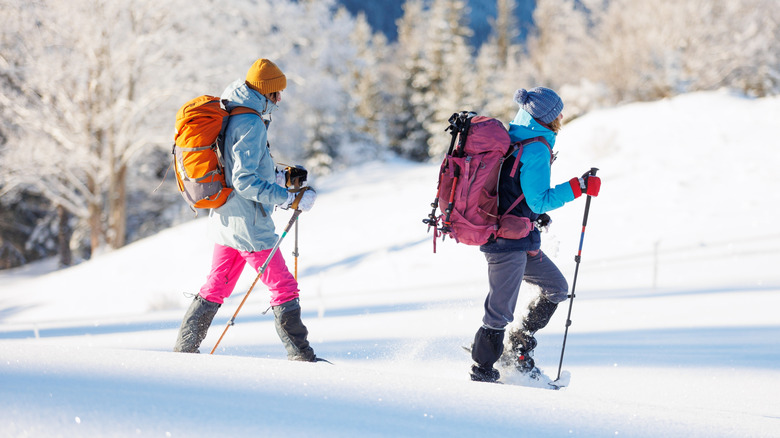
Camping and hiking in winter has plenty of positives: fewer crowds, unique scenery, and perhaps even different wildlife viewing opportunities than in warmer months. However, there are more precautions to take when spending time outdoors when it is cold. Of course most of these involve staying warm, yet there is an important rule for this principle that might be less obvious than packing a thick coat.
Hydration is of the utmost importance in warm weather, but avid outdoorspeople know that water bottles are essential things to pack in their winter hiking backpacks too. Drinking plenty of water supports healthy blood volume and circulation, in turn keeping up your core body temperature. Proper hydration can actually prevent hypothermia. Issues caused by dehydration, like fatigue, muscle cramps, and confusion, are possible too, even if those are more associated with getting too hot rather than too cold. Staying hydrated sounds like a given, but you're actually less likely to feel thirsty when out in the cold. This natural biological quirk is why you'll need to start drinking water before you actually feel thirsty during winter adventures.
There are multiple ways to keep your water from freezing
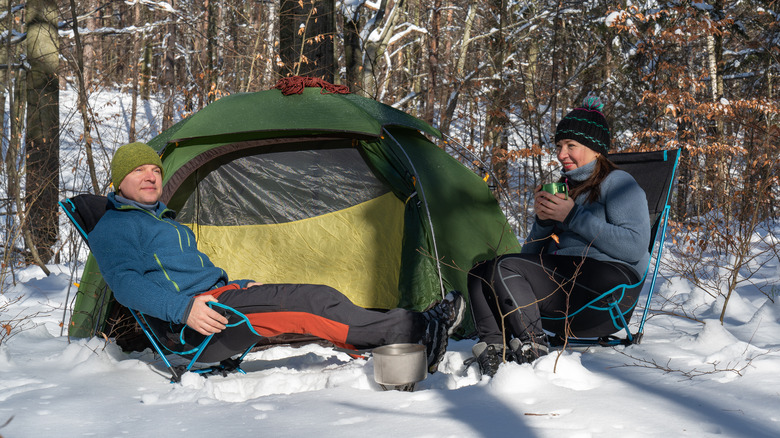
Age, climate, and activity level are some things to take into account when calculating how much water you need. However, a generally accepted measurement is to drink enough ounces to equal half of your body weight in pounds. So if you weigh 160 pounds, aim to drink 80 ounces of water daily — that's about seven glasses. And you will want to consume more when you're active outdoors. But when camping and hiking in winter, make sure your water doesn't freeze! Bring insulated water bottles like a Nalgene or Hydro Flask. Even budget-conscious traveler Rick Steves thinks they are worth the higher price tag. Nalgene in particular offers bottles with insulation sleeves. If your bottle doesn't have a sleeve, commenters in the subreddit r/Ultralight have used anything from foam pad material to thick socks to keep the contents from turning to ice.
Fill the bottles with boiling or at least near-boiling water. You can do this at night and bury the bottles in the snow. It seems counterintuitive, but snow can keep them insulated. Others recommended sleeping with the water bottles inside your sleeping bag, as body heat will prevent freezing. This is a camping hack that will keep you warm at night too. Another option is to fill the bottles with extremely hot water when you're making coffee and breakfast in the morning. As the hours pass, your water should stay above the freeze point.