

The One Thing You Need To Figure Out Before Choosing A Solar Power System For Your RV
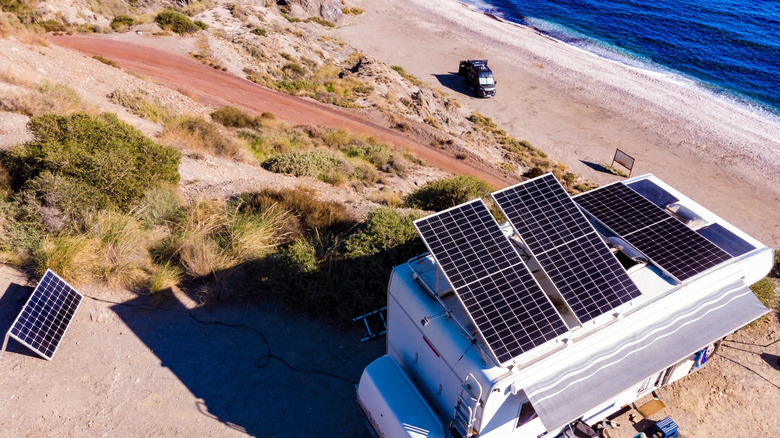
Planning a successful RV trip involves a lot of preparation, but it's all worth it when you're out on the open road or camping lakeside with a cold drink in hand. There is one question you need to answer before going ahead to buy any solar setup for your RV, and that is: How much electricity will I really use on the road? This matters more than anything else, even more than the brand names, panel size, or even the price. And that is because an underestimation could mean you get a system that'll die halfway through the day or one that's far more expensive than you actually need. To avoid that, you need to do your homework.
The single best thing you can do before researching the right systems is to start by listing everything you plan to power in your RV. This could include lights, a phone charger, a laptop, a small fridge, a fan, or even a coffee maker. Each device you plan to take with you uses a certain amount of electricity, measured in watts. The longer you use it, the more power it consumes, so you have to get it right. And to get it right, you have to do some math. So to estimate your daily use, think in terms of "watts used over time."
For example, if a device uses 100 watts and you run it for three hours, that's 300 watt-hours of energy. Add up the watt-hours for all your devices, then divide by 1,000 to calculate kilowatt-hours (kWh), which is the same unit used on electricity bills. Doing that will give you a rough daily energy usage figure that will help you choose the right solar power panel and battery size. You don't need to be exact. A ballpark estimate is all you need to avoid buying the wrong system.
Consider the extra power some devices need to start
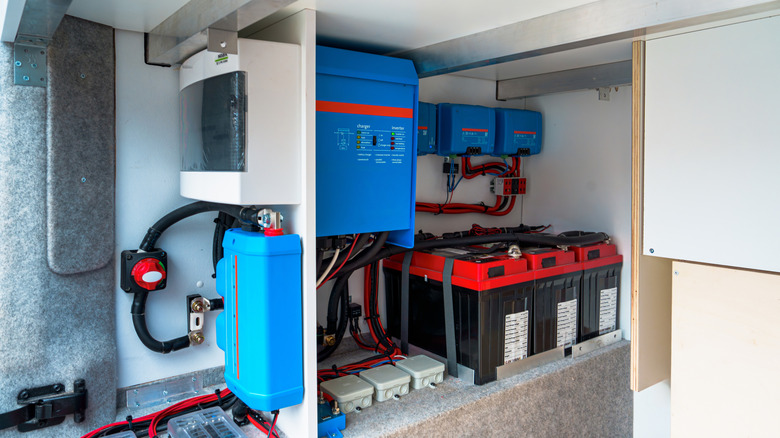
To avoid making a beginner mistake, don't forget to consider that some appliances need extra power just to turn on. That's called "surge power." While it is not important for you to remember the term, there is every need for you to remember the idea. Appliances like mini fridges, blenders, or power tools with motors or compressors often pull a quick burst of extra electricity for a few seconds when they start. And if your solar power generator can't handle that brief spike, the device simply won't turn on, even if the system looks powerful enough on paper.
So to stay clear of that potential problem, you have to check whether any of your devices list a higher "starting" or "peak" wattage. Your system should be able to handle that higher number, not just the regular running power. And if you're ever unsure, choose one that offers more power than you think you need. This will not only give you flexibility but also reduce frustration and leave room for adding more devices later. So, especially if you're RV beginners, understanding your own power habits and calculating the kWh you are likely to use can get you started on the right path towards finding the perfect solar power system. And once you know that, the rest becomes much easier. Here are some helpful tips for staying safe on your next RV adventure.