

Why Kauai's Picture-Perfect Beach Is One Of The Most Dangerous Places To Swim In America
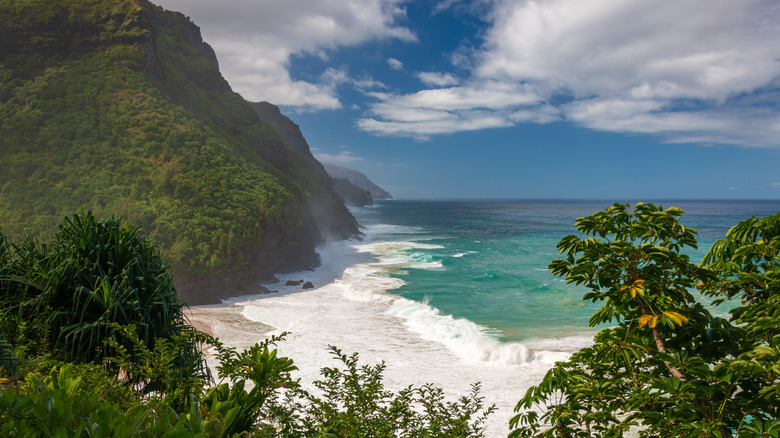
A dream trip can turn into a nightmare in the blink of an eye — a very real risk if you try to brave the waters at beautiful beaches in Hawaii that are too dangerous for swimming. Such is the case of the stunning Hanakapiai Beach, which reveals itself as a spectacular showstopper at the end of a 2-mile hike on Kauai's north shore. On a warm, sunny day, after a vigorous hike, what could be more alluring than a refreshing swim in the shimmering water? Beware of the siren song, because even if the waves and sharp coral don't look threatening enough, the worst danger lurks out of sight. Hanakapiai Beach has notoriously dangerous swells and strong currents that make swimming here a life-threatening activity.
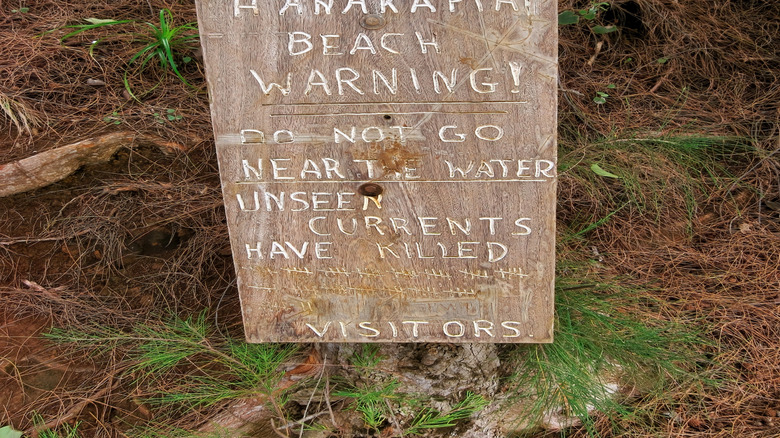
The name of the beach means "bay of sprinkling food" in Hawaiian. Take it as a sign that the first order of business should be not to become fish food. There is no lifeguard station and no flags to warn visitors that there could be danger at the beach. What you will find here is a wooden board indicating how many people have drowned at this site — a sobering reminder to take the warnings seriously.
Why Hanakapiai Beach is a dangerous place to swim
The beach is only accessible on foot, via the initial 2-mile section of the Kalalau Trail located on Kauai's famous Nā Pali Coast. This particular section of coastline is not protected by a reef, meaning that it takes the untethered brunt of the unpredictable Pacific Ocean. The craggy volcanic coast drops sharply into the deep, pounded by the incessant swell and strong currents. While it's rugged and beautiful, the combination of these factors creates the perfect invisible storm under the surface. Frequent rip tides can suction the most capable swimmer out to sea unbelievably fast.
It is already tricky to spot riptides on any beach when you are on vacation, let alone one that keeps a running tally of the swimmers that never make it back to shore. Even wading is not recommended, so keep a safe distance. The closest beach to regain a safe shore is around 6 miles away in extremely challenging conditions on the best of days. These are waters made to be admired, photographed ... and given a wide berth.
How to stay safe at Hanakapiai Beach
The first priority is to be prepared for the hike to Hanakapiai Beach from the trailhead at the end of Highway 560. You can take the Kauai North Shore Shuttle, which includes a roundtrip ticket and access to Hanena State Park for about $40, or you will need a parking pass and a park permit if you're driving. The trail is rated as moderate and offers awe-inspiring views of the coastline. The terrain can get slippery after it rains, so plan your footwear accordingly, and give yourself about four hours to walk the 4-mile round trip track. Pack lots of drinking water and don't drink from any natural water sources on the hike. Unfortunately, several streams in Kauai struggle with unsafe levels of bacteria, so bringing your own water is a must.
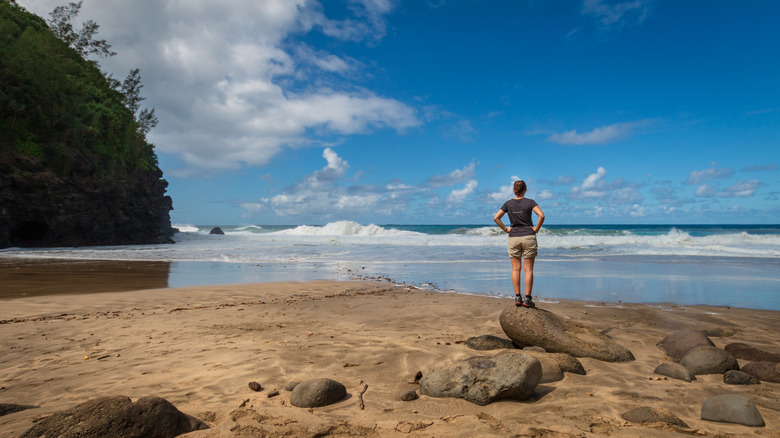
Once you get to the beach, the most sensible way to be safe is to stay completely out of the ocean. It is not worth the risk. But you can walk along the shore or bring a towel to sit on for a rewarding picnic after the hike. As with any wilderness outing, it's important to remain aware of your surroundings on your way to and from the beach. If the water streaming down looks muddy, stay away, as this is a sign that there has been recent heavy rainfall, which could quickly trigger flash floods. Be aware that there is little to no cell reception anywhere on the trail or down at the beach.
Extending the adventure to the scenic Hanakapiai Falls
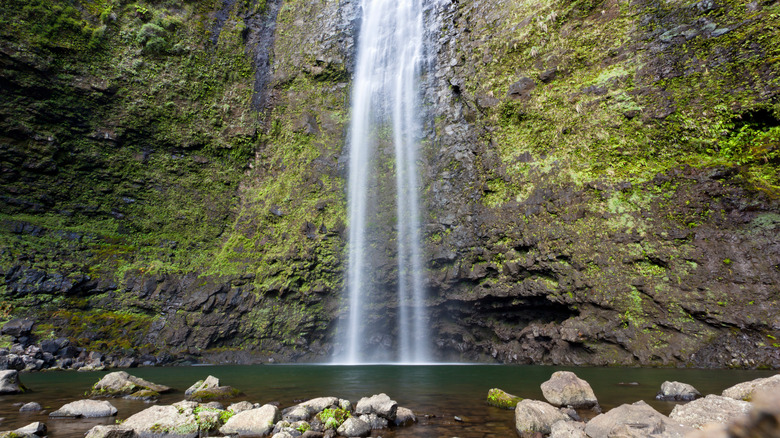
If you're melting and have it in you to hike even further, Hanakapiai Falls is the reward waiting for you at the end of the second section of the trail, similar in length to the first one but steeper and more strenuous. The 2-mile trail brings you to an idyllic 300-foot veil of water that plunges into a tranquil swimming spot, perfect for a dip to recover from all the effort.
This section of the trail is only recommended for more seasoned hikers. It is not to be underestimated and it is not maintained, so only go if you have enough drinking water, the right shoes, and good level of physical fitness. The rugged adventure will lead you through lush bamboo thickets, across streams, and down slippery steep terrain — you could also encounter crumbly rocks in some sections. Keeping to a few common-sense safety guidelines, and out of the ocean, will make for a memorable adventure to one of the most beautiful places in the world.