

This Country Denied Entry To Thousands Of Travelers. Here's What To Know Before Visiting
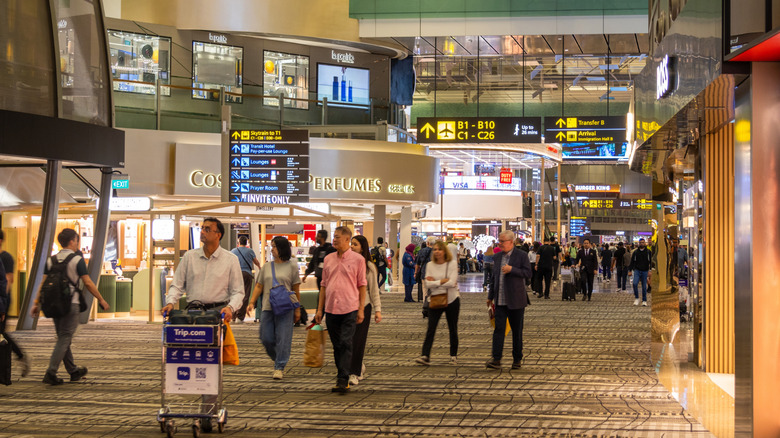
In recent years, immigration has become an important, emotional, even controversial topic, and countries around the world have tightened up their border security in order to control who's permitted to enter. While a significant proportion of this additional security relates to asylum seekers, refugees, and economic migrants, there's no denying that tighter immigration controls also have an impact on tourists as well.
Singapore is renowned as one of the strictest and most tightly controlled societies on the planet. It also officially holds the world's most powerful passport, so it's hardly surprising that their approach to immigration is equally robust. At Changi, consistently ranked as one of the best airports in the world, a combination of innovative security measures and cutting-edge technology makes security screening both more effective and less intrusive. But in the last year, Singapore's Immigration and Checkpoints Authority (ICA) have gone even further in cracking down on unwelcome visitors, denying entry to around 41,800 travelers, an increase of around 26 percent from 2024, and 46 percent from 2023.
The ICA are clear that the increase in numbers of travelers denied entry is a testament to their advanced, multi-layered security measures, and are delighted with how effective these new initiatives have been. Singapore intends to build on this success, continuing to tighten up their border security with new measures planned for the following year.
Tighter immigration security and No Boarding Directives
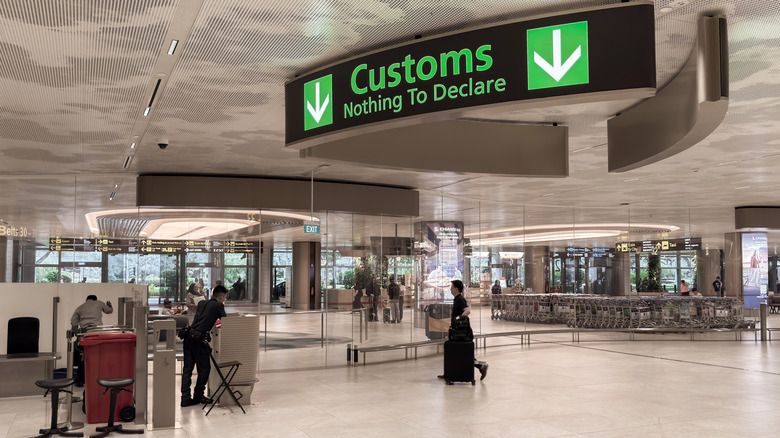
Following an act of government that came into force in December 2024, Singapore plans to inaugurate a new security scheme in 2026, known as the No Boarding Directive (NBD). This gives the ICA the power to compel airlines and other transport operators to refuse boarding to certain pre-identified travelers before they leave their country of origin, rather than dealing with the issue at airports and land and sea border checkpoints in Singapore.
The process has been finalized with Singapore Airlines, Scoot, Emirates, Turkish Airlines, and AirAsia to begin immediately in January 2026, and will be rolled out with other airlines in March, and at ferry ports by 2028. Operators who don't fulfil their side of the bargain will be fined up to $10,000 per infraction.
These stricter measures are designed to identify travelers with criminal records or other inadmissible characteristics, as well as those without an appropriate visa or entry permit, and prevent them from becoming an issue at Singaporean points of entry.
How will these changes impact travelers?
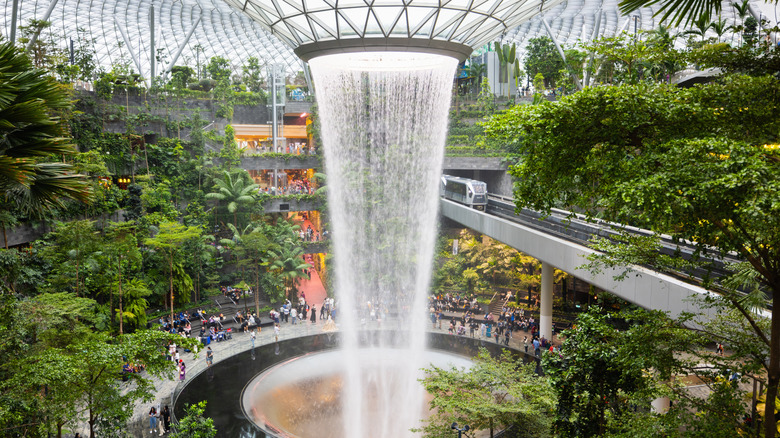
For most travelers, these heightened security measures will have little to no effect. In fact, Singapore has designed its immigration systems to be seamless, and to cause the least possible disruption to ordinary tourists. This initiative will feed into this aim, removing travelers with red or yellow flags from the main immigration process and dealing with their cases separately.
However, it's worth paying close attention to the entry requirements for Singapore, and ensuring that you have the correct visa for your trip. Tourists are still required to fill in the SG Arrival Card and the Electronic Health Declaration, as well as possess a passport with at least six months' validity remaining.
If travelers want to improve the odds their visa application will be approved, or have concerns about their eligibility to travel to Singapore, it's worth inquiring with a specialist visa service. These organizations can run passport validity checks, and take care of advance passenger info and visa issues.