

This Type Of Outdoor Adventure Is A Unique Way To Experience Canada's Banff National Park
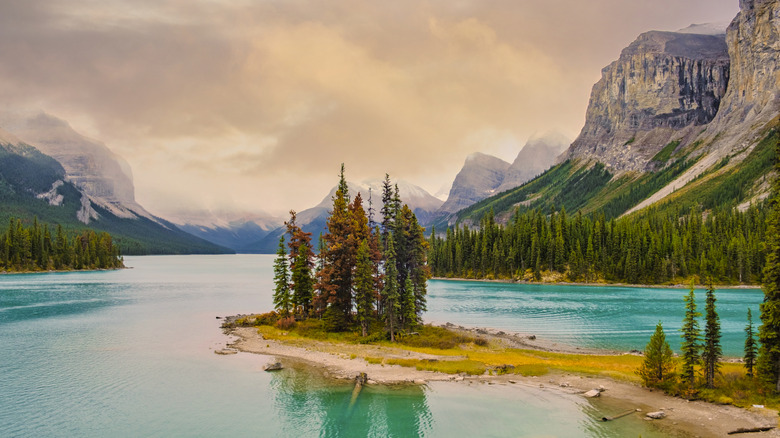
There are many ways to explore Banff National Park. You can hike some of the 1,000 miles of maintained trails, like the iconic Tunnel Mountain Trail that winds its way through beautiful stretches of Canadian forest. You can fish the streams, ski or snowshoe in the winter, mountain bike along rugged hillsides, or camp under the expanse of a starry sky. However, if you're looking for a truly unique way to experience Banff National Park, you need to spend some time on horseback.
Horseback riding is woven into the fabric of Banff's heritage. Established in 1885, Banff is Canada's first and oldest National Park. Intrepid explorers have been riding horses through this stretch of the Rocky Mountains for generations. Today, whether on your own or with a guide, the epic wilderness of Banff is wide open to this amazing type of outdoor adventure.
Exploring Banff on horseback is not without its hurdles. Day or month-long grazing permits are required, as well as National Park entry passes. Party sizes are limited to 10 riders with no more than 2 animals per rider. You're also not allowed to stay at a grazing site for more than 3 nights, and all camping must be done at least 70 meters away from a water source, with all manure and garbage being properly disposed of before moving on.
Exploring Banff on horseback
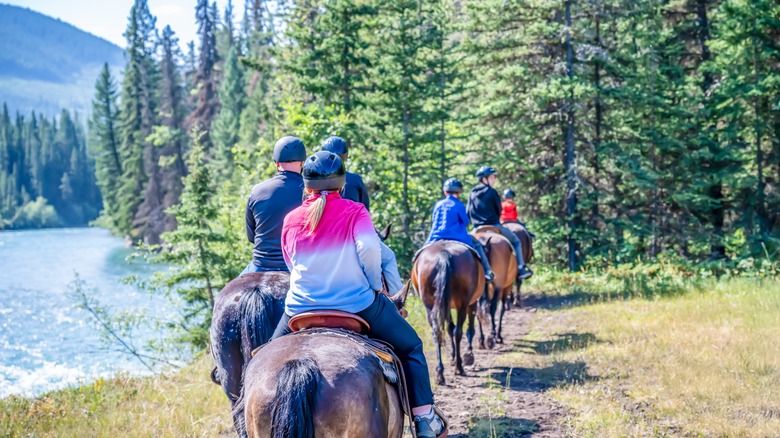
If you own a horse and are looking to assemble a group visit to Banff National Park, there are plenty of adventures you could take throughout this 1.6 million acre mountain wilderness. Before your trip, you will need to contact the Park Wardens to make a reservation for your stay. This comes with a fee, but it helps the Wardens manage resources to prevent overuse and habitat degradation.
Riders have their choice when it comes to grazing campgrounds. There are 42 sites to choose from across 6 different zones of the park. Some of these campgrounds are shared with hikers and other travelers. As such, you need to make sure that your horses are comfortable around others, and follow trail etiquette rules when you come across other hikers. These include keeping horses in single file formation, using feed bags to prevent spillage or attracting bears, hobbling or tying up your horses at overnight campsites, and making sure all manure is properly scattered.
While most of the trails are open to horseback riding, it's important to know which ones won't be accessible. Healy Pass, Sunshine Creek watershed — which includes the luxurious Sunshine Mountain Lodge — and the upper watershed of Howard Douglas Creek are all off limits to horse trekking. The terrain at Banff can also be notoriously difficult. That's why solo or private group treks should only be attempted by competent riders with several years of trekking/camping experience.
Take a multi-day trek back in time
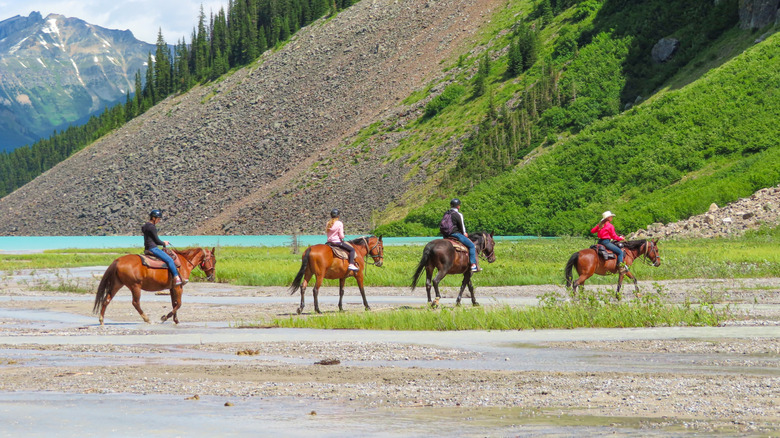
While making it on your own through Banff National Park might be one of the best ways to experience the place, there are a lot of visitors who either don't own horses or don't want to go through the hassle of getting a tour group set up. Yet, they still want the opportunity to experience the park on horseback. For this, the best option is to take a guided, multi-day trek that is going to make you feel like you've stepped back in time.
Businesses like Banff Trail Riders have been providing horseback riding tours of the national park for decades. They have multiple different guided rides, from beginner day trips to multi-day journeys. We'd recommend the latter if you really want to feel like you're taking part in a wonderful outdoor adventure. With no cellphone service and nights spent at the beautiful Sundance Lodge, you will really feel as though you have taken a step back into another century.
Other guided tours include rides up to some of the park's iconic hot springs. Summer is one of the best times of the year to enjoy a good soak in the hot springs of Banff. And what could be cooler than riding into the hot springs on the back of a horse? It'd be just like how the original explorers of the area first found them, a really unique way to experience this beautiful National Park high in the Canadian Rockies.