

American Tourists Look Silly Breaking This Unspoken Rule Of Chopstick Etiquette In Japan
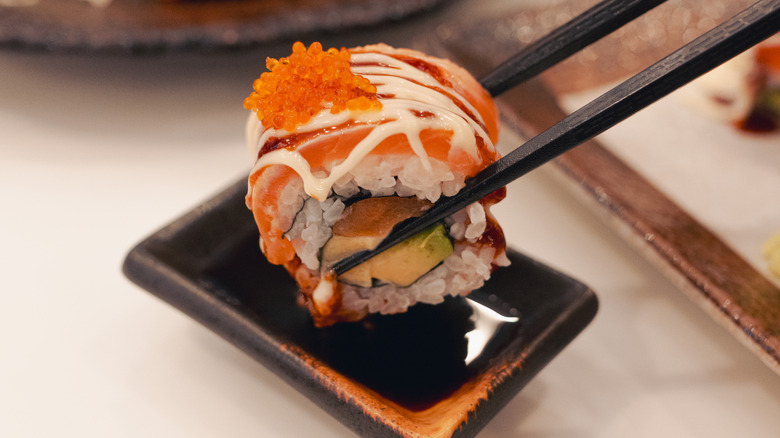
For Western eaters, figuring out chopsticks is a real achievement. They require finger strength, coordination, and — often — patience. More and more Westerners are learning how to manipulate these utensils at an early age. But even then, it's easy to miss one important rule about Japanese dining: you shouldn't put your chopsticks inside your mouth.
That may sound physically impossible — how do you eat food without putting your eating implement into your mouth too? No need to panic — the tips of your chopsticks will, of course, pass through your lips from time to time. Just insert as little of these shafts into your gob as possible. Don't lick your chopsticks if they have sauce on them, and don't gnaw on the ends of them either, as tempting as that might be. This kind of pensive chewing is called kami-bashi, and it's one of the 13 things tourists should never do when visiting Japan. Another chopsticks faux pas is using them to pick your teeth, which the Japanese call yoji-bashi — but there are loads more chopstick mistakes foreigners typically make in Japan.
More chopstick faux pas to avoid in Japan
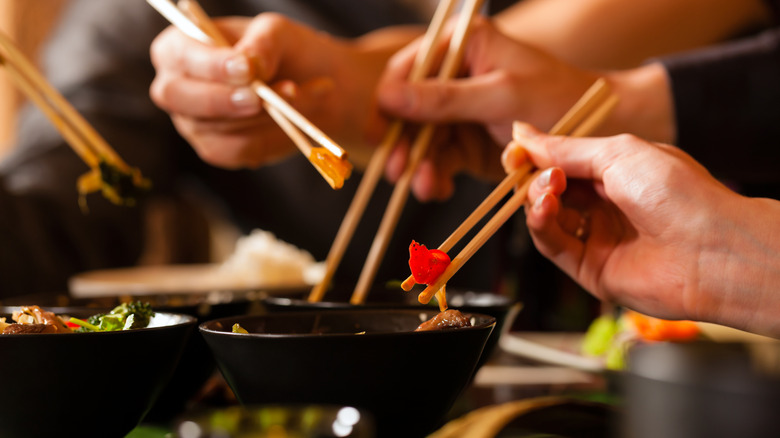
Utensil etiquette exists all over the world, and most Westerners learn early never to suspend spoons from their teeth or grip butter knives like daggers. In the same spirit, Japanese children learn a number of chopsticks rules. They shouldn't hover their chopsticks over sharing plates, no matter how tempting the food looks. Nor should they rub their chopsticks together — a practice that is thought to remove splinters, this is considered rude, since it implies that the chopsticks are of poor quality. They're also cautioned against using chopsticks to shove bowls around the table. Sticking chopsticks deep into your mouth will look silly and immature, like loudly sucking the last of your soft drink through a straw. And when you're done with a meal, don't put the chopsticks sticking straight up out of your food — this, too, is a faux pas at Japanese dinner tables.
This may sound frustrating, especially if you've just figured out how to use chopsticks. Isn't it good enough just to transport a piece of sushi from plate to mouth without dropping it? Do you really have to worry about all of this extra stuff? While it might be a lot to remember at first, the more you eat Japanese cuisine, the more natural it will feel, and you may not have to change your behavior much at all. Whether you're eating affordable sushi at a sushi-go-round restaurant or dining at an upscale omakase restaurant, these small chopsticks tips will help you show respect to the Japanese culture.