

You Can Camp In US National Parks In A Tiny House On Wheels, With One Catch
It's difficult to pinpoint exactly when the concept of tiny homes morphed from intriguing curiosities to mainstream dwelling options. Maybe the emergence of the pint-sized abodes were a clap-back at the late-20th-century explosion of McMansion-filled cul-de-sacs. Did a collective shift in consciousness jumpstart a trend toward downsizing? Or maybe a desire to live a more sustainable existence? Perhaps easy access to dwelling-focused television shows like FYI Network's "Tiny House Nation" piqued our interest with a seemingly endless stream of creative ways to maximize comfort within the confines of limited space. And then there's the mobility, the option to live a quasi-nomadic life with all the comforts of home.
Skip the Airstream. Leave the pop-up camper behind. Just hitch up your tiny home and hit the road. But there was a catch. As tiny homes became more commonplace, municipalities began enacting policies to regulate where and when owners could put down, even temporary, roots. In July 2014, a Texas town declared itself the first tiny house-friendly community in the nation — but the warm welcome didn't apply to tiny homes on wheels. Two years later the city of Fresno, California — one of the sunniest places in the world — passed a regulation to specifically allow wheeled tiny homes. And therein lies the great divide. If you're planning to use your tiny house as a mobile vacation home, you'll probably want wheels. Unfortunately, that seemingly minor detail can limit your options, but as long as your wheeled tiny house meets size restrictions and is RVIA-certified — the same certification required for standard RVs — your tiny house is welcome at U.S. national parks.
The difference between a tiny house and an RV
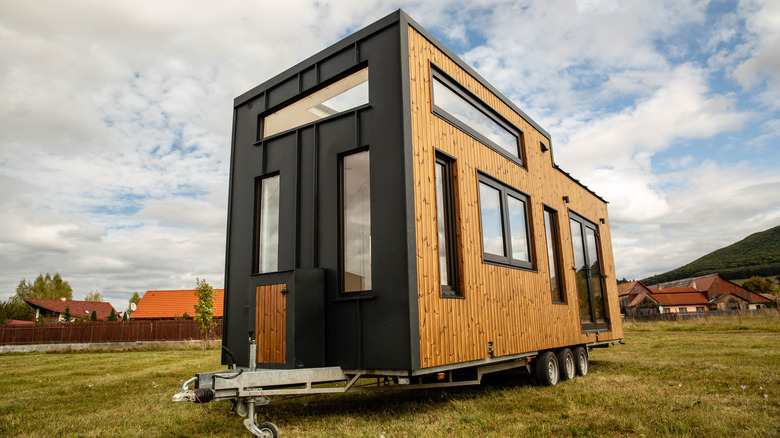
RVIA certification confirms RVs and tiny homes used for camping meet construction and safety standards set by the RV Industry Association. Qualifying structures bear an official seal and certification is required at most U.S. public and private campgrounds. The RV Industry Association deploys teams of inspectors to monitor recreational vehicle construction on site at manufacturing plants. It's important to keep in mind that, while the general public may use the term tiny house to describe mobile mini-homes, RVIA certification is only an option for specific models. Known in the industry as Park Model RVs, the camping-friendly mobile units are single-chassis vehicles on wheels that have a maximum gross trailer area not exceeding 400 square feet when set up and are no more than 8.5 feet wide during transport.
Additionally, the unit in question must be purpose-built for seasonal camping and recreation to qualify for RVIA certification. That means you'd be hard-pressed to get the required certification for a repurposed vehicle qualifying tiny houses, or more specifically Park Model RVs, must be built by an RVIA-certified manufacturer which rules out any chance of after-market certification. Qualifying vehicle? Check. RVIA certification? Check. Ready to hit the road? Keep in mind that stays in U.S. national parks and campgrounds — check out some of the best U.S. national parks for camping — are subject to maximum time limits, usually 14 to 30 days. Opting for a national park stay will ensure a true back-to-nature experience, while campgrounds are a better choice if you're planning to hook up to on-site services. Intrigued by the idea of tiny house camping, but not quite ready to go out and buy your own? The Riv at Zion in Utah's Zion National Park offers modern luxurious tiny homes spacious enough for family stays.