

Bali's Gorgeous Airport Boasts Unique Architecture Inspired By Indonesia's Vibrant Culture
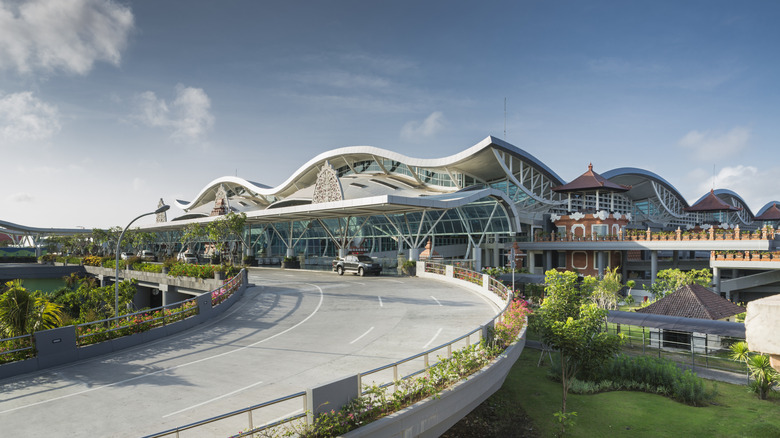
Arriving at an airport after a long flight is rarely a wonderful experience. Sure, you have the excitement of a vacation to look forward to, but you're also probably tired and jet-lagged, in need of a cup of coffee and a shower more than anything else. In general, arrival halls are defined by immigration queues, waiting to collect your checked bags, and crowds of taxi drivers and chauffeurs picking up passengers. As a result, airports rarely push the boat out when it comes to design and decor. There are, of course, exceptions, and I Gusti Ngurah Rai International Airport in Bali is a place where arriving really is a pleasure.
I Gusti Ngurah Rai International Airport, also known as Denpasar Airport, is Bali's main international airport. It ranked relatively low at No. 72 on Skytrax's World's Top 100 Airports in 2025 and has something of a mixed reputation when it comes to customer service and waiting times. However, its gorgeous architecture and unique design elements inspired by traditional Balinese culture make it a remarkable airport to visit.
Indeed, some airports do things differently. The most famous example is Singapore's Changi Airport, which boasts the world's tallest indoor waterfall, a forest garden spanning five floors, and an open-air swimming pool, alongside a host of architectural, design, and experiential touches. The art- and sculpture-laden Doha Hamad is known as the most luxurious airport in the world, while Seoul Incheon Airport boasts a golf course, spa, casino, and the Museum of Korean Culture. Bali's airport doesn't often feature on these sorts of lists, but it is an architectural joy and the gateway to Bali, a bucket-list adventure destination in Indonesia.
Design of I Gusti Ngurah Rai International Airport
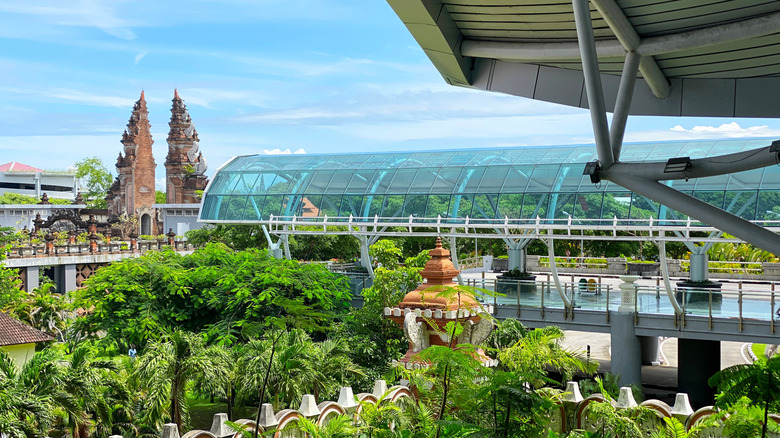
There has been an airstrip on the site of Denpasar International Airport since the '30s, when the Dutch Colonial administration built Tuban Airfield. The international airport was constructed in the mid-1960s, and development continued through the late 20th century and into the early 2000s, culminating in being named the third-best airport in the world in 2016 by Airports Council International.
What makes Bali's main airport so attractive is its architectural style — a unique blend of contemporary design and traditional elements mandated by the government when the airport was expanded in 2009. The main gates to the airport are decorated with reliefs depicting myths, legends, and traditional stories. The roof is layered in the classic Balinese style, immediately creating a visual link to the island's history and providing light and natural ventilation. The natural stone tiles used throughout the building are often seen in construction on the island. Inside, traditional culture is prominently featured in the design, with copper plates on the walls and intricate metalwork. Plus, the airport is often host to exhibitions and performances by local Balinese artists and musicians.
In part due to its mix of contemporary and traditional design elements, Denpasar Airport has a reputation for sustainability, having won the Best Energy Management in Buildings and Industries award at the ASEAN Energy Awards in 2023. It is highly energy-efficient to run and makes excellent use of its stormwater, as well as drawing on an impressive amount of solar energy.
Philosophy meets architecture
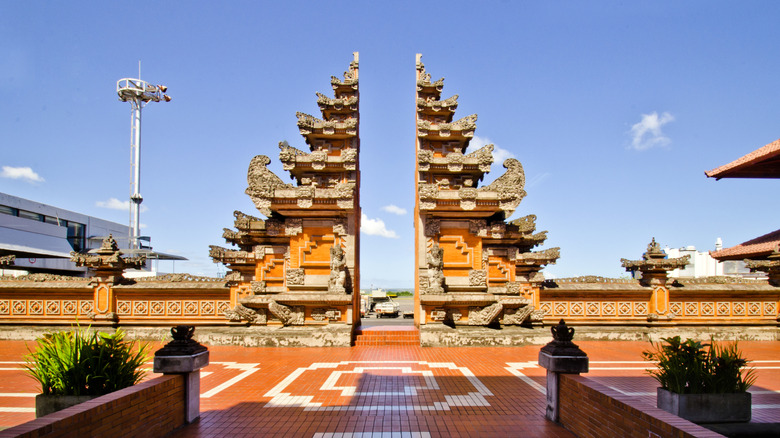
The impact of arriving at I Gusti Ngurah Rai International Airport and being immediately immersed in the culture and atmosphere of this stunning destination cannot be overstated, and it sets the tone for any visit to the Island of the Gods. The combination of modern design and traditional architectural styles is the perfect showcase of Bali today. This popular tourist destination has managed to maintain its traditions, customs, and unique culture while still welcoming over 16 million visitors every year. Everywhere you go on the island, eye-catching modern villas and exquisite resorts sit side-by-side with temples, floating pavilions, and bamboo structures, all built on the philosophical concept of Tri Hita Karana, which promotes harmony and balance between humanity, nature, and the gods.
This merging of philosophy and architecture will be even more evident in Bali's new airport, North Bali International Airport, set to open in 2028. Building on the success of Denpasar, North Bali will apply "the Tri Hita Karana philosophy into spatial planning, material usage, and integration with the natural landscape ... That way, every passenger arriving or departing will immediately feel the spirit of Bali," according to Erwanto Sad Adiatmoko, whose company will manage the new airport (via Bali Expat). The airport's shape is inspired by Bedawang Nala, the giant turtle in Balinese mythology, and will feature courtyards and garden spaces that echo the landscape of the island's north.