

The Odd Lighting Difference Tourists Should Know About Before Using Bathrooms In Europe
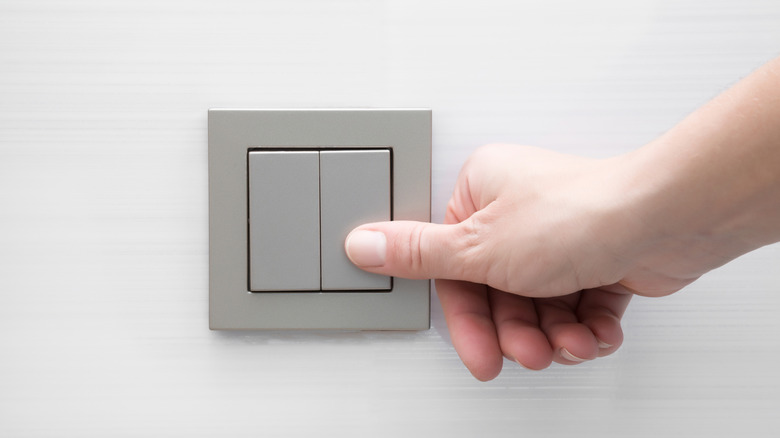
It's just past midnight, and you have awakened in your European hotel room as your bladder kindly reminds you of the many beers you drank a few hours ago. You stumble in the slightly dimmed room, half asleep, shuffling toward the bathroom, and once inside, you glide your hand along the wall looking for the switch with no luck. This is when you quickly learn the one odd difference that tourists should be aware of about bathrooms in Europe.
Confused and tired, you continue to pat your hand on the wall where the light switch should be. Nothing. You pause for a moment, and now slightly irritated, you're wondering if the hotel has secretly hidden the light switch in the room. It's not until a moment later that you step out of the bathroom and notice a switch on the outside of the bathroom on the hallway wall. Could it be? You flip the switch, the light flickers on, and the mystery is solved.
In most European countries, the light switches can be found on the outside wall, which is an unexpected surprise that tourists encounter when using bathrooms in Europe. While it may throw tourists off at first and may take some getting used to, there is a reason behind the placement.
The logic behind Europe's bathroom light switch placement
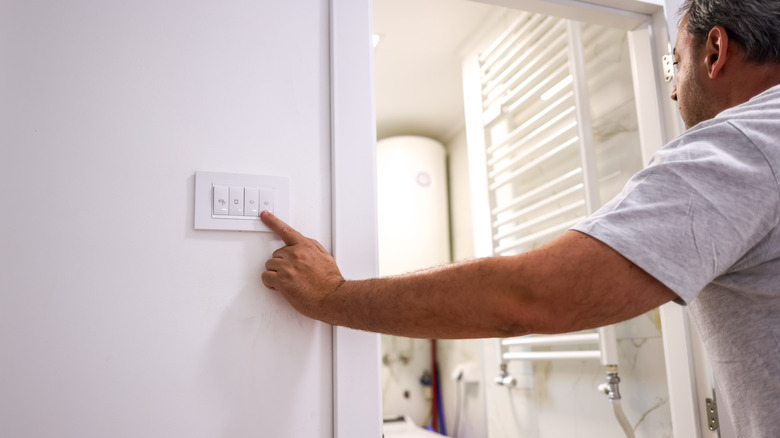
In Europe, it's pretty normal to see bathroom light switches placed outside the bathroom door, and there's a good reason for it. It's actually against the law in the UK to have a regular wall switch inside the bathroom because of major safety concerns. Bathrooms are damp, and mixing electricity with moisture can be an instant recipe for disaster. If you mistakenly touch a switch with wet hands or while standing on a small area of water on the floor, there's a higher risk of electric shock. To avoid that, switches are either placed outside the room or replaced with pull cords.
Another benefit of having the switch outside is that it keeps the electrical parts away from all the steam and humidity, which helps the switch last longer and work more reliably, not to mention it saves you from having to replace components more often. These rules are part of a larger set of strict safety standards followed across Europe. A group called CENELEC is in charge of setting these electrotechnical standards. Each country has one official member responsible for making sure the European rules are followed at the national level. They also ensure the replacement of older, conflicting electrical standards, so that safety rules are the same everywhere. Whether you're staying at one of the best hotels in Europe or a family-run bed and breakfast, it's all about keeping people safe and systems consistent.
Electrical and bathroom design constraints in Europe
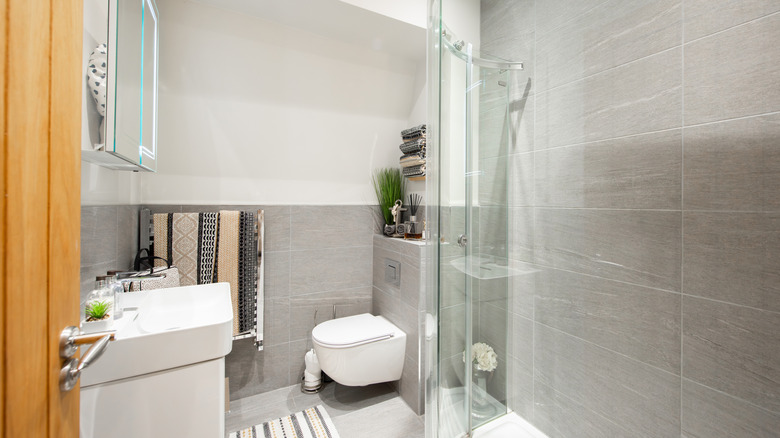
When designing a bathroom in Europe, there are a handful of conflicting design constraints to keep in mind before putting in switches. For starters, electrical switches and outlets must be kept a safe distance from the bathtub or shower, so you're not zapped while scrubbing away. That being said, the light switch should still be within reach of the door, which can be trickier than it sounds, especially in smaller European bathrooms.
The door needs to swing freely into the washroom and not into the hallway without crashing into the toilet, shower, or tub, since no one wants to make a bathroom exit that involves a head-on collision with the porcelain throne. To top it off, plumbing runs through the walls, so finding a spot for the electrical wall box becomes a game of "Where's Waldo?" when you are trying to locate the pipes behind the wall. All in all, designing a bathroom in Europe is a balancing act of safety, function, and finding just enough space to make it all work seamlessly.
Europeans tend to defend the design of the switch being placed on the outside of the bathroom, due to the fact that you would want to light up the room before entering. Now, when you find yourself in Europe, you'll know the location of the light switch when you're looking for the nearest bathroom while traveling.