

The Best Satellite Communicators For Your Camping And Hiking Adventures
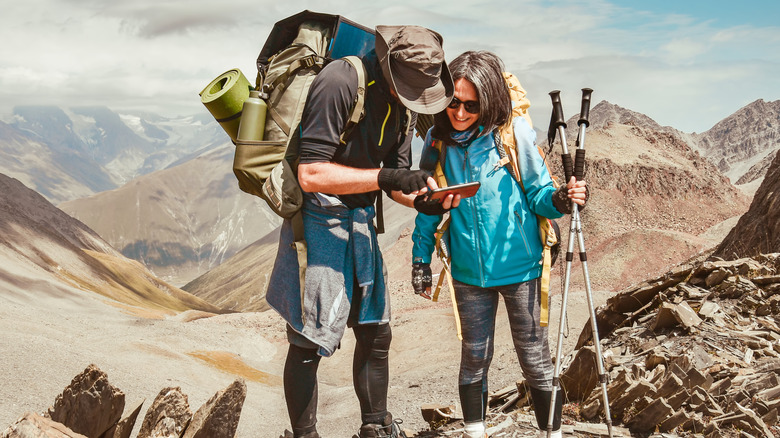
If you're an explorer who likes pushing the limits, you're aware of cases where something runs amiss — headlines surface daily warning of hikers, backpackers, and skiers in situations gone wrong. To stay as safe as possible, it's important to plan carefully before embarking on an adventure — checking weather updates, carrying enough food and water, bringing a compass and map — and a satellite communicator can act as a lifeline in a precarious situation, or serve as a way to connect with loved ones when exploring no-service zones. The benefits of carrying a satellite communicator make it one tech device you'll want to bring everywhere.
A little satellite 101: satellite communication devices work by connecting to satellites in space, and are nearly always accessible from areas with open, clear skies, unlike our phones, which connect to local cell towers. Satellite devices can allow travelers in remote areas to communicate with friends and family, and most notably, alert authorities with an SOS signal. These devices also usually have at least 100 hours of battery life, so in a bind, they're much more likely to be reliable. Satellite communicators have varying features, with some offering two-way communication, weather updates, and physical terrain maps.
With so many satellite communication devices on the market, we've compiled a list of our top five to keep you safe and in contact with loved ones while having remote adventures. Whichever you choose, make sure to always check country guidelines before bringing a satellite device along. Some countries, including India, China, Russia, and Cuba, have restrictions on satellite devices, and in extreme examples, travelers have wound up detained for using them. Still, it's worth adding a satellite communicator to your travel pack if allowed. There are cases of travelers trapped under avalanches, hikers caught in severe storms, and kayakers blown offshore who've been saved thanks to this technology, proving it's a safety item you should pack on your next adventure.
ACR Electronics ResQLink 400: the best no-frills Satellite Communicator
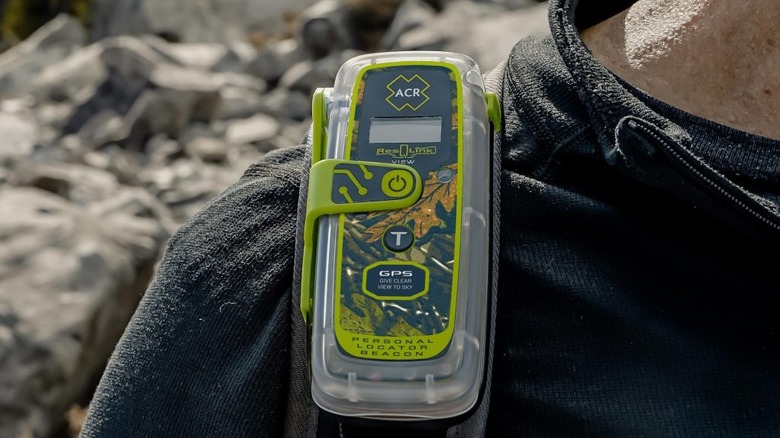
While most satellite communicating devices require a monthly subscription, the ACR Electronics ResQLink 400 is a one-time purchase. At $405, it's pricier than many other options, but the peace of mind that comes with not having to spend another $10+ per month on a subscription may make it worth the steeper cost.
Leaving the device turned off, the battery life lasts five years and the device is waterproof up to ten meters, making it perfect to throw into your backpack on all adventures. The ACR does lack many of the more advanced features that other satellite devices offer, such as two-way communication, but the most important component, the personal locator beacon, allows authorities to access your location within 100 meters.
Because it lacks two-way communication, you won't know if emergency services have received your SOS message, but it still acts as a practical safety device to bring along on remote trips. Once the device is turned on, you can even continue to move for 24 hours and emergency services will be able to track your movement. Weighing 144 grams and measuring 4.5 x 2 inches, this device will weigh your pack down more than some of the other options on our list.
ACR Bivy Stick MESH: the best group connection

At $225, the ACR Bivy Stick MESH offers an impressive array of features for a more affordable price. The device includes a personal locator beacon, plus it allows users to create pre-set messages to send to up to 16 other people with the same devices (connected via the ACR Bivy Stick MESH app) as long as they're within ten miles of each other.
What's particularly impressive is that if one person is navigating through a dense forest, cave, or other terrain where most satellite devices would not function, but they're connected to someone else's device with a strong satellite connection, they'll still be able to both send and receive messages. This feature makes the ACR Bivy Stick MESH a top contender for families and groups who frequently adventure together.
The Bivy Stick MESH also features 145 hours of battery life and waterproof protection, as well as up-to-date weather changes, offline maps, and two-way emergency communication via their connected app (of course, your phone needs to be charged to take advantage of these features). To access these extras, subscriptions start at $15 per month. Some users did complain that the app's interface wasn't designed the most optimally, so test it out for yourself before going with the Bivy Stick MESH. Weighing in at just over 100 grams and measuring 4.5 x 1.85 inches, this device isn't our smallest recommendation, but it's relatively compact.
Garmin Montana 750i: the crème de la crème

If you love having all the latest technology on the trails, the Garmin Montana 750i is for you. Garmin uses its own patented SOS emergency response — called InReach, which sends a distress signal to their 24/7 emergency response center, who use the device's two-way messaging system to assess your needs and coordinate with local authorities. Unlike most satellite devices with two-way messaging that require users to pre-set different messages beforehand, what makes the Garmin Montana 750i stand apart is its full QWERTY keyboard. With this device, users can send and receive messages to anyone, from anywhere.
It's also possible to view weather updates, bird's eye views of the terrain, and full navigable maps, all on the device's screen. With so many features, the battery needs to be charged occasionally, but can still last about a week in low-power mode, and up to 18 hours in GPS mode. Even more impressive, you can drop the Garmin Montana 750i off a cliff and it'll probably still work — the device was made with military-grade technology and is shock, heat, and water resistant. It even has an 8MP camera with precise geotagging, so you can find your way back to specific sites later.
The Garmin Montana 750i's features come at a steep cost: it currently retails for $800, plus InReach subscriptions start at $8 per month. Of course, with so many features draining its battery, you're less likely to have a charged device when in a bind, the most important reason to carry one, so bear that in mind when taking photos and checking minute-to-minute weather changes with the Garmin Montana 750i. This high-tech gadget is the heaviest and bulkiest option on our list, at over 7 x 3.5 inches and weighing 410 grams.
Garmin inReach Mini 2: our top pick

The Garmin inReach Mini 2 is our top pick because it combines all the most useful features in a compact device, and for a reasonable price too ($250). Like other Garmin devices, this device connects to the inReach emergency system and offers two-way communication.
The LiveTrack feature allows loved ones to track your location while you're on the move, and a track-back feature can help you retrace your steps, ensuring you never get lost. This device also offers weather updates and the battery lasts 14 days in "standard mode," and up to 30 days in energy-saving mode.
Weighing just 100 grams and measuring 3.9 x 2 inches, it's the perfect gadget to carry around everywhere just in case you end up in an emergency. The subscription options are the same as for the Garmin Montana 750i, starting at $8 per month for inReach, with additional charges per text message or weather request, and costlier subscriptions that include unlimited use.
Your New Cell Phone: a viable option?

We had to include cell phones on our list because many of the latest phones also include satellite communication technology. The iPhone 14 and later, Google Pixel 9 and later, and Samsung Galaxy S25 all now offer satellite connection options. The iPhone allows users to request emergency services, roadside assistance, text friends and family, and share location through satellite connection.
These features are included free for two years, and then can be purchased via subscription from your carrier. Google Pixel currently offers emergency SOS via satellite, and although they've said this feature will be an added cost in the future, it's currently included on Pixel 9 and later. Samsung's newer phones also offer satellite connectivity, but so far they're limited to specific regions and network partners, so coverage may be inconsistent.
Cell phones will undoubtedly continue to advance their satellite accessibility, but if you're a serious adventurer, you still may want to consider one of these other satellite devices. They're made of more robust materials, their batteries are likely to far outlast your phone's, and the satellite connection technology currently remains superior. A reliable satellite communication device is one of the best pieces of equipment you can have to feel safer when traveling.
Methodology
We researched all the latest satellite communication devices and aimed to give readers a variety of options, based on budget and desired features. Whether you're hoping to find a simple emergency response device, communicate with a group in a service-free zone, or update friends regularly while on a solo adventure, we've compiled the top-rated satellite gadgets for every traveler.