

Northern California's Largest State Park Is A Pristine Getaway For Backpacking Adventures
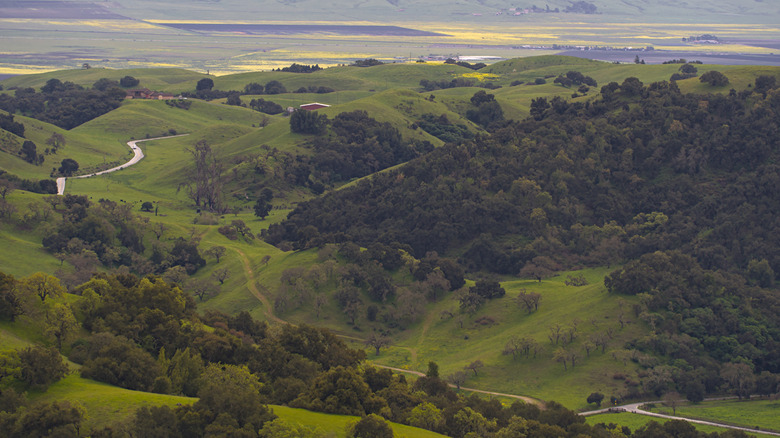
Ever dreamed of having the backcountry to yourself while enjoying nature and solitude? With Henry W. Coe State Park, this dream can become a reality. Known as the largest state park in Northern California, this serene, yet wild, park sits silently within the Diablo Range and sprawls across over 87,000 acres of expansive wilderness. Characterized by rugged hills, oak-dotted valleys, sweeping grasslands, and an atmosphere of calm and quietness, the park is a great destination for adventurous backpackers.
Everything about Henry Coe Park simply screams nature. No paved roads, no cell service — it's just you, your gear, and your ability to navigate your way through miles of ridges, valleys, and woodlands. Henry Coe is definitely not your regular park for hiking in California. While it can be visited by newbies, it is more suitable for experienced hikers and backpackers, or just anyone willing to put their planning and resilience to the test. The terrain at Northern California's Henry Coe is both diverse and vast, and its trail network (mostly comprising old ranch roads dating back to the 1880s and the 1960s) spans more than 250 miles. If you're looking for a real adventure in nature, backpacking here gives a true feel of what it's like.
Backpacking at Henry Coe Park: what you need to know
For novice backpackers, it's advisable to start your hiking at Frog Lake, as the terrain is quite manageable and only takes about an hour to complete. More experienced hikers may go on to Los Cruzeros, which can take about 5 hours to complete. As for the most adventurous hikers, or those who want complete solitude, Pacheco Ridge is the go-to spot. However, get ready for up to 10 hours of rugged hiking.
Bear in mind that backpacking permits are required at Henry Coe, and it's best that you reserve yours as early as possible, especially during busy seasons. You can obtain your permit at the visitor center, and you can self-register at the Hunting Hollow Entrance. Alternatively, you can make reservations online via the ReserveCalifornia website, which allows advance reservations up to six months.
Note that fires are not allowed at Henry Coe, and this is to mitigate the risks of wildfire. You're advised to go with a small gas stove and plan your meals accordingly. Additionally, due to the seasonal nature of water sources at Henry Coe, it's essential to bring along a sufficient supply of water and a purification system. The trails are not always marked, suggesting that a paper map, compass, and strong navigation skills are important. GPS is typically less useful due to the limited or unavailable cell service. For communication, you can find a pay phone at the Coe Ranch Entrance Visitor Center.
Getting to Henry W. Coe State Park
In case you're flying in, San Jose Mineta International Airport (SJC) is the closest major airport, offering many car rentals you can use to drive to the park's entrance. It's important to know that the park has three entrances. The main entrance is the Henry W. Coe State Headquarters Visitor Center. The second one is the Hunting Hollow Entrance. The third entrance is the Dowdy Ranch Entrance, but this particular entrance is not always open. At the visitor center, it's advisable to speak to staff in order to get up-to-date information on trail conditions, maps, and expert advice. There's also the provision of parking at the visitor center, but you have to be early, as it can be limited, especially during the spring months or weekends.
As for lodging, you can get clean and affordable hotels in nearby Morgan Hill, such as the Hampton Inn or La Quinta, with a price range of $120 to $180 per night, depending on the season. Spring is the best time to visit — a time when the weather is mild, the creeks are flowing, and wildflowers bloom across the trails. Summer, on the other hand, can be harshly hot (beyond 90 degrees Fahrenheit), causing water to dry up fast.
However, it doesn't matter what season it is: It's highly important to come prepared with all necessary gear. Have extra water to drink from time to time (very essential); have good boots, sunscreen, hats, and insect repellents — and also don't forget your camera. Remember always that planning cannot be overemphasized when it comes to having a successful backpacking experience in Northern California's Henry W. Coe State Park.