

The Whimsical Boomer Travel Trend That's Making A Comeback With Younger Generations
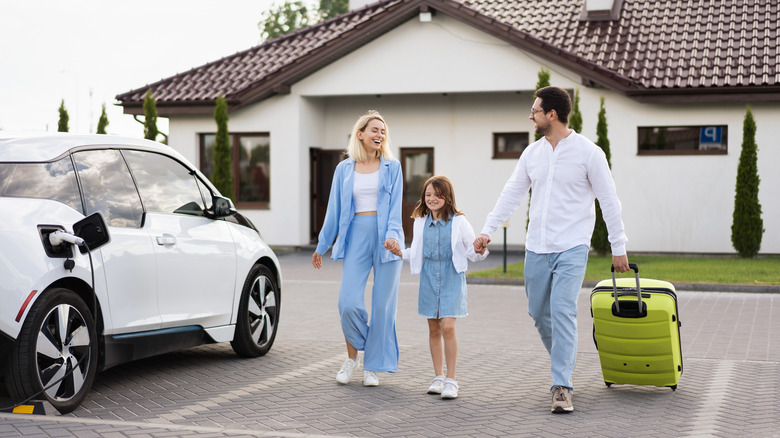
Boomers have been enjoying swapping spaces with people across the world for decades, but now younger generations are jumping on board. The popularity of house swapping is on the rise, particularly among Generation Z and millennials. House swapping is trading homes with someone else and spending your vacation in their space instead of paying for a hotel or a short-term vacation rental. Generally no money is exchanged between home-swapping hosts, so opting to house-swap can save travelers money.
Two decades ago a whimsical romantic comedy popularized a travel trend that boomers had already been enjoying for years. Starring Cameron Diaz and Kate Winslet, 2006's "The Holiday" told the tale of two women who were unlucky in love and who longed to escape their lives. They found each other on a house-swapping website called HomeExchange, which is a real company that still exists today. Both women forged new connections and the movie leaves viewers full of hope that life can change in the blink of an eye if you're willing to take a chance and step outside of your comfort zone. That's exactly the kind of fanciful experience that travelers dream of when they sign up for house swapping opportunities.
House swapping allows for a more immersive style of vacation. Instead of spending your vacation sleeping in a generic hotel room, you'll be enjoying the lived-in home of a local. It offers a more intimate travel experience than many of us are used to. It's also significantly more cost-effective than paying for traditional accommodations. For members of younger generations who are looking for a unique way to see the world, house swapping is an ideal option.
Younger generations may be new to house swapping, but boomers have been doing it for decades
House swapping allowed boomers to stay somewhere with all the comforts of home long before short-term vacation rentals became available on sites like Airbnb. Now it's easy to find a furnished apartment for vacation in almost any city around the world, or a spacious house in charming small towns with lush gardens and plenty of space. In the 1970s and '80s, when most boomers were in their 20s and 30s, traditional hotels were some of the only accommodation options available. House swapping was a welcome alternative that allowed people to see the world without sacrificing the creature comforts they were used to at home.
With house swapping, boomers could also save loads of money on the cost of accommodations, because money usually isn't exchanged between hosts, and there is no nightly fee. The formal idea to swap houses actually originated in the 1950s, when most boomers were kids. Teachers, in their infinite wisdom, were the first people to dream up the idea of swapping houses as a way to enjoy an affordable holiday.
In 1953, a New York City teacher named David Ostroff compiled a list of colleagues who were willing to swap spaces during summer vacation. He sent out thousands of posters to schools all across the United States hoping to attract more people. After advertising in teacher magazines, the program grew. Ostroff eventually found enough subscribers to create the Vacation Exchange Club, eventually renamed HomeLink, which offered house-swapping opportunities in the U.S., U.K., and Europe. Simultaneously, European teachers had created a similar house-swapping service called Intervac International. Both of those services are still available today. Some boomers grew up enjoying memorable family vacations in which they stayed in other peoples' homes, and many of them continued house-swapping when they purchased homes of their own.
House swapping helps make travel more affordable
Today, house swapping is making a comeback with younger generations. It may be partially fueled by the whimsical image portrayed by nostalgic romantic movies like "The Holiday" that millennials grew up watching, but it's also a very practical option for people who hope to travel cheap.
Millennials and Generation Z are facing challenging times as adults. The global affordability crisis is making it hard for younger generations to afford the kinds of experiences and lifestyles that some boomers once enjoyed. Taking extravagant vacations isn't an option for everyone. Hotels and short-term vacation rentals are becoming more expensive, but house swapping can help make travel more affordable. Studies show that affordability was one of the top concerns among travelers in 2026, so it's no surprise that it's making a comeback with younger generations.
With the rise of remote work opportunities, many members of younger generations have the time and freedom to explore new places and work remotely while traveling. Some young adults are starting to purchase homes of their own that they're interested in swapping. The membership service Kindred allows both renters and owners to list their properties. Members earn credits whenever they host another member in their home. Credits can be exchanged for a stay at another member's property, even if you don't do a direct swap. Kindred claims to have saved members a total of over $6 million on travel. HomeExchange members pay a flat yearly fee for unlimited home exchanges, and the site claims that it can save a family of four an average of $2,000 per year on accommodation costs. It sounds like a great deal, but there are some sneaky dangers you shouldn't ignore. Make sure you trust the member you're swapping with and purchase trip insurance in case they need to cancel at the last minute.