

Canada's Underrated Island Destination Has Stunning White Quartz Beaches And Sandstone Cliffs
Prince Edward Island, Canada's smallest province, had a record-breaking tourism season in 2025, welcoming 1.87 million visitors. Five hours away by ferry, the Magdalen Islands also had a record-breaking tourism season, but with nearly 96% fewer guests. Only 69,800 people visited this underrated island chain in 2025.
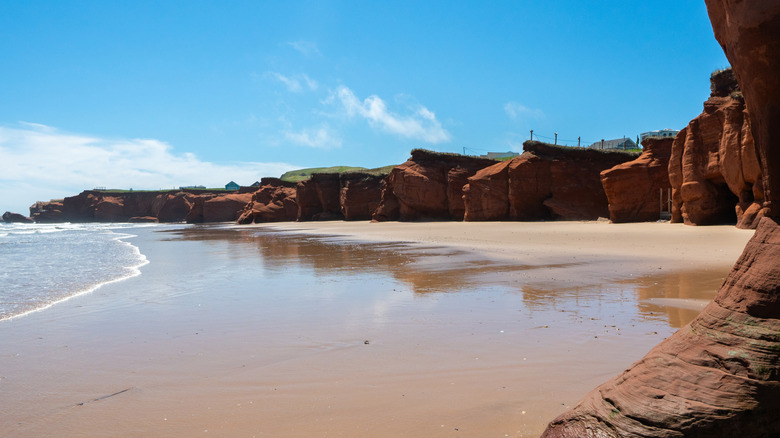
Although the islands are part of the French-speaking province of Quebec, they're about 125 miles from the mainland. The few people who make the journey to the "Maggies," as some locals call them, discover 190 miles of stunning white quartz beaches edged by red sandstone cliffs. These towers of sedimentary rock are made of quartz covered in iron oxide, which lends a rust-colored hue. The contrast is striking, and erosion from the cliffs actually contributes to the pearly sands. The iron oxide is rinsed away when the rock hits the salt water, leaving behind the powdery white quartz sand.
Although the Magdalens sit well north of the U.S. border, the ocean can be more welcoming for swimming than some beaches to the south. Lagoons and bays along the archipelago can reach nearly 70 degrees Fahrenheit in late August and September, thanks to Gulf Stream currents and shoals (shallow areas) that help to warm the water. Some say it is the warmest water north of the Carolinas, where one beach at Cape Lookout, North Carolina, features wild horses and an idyllic lighthouse.
A French-speaking beach community in the Gulf of Saint Lawrence
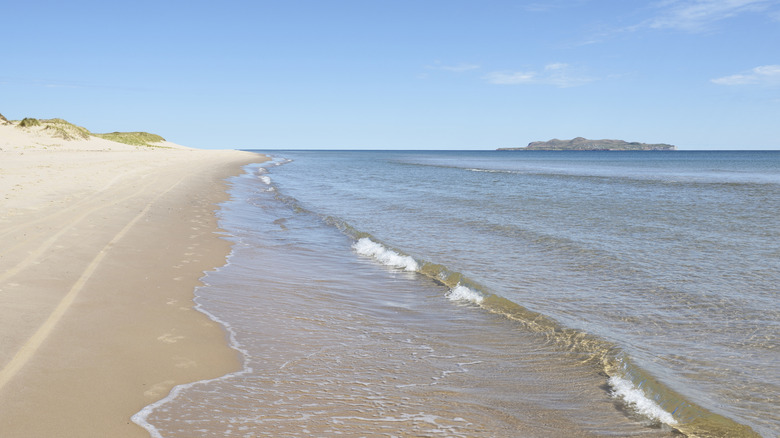
The majority of the islands' 12,937 residents speak French, but since many work in the tourism industry, you can expect to find folks who speak English as well. Officially called îles de la Madeleine, the chain consists of about 12 islands in the Gulf of Saint Lawrence, six of which are connected by roads along sand dunes. Route 199 runs 55 miles from one end of the island chain to the other, meaning you can drive, bike, or hike the (nearly) whole length. Only one of the inhabited islands, Entry Island, is not linked to the others and is only accessible by boat.
While ferry service from Prince Edward Island is the primary way to arrive, visitors can also fly into Îles de la Madeleine Airport (YGR) on Havre aux Maisons Island. It's about a two-hour flight from Québec City, where you can check out a historic neighborhood of European beauty before your departure.
Because the islands are so remote, the tourism board highly recommends securing all transport and accommodations ahead of arrival. And be sure to pay attention to the local time zone — the Magdalens are on Atlantic time, which is an hour ahead of Quebec.
Fresh seafood and a warm welcome on the Magdalen Islands
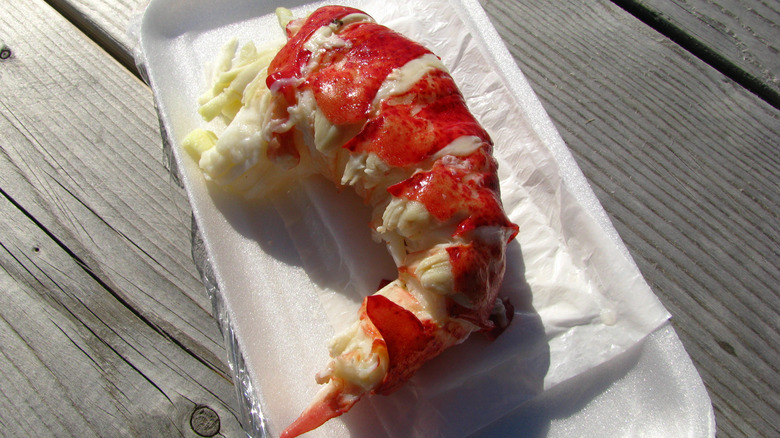
Perhaps because of the island chain's remoteness, residents put a special emphasis on locally grown and made foods. Fishing is the primary industry in the Magdalens, with ocean delicacies like fresh lobster, snow crab, scallops, and clams harvested routinely and sometimes cooked into a local seafood pie called pot-en-pot.
Another ocean catch is less familiar to visitors. The Magdalens is one of the few places in Canada to enjoy seal, a surprising delicacy that is rich in protein and low in fat. If you're lucky, you may be offered croxignoles, a braided pastry fried in seal oil. Wash down your meal with la bagosse — the island's local beer. You might even find a beer brewed with cranberries, known locally as pommes de pré, which grow wild in the sand dunes. For a true taste of regional specialties, look for items labeled 'Le bon goût frais des Îles de la Madeleine,' a local food association promoting authenticity and freshness.
Beyond food, Madelinots, as locals are called, are happy to share music, storytelling, and art. While the Magdalens are a part of Quebec, they share history with the Acadian people, which is evident in local cultural experiences.