

Skip Yellowstone — Visit Montana's Largest State Park For A Fossil-Filled Badlands Escape
Fossil-hunting is one of the most interesting and exciting pursuits for dinosaur fans in the great outdoors. America is filled with fabulous wildernesses brimming with fossilized finds, from the colorful desert scenery of Arizona's Petrified Forest National Park to Utah's spectacular Dinosaur National Monument, where visitors can encounter the remains of Stegosaurus, Allosaurus, and Apatosaurus. Camping in Yellowstone National Park is a popular way to learn about paleontology, as the park has one of the most diverse fossil records in the entire national park system.
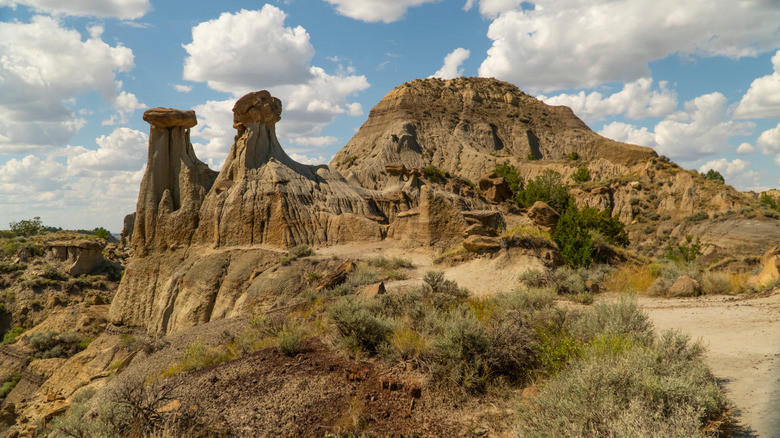
However, Yellowstone can be a busy place to visit, particularly in the most well-known spots. If you want somewhere where you can indulge your dino-passion with a little more peace and quiet while also enjoying some incredible badlands rock formations, there's an underrated state park in Montana just waiting for you. Makoshika State Park is 11,538 acres of astonishingly colorful caprocks, hoodoos, and natural bridges, dotted with juniper bushes and pine trees. It is also the site of some of North America's most exciting dino discoveries, including Triceratops and Tyrannosaurus Rex remains.
Makoshika State Park is located just outside of the town of Glendive, on the banks of the Yellowstone River in western Montana. It is a remote place, deserving of its 'badlands' description, and the nearest major cities are Billings, Montana, around 220 miles southwest, and Bismarck, North Dakota, around 200 miles east. The easiest way to reach the park is by flying to Dawson Community Airport (GDV), which services flights from Billings-Logan International Airport (BIL), the nearest major hub.
A badlands wilderness filled with dinosaurs
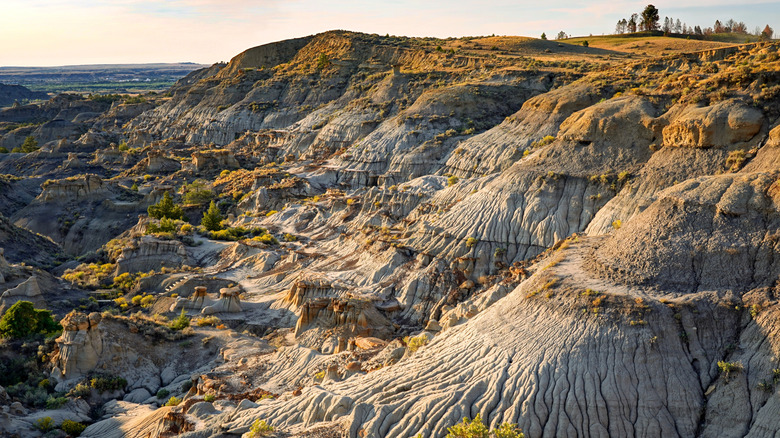
Makoshika State Park is part of the Lewis and Clark National Historic Trail, which traces the famous expedition to discover a route to the western edge of the American continent. An extraordinary area of outstanding natural beauty, Makoshika spreads out from the Yellowstone River across a landscape of stunning desert color, stark, otherworldly rock formations, and scatterings of prairie scrub, juniper, and pine stands.
Makoshika State Park is a great place to discover fossils and an absolute heaven for dinosaur enthusiasts. It is a world-class site for paleontology, part of the Hell Creek Formation, a layer of sandstone and shale 575 feet thick, which is considered one of the most important and abundant sources of dinosaur fossils in the world. The remains of more than 10 different dinosaur species have been discovered within the boundaries of Makoshika State Park, including some of the biggest names in dino lore. An enormous female Triceratops skull was discovered in the early 1990s, as well as partial skeletons of Edmontosaurus and the mighty Tyrannosaurus Rex. Perhaps most excitingly, in 1997 an expedition unearthed an almost complete Thescelosaurus skeleton.
The visitor center is a great place to begin a visit to Makoshika State Park. Here you can see the vast Triceratops skull, as well as displays and exhibits exploring the history and geography of the park and the Hell Creek Formation more widely. If you are after a slightly more alternative, even out-there perspective, the Dinosaur and Fossil Museum in Glendive has an incredibly impressive collection of bones and fossils and explores the story of the dinosaurs through a creationist lens.
Beautiful trails and exciting wildlife
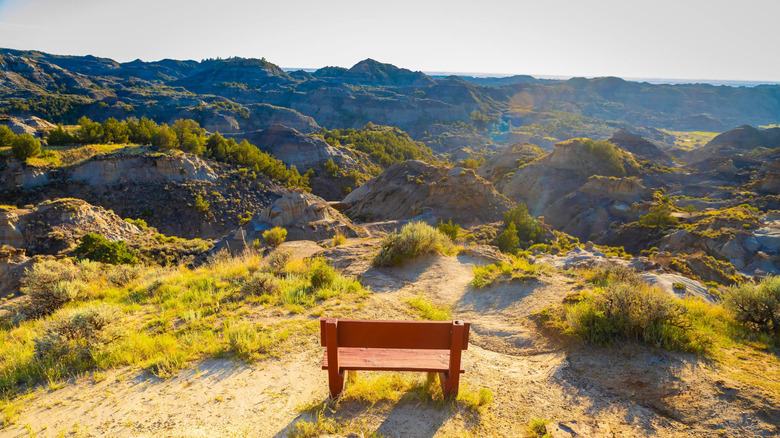
Of course, Makoshika isn't just a playground for dinosaur hunters. It is also an awesome spot for outdoor adventurers to explore, a fabulous wilderness filled with fascinating wildlife and mesmerizing badlands scenery. As Montana's largest state park, there are loads of opportunities for hiking, with a great network of trails winding their way past unusual rock formations, stands of juniper and pine, and across open prairie. The Cap Rock Trail is a great place to start, a short, gentle stroll through some of the more scenic sections of the park. The Hungry Joe Trail is a more strenuous challenge, offering stunning views and hidden meadows, with nearly 750 feet of elevation.
Despite its bleak, barren, rocky appearance, Makoshika is home to some delightful wildlife and is a great destination for animal lovers and birdwatchers. There are plenty of mule deer, pronghorn antelopes, and coyotes, as well as several exceedingly shy and rare mountain lions. Rattlesnakes often slither across the trails, so watch your step, and you might see sage lizards and bull snakes as well. In the skies, native birds like mountain bluebirds and turkey vultures migrate back to the park every year, while bald eagles and golden eagles are also often sighted.