

The Once-Popular Airline Perk Travelers Don't See Anymore
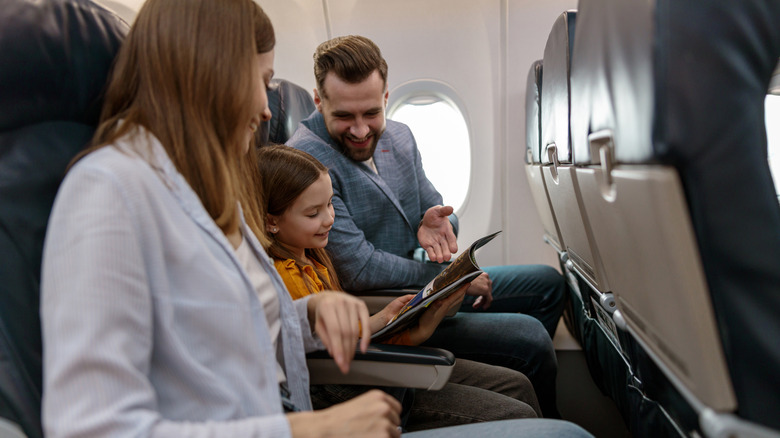
As technology continues to advance, so does its application for travel. Swapping paper tickets for digital boarding passes, metal keys for swipe cards, and contactless check-in and -out have proven themselves to make travelers' lives a bit easier. However, one staple of air travel that has been around since 1952 is now almost completely extinct. While at one point most of the major airlines published their own in-flight magazine, now only one remains in the U.S.
For many travelers, the in-flight magazine served multiple purposes: expertly crafted articles, vibrant photography, destination recommendations from flight crew, and maps of flight routes stretching across the world. These features provided entertainment during a flight, offered information about a destination, and gave travelers new places to consider for future trips. While most left the magazine in the seatback pocket for the next person, for some it also served as a memento of their trip.
Today, however, most of those in-flight magazines have been replaced with streaming digital entertainment delivered via Wi-Fi. Passengers can stream movies, listen to music, and watch digital content associated with their destination from the back of their seat or use their devices to do whatever they want. In some cases, those in-flight magazines have gone digital, giving travelers the opportunity to still access quality content, just without the tactile sensation of flipping through paper.
What happened to the in-flight magazine?

As with many things, the global COVID-19 pandemic had a major effect on travel, with its impacts on the in-flight magazine being some of the most lasting consequences. Three major airlines — Delta, Southwest, and Alaska Airlines — phased out magazines during the pandemic, partially because they created a physical touchpoint that could spread the virus. American Airlines' long-running American Way magazine said goodbye in June 2021 in order to focus on digital entertainment. In 2024, United Airlines' Hemispheres Magazine moved to online-only.
Many of the airlines cited a reduction in paper waste and carbon emissions as a reason to not bring the magazines back. Consequently, those environmental benefits also happen to help airlines save money in fuel costs by reducing the plane's weight.
Giving travelers the opportunity to customize their on-board experience through digital entertainment was also a driving force behind the shift. Internet access is now available on most major carriers, and there are some airlines that offer free Wi-Fi, making it easy for passengers to catch up on their favorite TV shows or communicate with friends and family from 30,000 feet.
The last remaining U.S. in-flight magazine
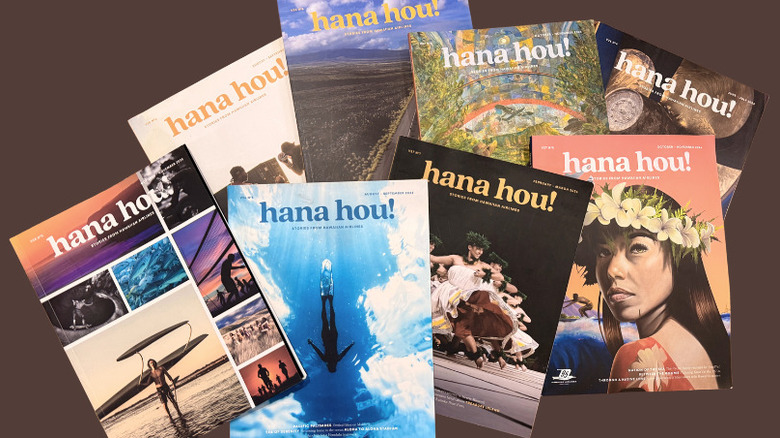
Though it seems like the final coffin nails have been hammered into the in-flight magazine, leaving it destined for the history books and online archives, one print publication still remains. Hana Hou!, which finds its home in the seatbacks of Hawaiian Airlines planes (and online), still showcases stories about Hawaiian history and culture, places to visit in the islands, events, and other content that helps enhance a visit to Hawai'i.
As a Hawai'i resident and frequent flyer on Hawaiian Airlines, my shelves are filled with copies of Hana Hou!. It helps me get to know my home better and inspires my own travels to the other islands. It's also one of my dream publications to write for. With the recent merger of Hawaiian and Alaska Airlines, some have concerns about the future of the print version, but as of 2026, it's still going strong. In addition to Hana Hou's content in print, it also publishes its stories online. United's Hemispheres still publishes new content online, as well.
Though this may signal an end to physical media, print travel magazines not associated with an airline are still holding their own. It's a travel inspiration trend younger generations are embracing, popular among those who like having something tactile to plan their future trips. And while U.S. airlines' print publications have dried up, many international airlines have continued to publish in print or have revived their imprints. These airlines are bucking the trend of moving solely toward technology. KLM Airlines offers Holland Herald via print and digital, and Japan Airlines still offers Skyward Magazine in print. While both Air New Zealand's Kia Ora and Pacific Coastal Airlines' SOAR temporarily paused printing, they've both returned to physical copies on their planes.