

North America's Largest High-Elevation Lake Offers Pristine Recreation In A National Park
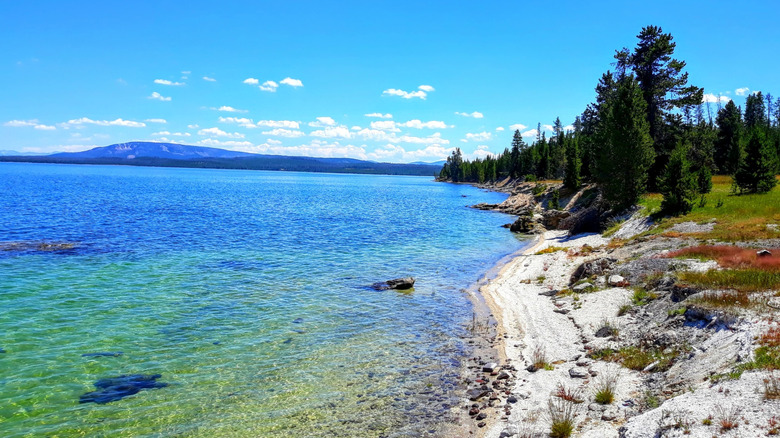
When frontiersmen in present-day Wyoming first reported steaming geysers, colorful bubbling pools, and picturesque waterfalls, members of Congress back in Washington D.C. did not believe such a place actually existed. Of course, we now know these geological wonders are all famous components of Yellowstone National Park. Early reports back to the U.S. federal government also mentioned a huge freshwater lake that manages to exist alongside the region's more hazardous, boiling bodies of water. Today, Yellowstone Lake is a beloved part of any Yellowstone itinerary even if you only have one day in America's oldest national park.
A high-elevation lake is one situated at least 7,000 feet above sea level. Sitting at 7,733 feet and with 141 miles of shoreline, Yellowstone Lake is North America's largest high-elevation lake. The water here is usually around 10 degrees above freezing, which means swimming is quite risky. Instead, get out on the bright blue water by boat, enjoy the views from nearby boardwalks, and learn more about Yellowstone National Park along the way. You can pitch a tent or park an RV here too. Even better, the lake is close to other major Yellowstone attractions, like Old Faithful and Mount Washburn.
See Yellowstone Lake's hydrothermal activity at West Thumb Geyser Basin
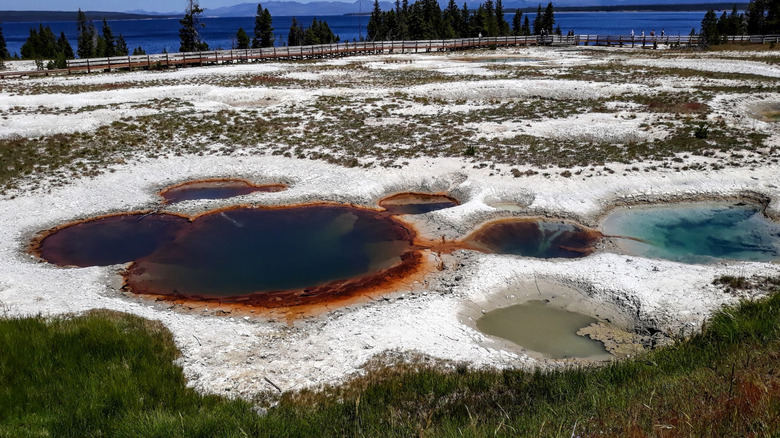
Among the most intriguing parts of Yellowstone Lake is West Thumb, a basin of geysers on the lake's western shore. You can get there from Grand Loop Road, one of the longest scenic national park drives in the United States. West Thumb is where the vast scenery of Yellowstone Lake meets the park's famous hydrothermal features. As you follow the boardwalks around West Thumb Geyser Basin, the bubbling hot springs make for an interesting juxtaposition with the calm waters of Yellowstone Lake. Depending on the water level at West Thumb, there are even a few geysers and hot springs steaming from under the water's surface.
Also along Grand Loop Road is Grant Village Campground, where you can pitch a tent or park an RV just minutes from the shores of Yellowstone Lake. There are no electrical hookups for RVs, but Grant Village does have bear-proof storage containers, wheelchair accessible sites, trash and dumping stations, restrooms, and a camp store for extra supplies. But keep in mind that Grant Village camping is only available from late June through late September.
Learn more about Yellowstone National Park with boat tours and park rangers
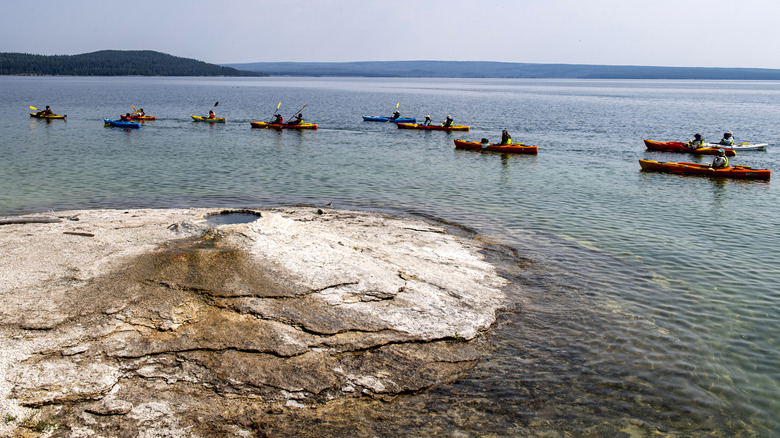
Yellowstone National Park Lodges offers guided boat cruises on Yellowstone Lake. These "Scenicruise" trips leave from Bridge Bay Marina and teach passengers about the region's history, wildlife, and more. Keep your eye out for eagles and shorebirds throughout the ride. Bridge Bay Marina is also where you can rent a boat and sightsee on your own. For guided kayak tours, Yellowstone Hiking Guides and Prismatic Tours both depart from Grant Village and meander around the hydrothermal features of West Thumb. If you bring your own water vessel of any kind, obtain a permit and allow park rangers to check it for any Aquatic Invasive Species (AIS). This protects the vital Yellowstone Lake ecosystem from external contamination.
Located in a nearly 100-year-old building at the northernmost part of Yellowstone Lake is the Fishing Bridge Visitor Center. Aside from featuring exhibits on the park's wildlife, you can speak with park rangers and find out how to participate in Junior Rangers. This fun national park program is the perfect way to help kids become passionate about protecting nature both in America's national parks and around the world.