

What Does It Mean When You See A Purple Flag At The Beach?
If you've ever visited a popular public beach, you've likely noticed that certain precautions are put in place to ensure that beachgoers have a safe experience. Trained lifeguards often sit on lifeguard stands high above the beach and keep their sharp eyes locked on the water in case swimmers begin to struggle or need rescue. They often have whistles that they will loudly blow if they notice a dangerous situation to alert their fellow lifeguards and other people on the beach. One of the most important safety precautions of all are colorful beach safety flags. Lifeguards, safety patrol officers, and local authorities work together to put up safety flags on popular beaches each morning. The various colors of beach safety flags communicate whether or not it's safe to swim, and whether there are any potential dangers that visitors should be aware of.
In order to stay safe around bodies of water, it's important that beachgoers understand the different meanings of beach safety flags. The International Life Saving Federation first outlined a plan to create universal guidelines for these flags in 2004. In total there are nine different colored flags that each have specific meanings, according to the ILSF.
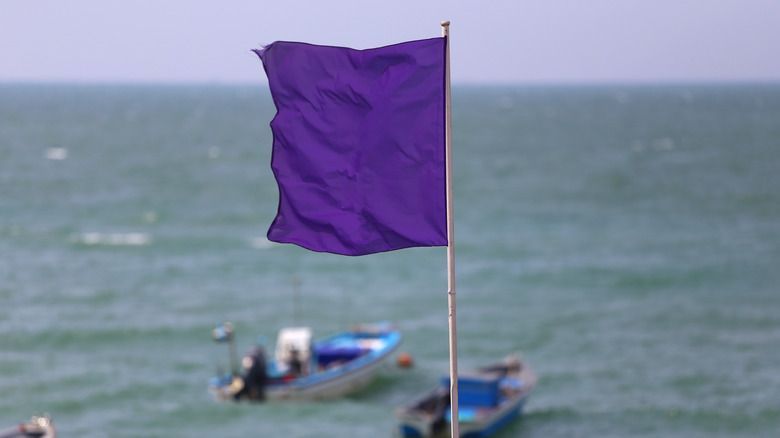
A yellow flag indicates that the risk of entering the water is moderate and that the hazard level is medium. (Green flags are no longer used because it is impossible to guarantee completely safe beach conditions.) A red flag indicates a high hazard and discourages any swimmers from entering. Double red flags mean that the water is closed to the public. In the United States, we are used to yellow indicating caution and red indicating danger, but a purple flag may cause some confusion. When you see a purple flag at the beach, it means that marine pests are present in the water.
A purple flag indicates marine creatures that may cause you harm are present in the water

Understanding the various beach safety flags can help beachgoers stay safe in and out of the water. They can help you spot dangers like rip currents during your next beach vacation, as well as indicate that dangerous marine pests are present. More than 100 different countries have organizations that are members of the International Life Saving Federation, and many of them abide by the universal guidelines set by the organization. The United States is one country that utilizes the colored flags to communicate messages to people who are visiting the beach.
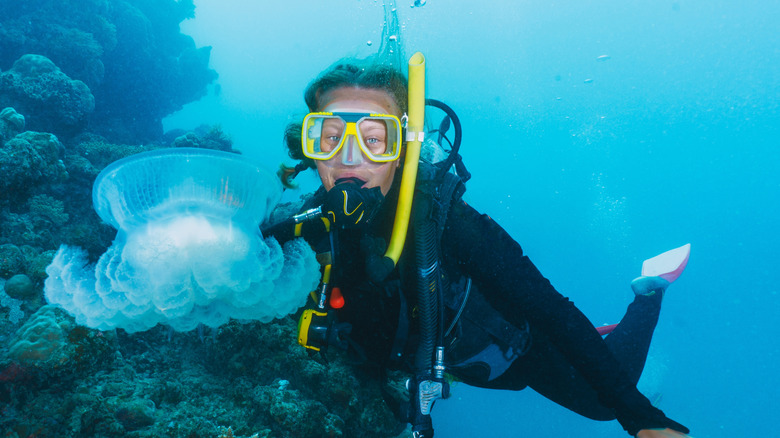
According to the International Life Saving Federation, purple flags indicate that there are animals in the water that could cause minor injuries to swimmers. These kinds of creatures include jellyfish, which have long tendrils that contain venom. Sometimes jellyfish will just leave a painful sting, but others can have powerful neurotoxic peptides that are more dangerous. Some species, like the Australian box jellyfish, can even be deadly to humans. A few other species that may cause a purple flag to go up at a beach include Portuguese man-of-war and stingrays.
It is crucial to understand that purple safety flags are not intended to notify beachgoers of the presence of sharks, according to the International Life Saving Federation. If a shark has been spotted, you may see a red and white quartered flag, indicating an emergency evacuation, or a double red flag, indicating that the water is closed to the public. Remember too that just because you don't see a purple flag does not mean sharks and other dangerous marine creatures aren't present. You should always maintain situational awareness when swimming in any body of water, and notify lifeguards should you notice anything out of the ordinary.
What to do if you see a purple flag at the beach
The easiest way to ensure your safety if you see a purple flag at the beach is to stay out of the water completely. If you aren't swimming, jellyfish and other creatures that could cause you harm won't be able to touch you. That being said, you may want to swim in the ocean so badly that you're willing to risk it.
Unlike a double red flag, a purple flag is not meant to forbid anyone from entering the water. If you see a purple flag, but you still want to swim, you should try to talk to a lifeguard. They may be able to provide more information about what types of marine pests are present and how prevalent they are. It could be that the risk is not severe enough to deter you from swimming. Alternatively, you may choose not to risk it if multiple people have experienced painful stings.
If you really want to swim, you might choose swimwear that will help protect your skin, just in case you have a run in with a sea creature. Wearing a neoprene wetsuit can create a physical barrier that protects your skin from painful jellyfish stings. Wearing waterproof shoes when you swim could help protect you if you accidentally step on a stingray. If you choose to swim when you see a purple flag at the beach, know that it is possible that you could get hurt. Be diligent and make sure that you are carefully watching where you walk and swim.