

The Most Turbulent Flight Route In North America Is A Short Trip In The Western US
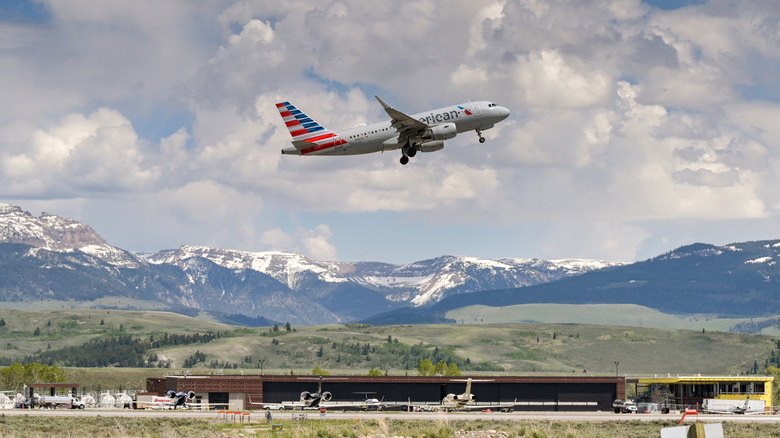
Almost all flyers have experienced turbulence at some point. The hum of the engines is lulling you to sleep, when suddenly, the plane lurches, jolting you awake. Oftentimes, the turbulence is less of a big deal than you think it is, the shaking only lasts a few seconds, and you breathe a deep sigh of relief. Other times, though, the plane becomes a bucking bronco, creating mayhem inside the cabin. Turbulence is possible on any flight, but it's more common on some routes than on others. In 2025, aviation information company Turbli conducted a study and found that the most turbulent route in North America was between Denver, Colorado, and Jackson, Wyoming — a 1.7-hour flight that delivers more than its fair share of bumpiness.
In its study, Turbli assessed turbulence across 10,000 routes between 550 of the world's largest airports in terms of the eddy dissipation rate (edr), a way of measuring the intensity of turbulence in the atmosphere. A higher edr means turbulent energy dissipates faster, which means stronger turbulence. The Denver-Jackson route took the top spot among North American contenders, with an edr of 18.18. Examining the list further, a distinct pattern emerges: All the routes in the North American top 10 were over U.S. Rocky Mountain regions. The world's most turbulent route, from Mendoza, Argentina, to Santiago, Chile, with an edr of almost 23, also crosses over high mountains (the Andes). This is not a coincidence, as certain geographic and meteorological conditions can make turbulence far more likely.
Causes and effects of airplane turbulence
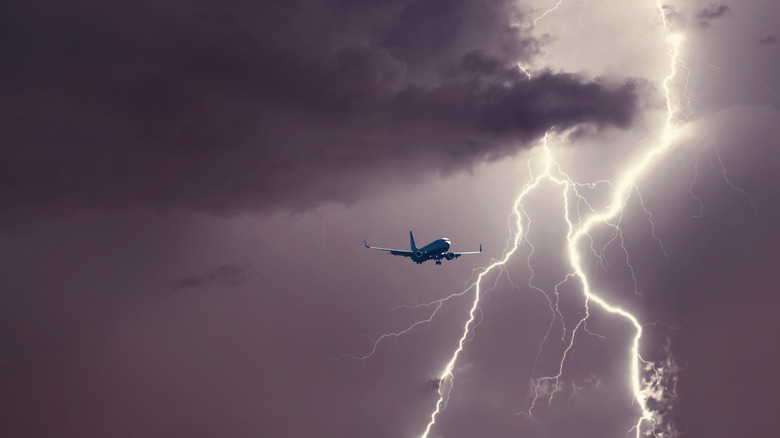
Turbulence happens when a plane flies through chaotic wind currents, or columns of air moving in different directions or at different speeds. Mountains can also disrupt wind currents, creating waves and updrafts, which a plane experiences as turbulence as it passes through them. Hence, some of the world's most turbulent flight routes – including the Denver-Jackson route — are over tall ranges like the Rockies, the Andes, the Alps, and the Himalayas. Thunderstorms can also generate unruly wind patterns, which are to be expected in the immediate area around storm clouds, but they can also propagate for hundreds or thousands of miles through the atmosphere, leading to clear-air turbulence (CAT), which gives no visible warnings of turbulence. Jet streams are another source of CAT, which can arise, quite literally, out of the clear blue sky.
Rest assured, though — instances of severe turbulence remain relatively rare. At flight-cruising altitudes, less than 5% of the atmosphere has turbulence at any given moment, and most of that is light. Even when severe turbulence does occur, it poses little risk for modern aircraft, which are "way overbuilt," according to Chris McGee, a commercial airline pilot with 30 years of experience. "In terms of if an aircraft would crash from turbulence, that's about the same likelihood as me stepping outside the door and having a meteorite land on my head," McGee told Sky News. The most damaging effects from severe turbulence tend to occur inside the plane rather than to the plane itself, as unsecured objects and passengers get tossed about the cabin — resulting in sheer terror, injuries, and in very rare cases, deaths.
Best ways to protect yourself during turbulence
Since clear-air turbulence is difficult for pilots to predict and can occur without warning, take steps to protect yourself and your loved ones, no matter what route you're flying. To minimize the risk of turbulence, fly early in the morning, as opposed to late afternoon when thermal turbulence (i.e., updrafts of heated air) is more likely. Choose a seat toward the front of the plane, closer to the plane's center of gravity, where any turbulence that does occur will cause less severe rocking.
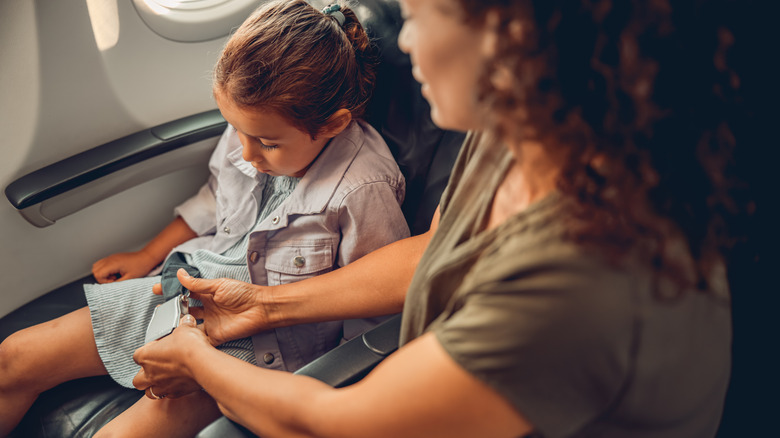
Objects and unrestrained passengers can become airborne inside the cabin in the event of sudden turbulence. For this reason, it's a good practice to stay seated with your seatbelt fastened for as much of the flight as possible, and keep your children restrained, too. Children under age 2 are safest in their own seat in an approved child restraint device, rather than in your lap. Keep little ones away from hot beverages, which can overturn during turbulence, and consider seating children away from the aisle to protect them from bumps from destabilized food carts.
During any episodes of turbulence, return to your seat immediately if you're not already in it. Remain seated with your seatbelt fastened, stow all objects under your seat, and stay attentive to guidance from the pilot and crew members. If you happen to be in the plane's bathroom when severe turbulence strikes, don't try to walk back to your seat! Stay in the lavatory and secure yourself as best you can, such as by sitting on the toilet and gripping onto the sink. When the seatbelt sign turns off, it's then safe to return to your seat.