

The Once-Popular Travel Essential That Now Feels Totally Obsolete

There was a time in the not-so-distant past when travelers had to work harder to feel comfortable in unfamiliar countries, but there are very few places left in the world where you won't have access to modern technology. Although there's something nostalgic and inspiring about going analog on your vacation, it's hard to deny that some gadgets are extremely convenient. They can also help us feel safer when traveling. With modern technology, it's never been easier to communicate with locals and other travelers who speak different languages.
Before recent technological advancements, people rarely left their country of origin without a bilingual dictionary. The phrasebooks included common words and phrases in one language and their side-by-side translations in another. If you were from the United States visiting Paris for the first time, an English-to-French pocket dictionary would have been a travel essential you'd want to have on hand at all times. These days, bilingual dictionaries feel totally obsolete to most travelers because there are tons of different translator apps that will do the hard work for you.
Modern technology is incredible, and some language translation apps will speak out loud in any language using perfect pronunciation. These apps really come in handy, and they're so much easier and more convenient than flipping through the pages of your dictionary looking for the correct word. That being said, there are some downsides. With all of the technology available, tourists are much less likely to retain words and phrases in a new language, which can put them in a sticky situation if they find themselves without reception. A broken device or a dead battery could ruin an otherwise perfect day of exploring. Relying on a device for all of your communication needs could also lead to expensive data charges while you're abroad.
Communication is key when traveling, but pocket dictionaries are no longer essential
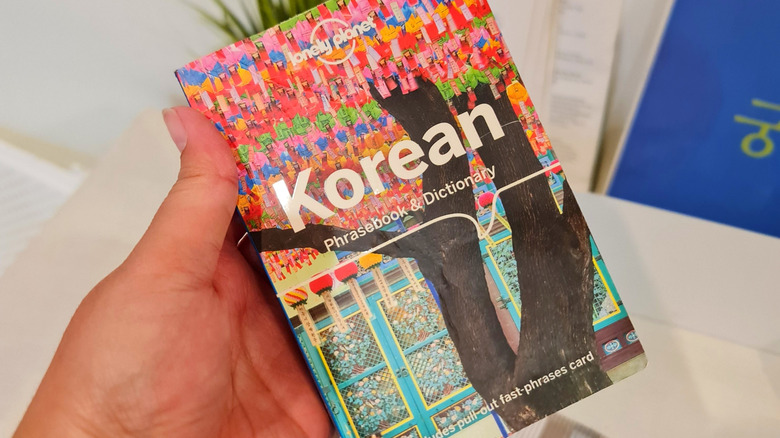
Listening to the sounds of locals speaking in their native language is an exciting travel experience, especially if you're from somewhere like the U.S., where around 78% of the population only speak English. It is estimated that only 20% of the U.S. population speaks two or more languages, which makes it difficult to communicate with people in other countries where multilingualism is more common. Language apps can really come in clutch. If you're lost and in need of directions, you can simply speak into your phone and wait for the translation to generate. Then, the response from the other person can also be easily translated into your language. The interaction won't take much longer than a normal conversation. If you were trying to communicate using a language dictionary, it could take ages to translate each word.
If you're interested in meeting new people while traveling, the ability to communicate is key. Modern technology makes it easy to bridge language barriers and make friends abroad. Instead of sitting in awkward silence or stumbling over a basic greeting, you can introduce yourself quickly and easily. Attempting to approach someone and strike up a conversation takes a lot of confidence even when you speak the same language, so when you aren't confident about communicating effectively, it is beyond intimidating.
Flipping through a pocket dictionary to find the words for a simple introduction or searching through the pages to decipher what someone said to you can make an interaction super awkward. You might even worry that you'll mispronounce something and accidentally cause offense. The new translation technology takes the stress out of potentially uncomfortable interactions and makes them more enjoyable. It's easy to see why travel dictionaries, which used to be travel essentials, have begun to feel totally obsolete.
Depending solely on technology can have negative consequences while traveling

Even though modern technology makes communicating in different languages easier and more convenient, you might not want to completely ditch your pocket phrasebook. Technology isn't always reliable, and if you aren't careful you could end up in a sticky situation.
Imagine that you boarded a train to a small German village that you read all about on your favorite travel blog. You don't really know where you're going, so you're planning on using your cell phone's GPS to navigate once you arrive. Your train tickets are also stored on your cell phone, and you're planning on using your language app to communicate while you're there. When you arrive in the tiny town and realize that you have zero signal, you're going to be really disappointed. Without your language app, you might not even be able to ask for directions until you find someone who speaks a bit of your native language. If your cell phone dies while traveling you'll face similar issues. Having a language dictionary available in these situations would be a lifesaver, so consider whether it might still be useful where you're going.
Relying on your phone or tablet to translate every single thing you want to say can use a lot of data. Unless you have a great unlimited international phone plan, that may lead to tons of charges and fees. Increasing your data package every time you need to communicate with a local could cause you to blow through your travel budget quickly. Fortunately, many translation apps let you download language packs to use offline, so even if you don't have internet or a pocket dictionary handy, you can communicate with the locals more easily.