

New Mexico's Former Army Base Is Now A Vast National Monument With 1800s Frontier Adobe Ruins
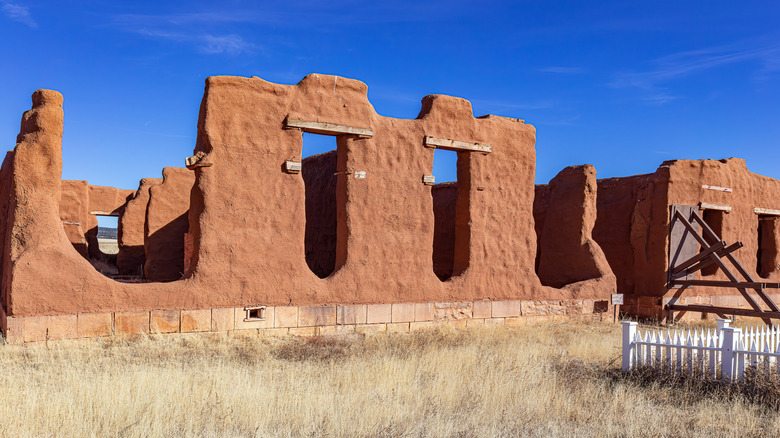
History buffs, especially those fascinated by U.S. military history, will find plenty to explore at Fort Union National Monument. Once an active Army post, the site is now a place that anyone can visit. In northeastern New Mexico, the 721-acre Fort Union National Monument provides visitors with an eye-opening experience among the ruins of a 19th-century frontier fort.
Fort Union dates back to the mid-1800s, around the same time that thousands of pioneers were heading west. The idea of "Manifest Destiny" helped drive westward expansion. It was during this period that Fort Union served as a hub for military forces in what was then the New Mexico Territory. The fort remained in operation for decades.
Indigenous people inhabited New Mexico for thousands of years before European colonists arrived. New Mexico first became a U.S. territory in 1850 after the Mexican-American War ended. Spain had controlled the region for centuries, followed by a period of Mexican rule. People of Spanish, Mexican, and American descent lived there in the 1800s, alongside Indigenous communities. Conflicts between the various groups were common and often violent, particularly as U.S. military expansion displaced Indigenous peoples. Visiting the national monument provides a fascinating glimpse at what life was like during the 19th century, and the challenges that pioneers, service members, and Indigenous people faced during the period. While wandering through the adobe ruins, visitors may feel as though they've stepped back in time.
Step back in time and experience a place that helped shape the American Southwest
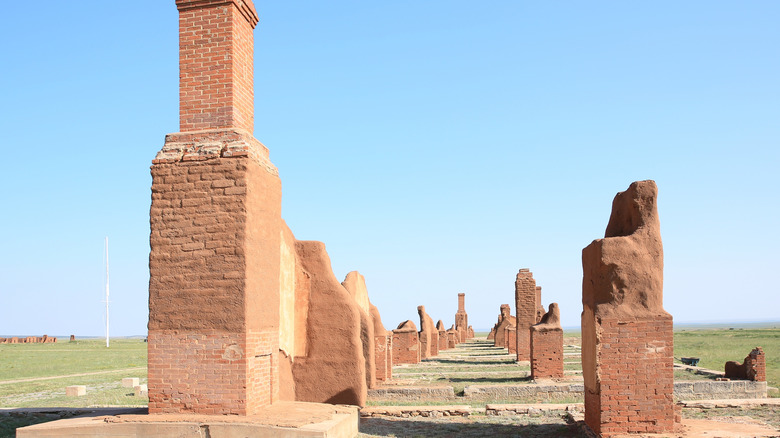
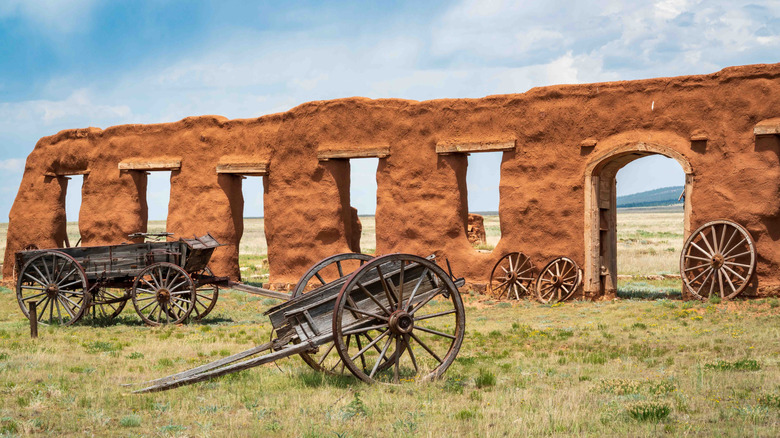
New Mexico wouldn't officially become a U.S. state until 1912, so it remained a territory for over 60 years. For 40 of those years – from 1851 until 1891 – Fort Union was in operation. It played a major role in shaping the American Southwest. The military personnel stationed there helped protect travelers along the Santa Fe Trail. The fort housed soldiers and their families, but it also served as a distribution hub. Goods arrived at Fort Union via wagons before being distributed across the region. During the Civil War, Fort Union played a major role in the Union victory at the Battle of Glorieta Pass in 1862.
Fort Union National Monument is located on the high prairie, and many of the structures have been slowly damaged by strong winds and weather. Throughout the monument, visitors can explore the remains of structures built in the 1800s, including the remnants of adobe buildings with stone foundations. The adobe ruins provide a fascinating glimpse of what life looked like for people living at a Southwestern frontier post.
Fort Union fell into disrepair and became less essential, as did the Santa Fe Trail, after the Atchison, Topeka, and Santa Fe Railroad reached nearby Watrous in 1879. Eventually, in 1891, the fort was abandoned. Decades later, groups advocated for Fort Union's preservation, and it was established as a national monument in 1956. Today, you can explore the fort's ruins via a 1.25-mile self-guided walk. Signs explain the site's history along the way. If you'd prefer something shorter, there is a half-mile walk that will allow you to see part of the fort and some of the adobe ruins. There are various special events and ranger-guided programs throughout the year, including campfire storytelling, historical tours, and living-history demonstrations. Check out the calendar of events on the National Park Service website for more information.
Visiting Fort Union National Monument
Fort Union National Monument is located about an hour and a half from the city of Santa Fe, New Mexico, the oldest state capital in the U.S. If you're flying in, Santa Fe Regional Airport (SAF) is 103 miles away, while Albuquerque International Sunport (ABQ) is 154 miles from the monument. Denver International Airport, a major global hub that is considered the most sustainable airport in America, is 329 miles away. There are no public transportation options that can take you to Fort Union National Monument, so renting a car will be necessary if you aren't already road-tripping.
Fort Union National Monument is open year-round from 8 a.m. to 4 p.m. Admission is free, and the historic site is closed on Thanksgiving, Christmas, and New Year's Day. If you prefer milder weather, consider planning your visit during the spring or fall. Regardless of when you visit, always bring some light layers. Fort Union National Monument has been nicknamed "Fort Windy" because of the strong winds that sweep across the prairie.
The national monument is located in a remote and isolated area. The National Park Service website notes that there are no restaurants, gas stations, or grocery stores close by. The nearest gas stations are in Las Vegas, New Mexico, 28 miles south, and Wagon Mound, 30 miles north, so make sure you have plenty of fuel before visiting. The city of Santa Fe makes a wonderful home base for a longer New Mexico trip. Albuquerque, an incredible fall foodie destination, is another great choice if you're exploring more of the state.