

The Low-Tech Heating Trick To Stay Warm In Your Sleeping Bag While Camping In The Cold
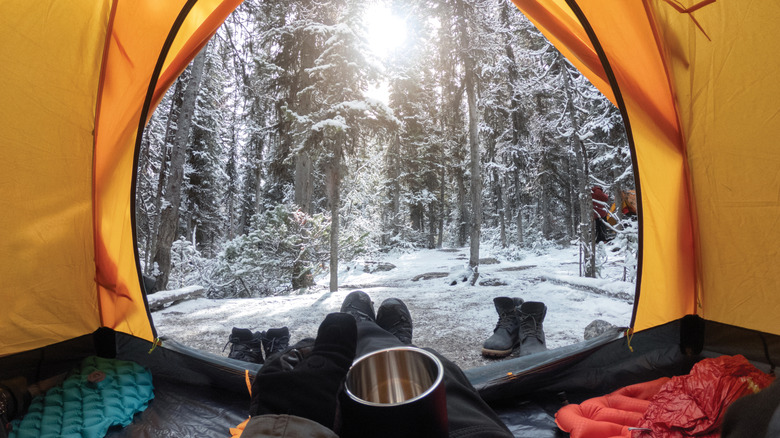
Camping is a joyful experience for many of us. But there's nothing worse than spending a cold night shivering inside your tent, waiting for those first warming rays of dawn. While frigid nights are to be expected on winter trips, they can happen even in summer when the weather changes unexpectedly — particularly at higher elevations. In 2025, for example, it snowed in early September in Colorado's foothills around Idaho Springs, a Rocky Mountain destination offering tons of outdoor activities close to several highly rated campgrounds. Imagine embarking on a late summer camping adventure expecting balmy breezes and the hum of crickets and waking up to a winter wonderland outside your tent!
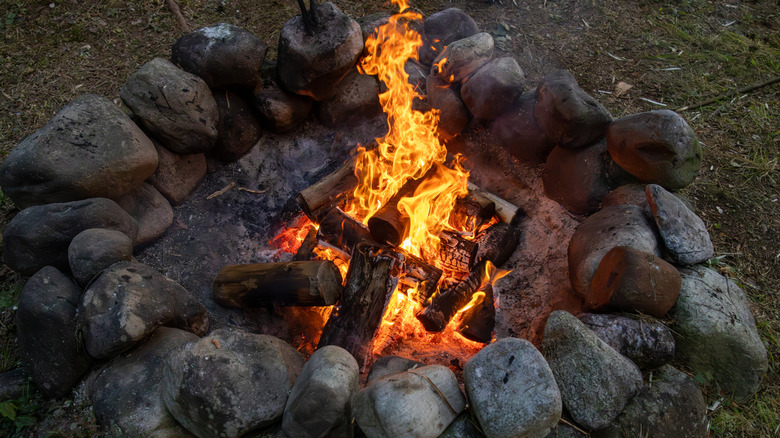
Fortunately, there's an easy solution to this problem that does not require high-tech camping gear from REI. As long as you can make yourself a crackling campfire, you're all set. You just need your fire, some rocks, heat-resistant fabric, and some patience. Set stones of various sizes around your campfire until they're piping hot. Ensure that these rocks are dry before you place them near the fire, as wet rocks can explode when heated. It's also best to avoid using sharp rocks, which can tear holes in your belongings or hurt you if you roll over onto them in the middle of the night.
When the rocks are sufficiently hot, pick them up using thick gloves or tongs and wrap them in a heavy cloth — preferably a natural fabric like cotton, as synthetic fabrics can melt or disintegrate when exposed to heat. Completely cover the rocks with the fabric to avoid burning yourself or damaging your gear; smaller rocks may actually fit nicely into cotton or wool socks. Finally, place these natural heaters in and around your sleeping bag and let them get to work. After about 30 minutes, slip into your warm nest and enjoy some deep rest! The rocks should continue emanating heat for several hours or more.
Other tips for staying warm on cold camping nights
I've never tried the hot rocks trick when camping. But I've slept in tents all over the planet and on a few high mountains, so I do have a few other tricks up my sleeve. One is filling Nalgene water bottles with hot water and sleeping with those close to your body on cold nights. Nalgene water bottles are extremely tough and will not warp or leak when exposed to hot or even boiling water. This makes them a safe alternative to hot rocks, particularly when it's not possible to build a campfire due to fire restrictions or lack of available kindling — for example, on Alaska's snow-capped Denali, one of the majestic mountains everyone should see in their lifetime. When using "Nalgene babies," as one Redditor called them, put one at the foot of your sleeping bag and another close to your core, and you'll stay cozy as a clam for hours on end.
Another trick is to skip the manual heating process completely and just throw a few hand warmer packets into your bag — these generate heat through an air-activated chemical reaction. While some brands claim to be reusable, the ones I have used are single use and thus,less environmentally friendly than hot rocks or reusable Nalgene bottles. But they do work like a charm when you need a quick cure for teeth chattering on a frosty night.
Of course, having the right gear to begin with means you might not need to resort to "tricks" to stay warm camping under most camping conditions. A well-designed tent with a proper rain fly goes a long way, as do high-quality sleeping pads and bags. Even if it means carrying a little extra weight in my pack, I always bring a warmer sleeping bag than I think I'll need to avoid midnight shivers. And you can always unzip the bag or even sleep on top of it on a warmer-than-expected night.