

America's First National Park City Is A Scenic Outdoor Recreation Destination In Tennessee
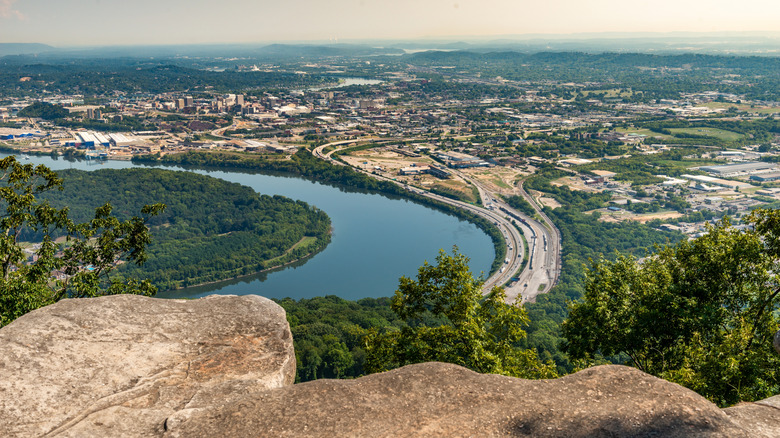
Tennessee is already home to America's most-visited national park, the Great Smoky Mountains, but you might not know that it's also home to North America's first national park city. In 2025, Chattanooga, Tennessee, joined London, England, and Adelaide, Australia, to become the third destination worldwide to receive national park city status, as awarded by the National Park City Foundation. The foundation granted the recognition based on Chattanooga's "remarkable transformation" from "one of the most polluted cities in the United States in the 1970s into an unrivalled outdoor destination."
More than 194,000 people live in Chattanooga, according to the U.S. Census Bureau. Add 11 million annual visitors to Great Smoky Mountains National Park, and the city might seem too crowded for the kind of trip where you can hear yourself think while connecting with nature. Hop on I-24, however, and in less than 10 minutes, you'll go from downtown Chattanooga to the Raccoon Mountain Caverns, one of the most breathtaking caves in the country. There, you'll have the option of donning a helmet with a headlamp and crawling on your belly through a place where bats, crickets, and salamanders live.
The two-hour, guided Canyon Crawl tour splits the difference between the entry-level walking tour and the more strenuous, three-and-a-half-hour Waterfall Dome tour. The 45-to-55-minute walking tour includes handrails, steps, and bright lighting, bathing the stalactites in the impressive Crystal Palace room in color. At 58 degrees Fahrenheit year-round, the cave's steady temperature makes it a cool escape even in summer when the record-breaking heat could have you rethinking your outdoor plans. It's just one reason why travelers drawing up a bucket list of the best national parks with the most visitors may need to add Chattanooga to their itinerary.
Chattanooga's Lookout Mountain and Ruby Falls
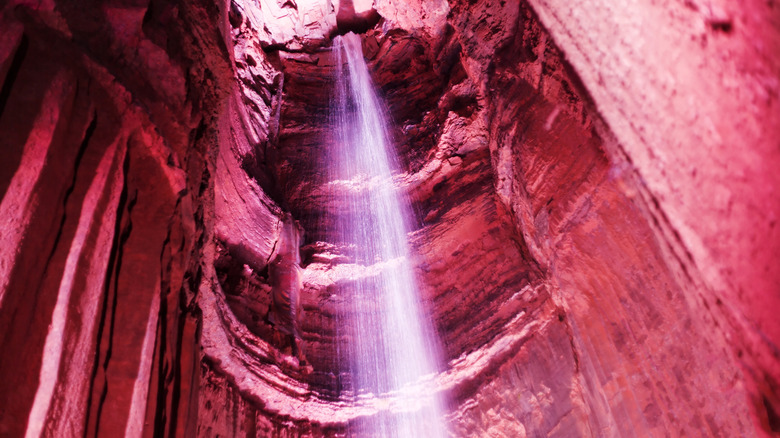
Another one of Chattanooga's top tourist attractions is Lookout Mountain, which has its own caves, including Ruby Falls, the tallest underground waterfall in America that's publicly accessible. As the first U.S. attraction to receive Green Globe certification for sustainable tourism, Ruby Falls helped lay the foundation for Chattanooga's national park city status. To access the waterfall, you'll ride a glass-front elevator more than 250 feet down into the mountain. The above-ground entrance is a castle built with limestone excavated when the elevator shaft was dug, back in the late 1920s. Today, the castle and caverns are listed on the National Register of Historic Places.
In Ruby Falls Cave, a guide will lead you down a subterranean trail to the lit-up waterfall. Different tours are available, including lantern-lit ones on select nights. Before your visit, you'll need to purchase a date-based, timed-entry ticket online. Like Lookout Mountain Cave — which lies just below it and once served as a hideout for local moonshiners — Ruby Falls Cave has an interesting history behind it. It opened in 1930 and survived the Great Depression to become a fallout shelter in the 1960s.
History also informs the Lookout Mountain Incline Railway, which takes visitors from the foot of the mountain to an observation deck one mile up. In 1905, President Theodore Roosevelt rode this same passenger railway — one of the world's steepest, with the incline reaching a grade of 72.7% near the top. About a 10-minute drive from the railway's upper station is another popular attraction, Rock City, which is located where the mountain crosses into Georgia. With a view of seven states, Rock City offers gardens and trails lined with kitschy gnome statues, a 90-foot artificial waterfall, a sheer cliff called Lover's Leap, and a swinging bridge over the valleys below.
Plan a day around the Tennessee River and Moccasin Bend

The landscape of Chattanooga is shaped by the Tennessee River, as it horseshoes around Moccasin Bend, America's only national archaeological district. From Snooper's Rock just to the northwest, you can take in a scenic view of the winding river gorge. This rock ledge overlooks the gorge from Prentice Cooper State Forest, which offers horseback riding and mountain biking, plus 35 miles of hiking trails.
The Trail of Tears National Historic Trail overlaps with Moccasin Bend and Chattanooga as well. You'll see Trail of Tears signs in front of local landmarks like the Chattanooga Choo Choo, a former railway terminal turned entertainment complex (which owes its name to a famous steam locomotive and a hit song by the Glenn Miller Orchestra). Hiking along the trail, you'll also see markers that help give historical context for the forcible removal of the Cherokee people from their homes in 1838 and 1839. Downtown, near the Tennessee Aquarium, a stairway waterfall and an adjacent weeping wall, dedicated to the Cherokee, flow down into the river. At Ross's Landing, the Cherokee boarded boats and barges for what is now Oklahoma.
Renting a kayak or paddleboard from L2 Outside in Coolidge Park, you can take a ramp down to the Tennessee River yourself for an up-close view of the Walnut Street Bridge, one of the longest pedestrian bridges in the world. When you're ready to depart, Chattanooga Airport (CHA) offers connecting flights to major hubs like Nashville International (BNA) and Hartsfield-Jackson Atlanta International Airport (ATL). Those two international airports are each about a two-hour (or 130-mile) drive from Chattanooga.